Representative John Whalley
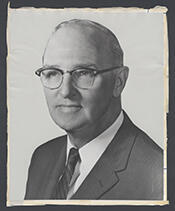
Here you will find contact information for Representative John Whalley, including email address, phone number, and mailing address.
| Name | John Whalley |
| Position | Representative |
| State | Pennsylvania |
| District | 12 |
| Party | Republican |
| Status | Former Representative |
| Term Start | January 3, 1960 |
| Term End | January 3, 1973 |
| Terms Served | 7 |
| Born | September 14, 1902 |
| Gender | Male |
| Bioguide ID | W000320 |
About Representative John Whalley
John Irving Whalley (September 14, 1902 – March 8, 1980) was an American businessman and Republican politician who served as a member of the U.S. House of Representatives from Pennsylvania from 1959 to 1973. Over the course of seven terms in Congress, he contributed to the legislative process during a significant period in American history, representing the interests of his constituents and rising to a high-ranking position on the House Foreign Relations Committee.
Whalley was born in Barnesboro, Pennsylvania, to Isabella (née Ashurst) and James H. Whalley, both immigrants from England. He grew up in a working-class environment in western Pennsylvania and entered the workforce at an early age. At age ten he took his first job in a grocery store in Windber, Pennsylvania, and by fourteen he was employed at the local Ford garage. These early experiences in small-town commerce and the emerging automobile industry shaped his lifelong business career and later informed his political agenda.
Without the benefit of an extensive formal education, Whalley advanced through practical experience in the automotive field. At the Ford garage in Windber he worked successively as a mechanic, salesman, bookkeeper, delivery man, and driving instructor. Twelve years after beginning work there, he owned the dealership. Three years later he purchased a second dealership, and over the years leading up to World War II he opened or acquired additional outlets, eventually building a chain of thirteen automobile dealerships in central and western Pennsylvania. His success in business brought him prominence in the region and led to his involvement in civic and educational affairs. He served on the advisory board of the Johnstown College branch of the University of Pittsburgh, was chairman of the Somerset County Redevelopment Authority and the Windber Planning Commission, and was a member of the Windber School Board from 1935 to 1947.
Whalley’s entry into elective office came at the state level. A Republican, he was elected to the Pennsylvania House of Representatives, where he represented one of Somerset County’s at-large seats from 1951 to 1954. He then advanced to the Pennsylvania State Senate, serving from 1955 to 1960 as the senator for the 36th district. During these years he developed a legislative profile that reflected his business background, particularly in transportation and infrastructure issues, and he became known for advocating policies favorable to motorists and the automotive industry.
Whalley was elected to the U.S. House of Representatives as a Republican in a special election to the Eighty-sixth Congress, held to fill the vacancy caused by the death of Representative Doug Elliott. His service in Congress began in 1959, and he was subsequently reelected to the five succeeding Congresses, serving continuously until his retirement in 1973. Although one source characterizes his tenure as six terms from 1960 to 1973, his service encompassed seven terms beginning with the special election. In the House he campaigned on issues closely related to his professional expertise, opposing taxes he considered unfair to new car buyers and working to secure support for improvements to the Pennsylvania Turnpike and for better highways nationwide. Over time he became a high-ranking member of the House Foreign Relations Committee, reflecting an expansion of his legislative interests beyond domestic transportation and commerce.
Whalley’s congressional career coincided with a transformative era in American politics, including the civil rights movement, the expansion of the interstate highway system, and the Cold War. In addition to his committee work in the House, he was appointed by President Richard Nixon to serve as a delegate to the United Nations for the 1969 session, further underscoring his role in foreign policy matters. He retired from Congress in 1972, concluding more than two decades of continuous public service at the state and federal levels.
In the year following his retirement, Whalley became embroiled in legal difficulties arising from his management of congressional staff salaries. In 1973 he was accused of taking staff salary kickbacks, though he maintained that the funds in question had been used solely for office purposes. He ultimately pleaded guilty to one count of mail fraud and two counts of obstruction of justice. For these offenses he was fined $11,000 and sentenced to three years of probation, placing him among the American federal politicians convicted of crimes and linking his name to the broader history of federal political scandals in the United States.
Whalley remained associated with the automotive industry even after his political career ended. In recognition of his long and influential role as a dealer and advocate for motorists and highway development, he was inducted into the Automotive Hall of Fame in 1981. John Irving Whalley died on March 8, 1980, at the age of seventy-seven. He was buried in Grandview Cemetery in Johnstown, Pennsylvania, leaving a legacy that combined entrepreneurial success, extensive public service, and a complex post-congressional reputation.