Representative John White
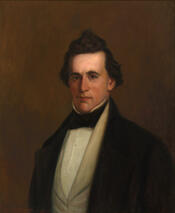
Here you will find contact information for Representative John White, including email address, phone number, and mailing address.
| Name | John White |
| Position | Representative |
| State | Kentucky |
| District | 6 |
| Party | Whig |
| Status | Former Representative |
| Term Start | December 7, 1835 |
| Term End | March 3, 1845 |
| Terms Served | 5 |
| Born | February 14, 1802 |
| Gender | Male |
| Bioguide ID | W000380 |
About Representative John White
John White was born on 14 February 1802 in Kentucky, then a young and rapidly developing western state of the Union. Little is recorded about his early childhood, but his formative years unfolded against the backdrop of the post-Revolutionary expansion of the United States and the early political organization of Kentucky. Growing up in this frontier environment, he would have been exposed to the political debates of the era, including questions of internal improvements, states’ rights, and the balance of power between the federal government and the states—issues that would later shape his public career.
White received a basic education in the common schools of Kentucky, which, though limited by the standards of older eastern states, provided him with the foundation necessary for professional study. Demonstrating an aptitude for the law, he pursued legal studies in Kentucky, reading law in the customary manner of the period rather than attending a formal law school, which was still a rarity in the early nineteenth century. After completing his legal training, he was admitted to the bar, establishing himself as an attorney in Kentucky. His legal practice brought him into contact with a wide range of clients and local interests, helping to build the reputation and connections that would support his entry into politics.
White’s political career developed within the ranks of the Whig Party, which emerged in the 1830s in opposition to the policies of President Andrew Jackson and the Democrats. Aligning himself with the Whig emphasis on congressional authority, economic development, and internal improvements, White became an advocate for policies intended to foster national growth while representing the particular needs of his Kentucky constituency. His standing as a lawyer and his identification with Whig principles positioned him as a credible candidate for national office at a time when Kentucky was a significant center of Whig strength, associated especially with figures such as Henry Clay.
In 1835, John White was elected as a Representative from Kentucky to the United States House of Representatives, beginning the first of five consecutive terms in Congress. He served from 4 March 1835 to 4 March 1845, representing his state during a period marked by intense partisan conflict and major national questions, including banking policy, tariffs, and the scope of federal power. A member of the Whig Party throughout his congressional career, White contributed to the legislative process over a full decade in office, participating in debates and votes that reflected both national Whig priorities and the interests of his Kentucky constituents. His colleagues recognized his abilities and leadership, and he rose to a position of particular prominence when he was chosen as Speaker of the U.S. House of Representatives, a post he held from 31 May 1841 to 4 March 1843 during the 27th Congress. As Speaker, he presided over the House at a time of significant political realignment, including the brief Whig ascendancy under Presidents William Henry Harrison and John Tyler, and played a central role in managing the chamber’s proceedings and shaping its legislative agenda.
White’s decade in Congress coincided with a transformative era in American politics, as the Second Party System reached its height and the nation grappled with questions of economic policy and sectional balance. As a Representative, he participated in the democratic process on behalf of his district, giving voice to Kentucky’s concerns over issues such as internal improvements, land policy, and the broader economic direction of the country. His service from 1835 to 1845 placed him at the heart of the legislative branch during repeated clashes between Whig leaders in Congress and the executive branch, particularly over the national bank and the use of the presidential veto. In this context, White’s role as both a rank-and-file member and later as Speaker underscored his importance within the Whig congressional delegation.
After leaving Congress at the conclusion of his fifth term on 4 March 1845, White’s national political career came to an abrupt end. He returned to private life in Kentucky, where he resumed his legal and personal affairs. His later life was brief, however, as he died on 22 September 1845 in Richmond, Madison County, Kentucky, only months after his final term in the House concluded. John White was interred in the Richmond Cemetery in Richmond, Kentucky. Though his public career was relatively short, his decade of service as a Representative from Kentucky, including his tenure as Speaker of the U.S. House of Representatives, secured his place in the political history of both his state and the United States during a pivotal period in the early nineteenth century.