Representative John Newton Williamson
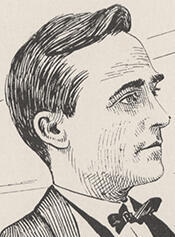
Here you will find contact information for Representative John Newton Williamson, including email address, phone number, and mailing address.
| Name | John Newton Williamson |
| Position | Representative |
| State | Oregon |
| District | 2 |
| Party | Republican |
| Status | Former Representative |
| Term Start | November 9, 1903 |
| Term End | March 3, 1907 |
| Terms Served | 2 |
| Born | November 8, 1855 |
| Gender | Male |
| Bioguide ID | W000552 |
About Representative John Newton Williamson
John Newton Williamson (November 8, 1855 – August 29, 1943) was an American rancher and Republican politician from Oregon who served as a Representative from Oregon in the United States Congress from 1903 to 1907. A native Oregonian, he became a prominent figure in central and eastern Oregon politics in the late nineteenth and early twentieth centuries, holding office in both chambers of the Oregon Legislative Assembly before his election to the U.S. House of Representatives. His congressional service occurred during a significant period in American history, and he was later implicated in, and ultimately cleared of, charges arising from the Oregon land fraud scandal.
Williamson was born on November 8, 1855, in Oregon, at a time when the region was still developing politically and economically. Raised in a frontier environment, he became closely associated with the ranching interests that would shape much of his later public life. As a young man he engaged in ranching in central and eastern Oregon, gaining familiarity with the land, agricultural practices, and the concerns of rural communities. This background helped establish his reputation as a representative of the region’s ranchers and settlers and informed his later legislative priorities at both the state and federal levels.
By the mid-1880s, Williamson had entered public service at the county level. In 1886, he was selected as sheriff of Crook County, Oregon, a position he held until 1888. His tenure as sheriff provided him with administrative and law enforcement experience and increased his visibility in local affairs. That same year, 1888, he was elected to represent Crook County in the Oregon House of Representatives, marking his first service in the Oregon Legislative Assembly. His early legislative work began to align him with the Republican Party’s growing influence in the state and solidified his role as a spokesman for central and eastern Oregon.
Williamson’s state legislative career continued intermittently over the next decade. In 1898, he returned to the Oregon House of Representatives as a Republican during a special session of the legislature and then served again in the regular 1899 session. Building on this experience, he was elected to the Oregon State Senate in 1900. In the Senate he represented Crook, Klamath, Lake, and Wasco counties, a vast and largely rural region of the state. He served in the 1901 and 1903 regular sessions of the Senate, though he did not participate in the special session of 1903. During the 1901 session he held the influential position of president pro tempore of the Senate, underscoring his prominence within the Republican caucus and his leadership role in state politics.
On the strength of his legislative record and regional support, Williamson was elected as a Republican to the United States House of Representatives from Oregon. He served two terms in Congress, from March 4, 1903, to March 3, 1907. As a member of the House of Representatives, he participated in the national legislative process and represented the interests of his constituents from central and eastern Oregon during a period of rapid economic expansion and ongoing debates over public land policy, conservation, and development in the American West. A member of the Republican Party, he contributed to the legislative process during his two terms in office and took part in the broader democratic process at the federal level. Williamson declined to run for re-election in 1906, bringing his congressional career to a close after four years of service.
Williamson’s congressional tenure was overshadowed by his involvement in the Oregon land fraud scandal, a major political corruption case of the early twentieth century. In 1905, while still a sitting member of Congress, he was convicted along with U.S. Senator John H. Mitchell and other co-conspirators on charges related to the illegal acquisition of public lands. The case centered on abuses of federal land laws intended to promote settlement, with allegations that public lands were fraudulently obtained for private gain. Williamson’s conviction drew national attention and cast a cloud over his public career. However, in 1908 the United States Supreme Court, in Williamson v. United States, 207 U.S. 425, 28 S. Ct. 163, overturned his conviction and remanded the case for a new trial. No new trial was ever held, effectively ending the criminal proceedings against him.
After leaving Congress and following the resolution of his legal troubles, Williamson returned to private life in Oregon. He resumed his involvement in ranching and local affairs, remaining identified with the agricultural and rural interests that had shaped his early career. Although he did not return to high public office, his long record of service in county government, the Oregon House of Representatives, the Oregon State Senate, and the U.S. House of Representatives left a distinct imprint on the political history of central and eastern Oregon. John Newton Williamson died on August 29, 1943, closing a life that spanned from the territorial-era frontier through the modernizing decades of the early twentieth century.