Senator John Downey Works
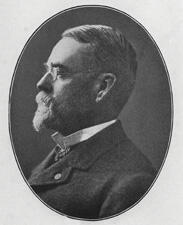
Here you will find contact information for Senator John Downey Works, including email address, phone number, and mailing address.
| Name | John Downey Works |
| Position | Senator |
| State | California |
| Party | Republican |
| Status | Former Representative |
| Term Start | April 4, 1911 |
| Term End | March 3, 1917 |
| Terms Served | 1 |
| Born | March 29, 1847 |
| Gender | Male |
| Bioguide ID | W000743 |
About Senator John Downey Works
John Downey Works (March 29, 1847 – June 6, 1928) was an American politician, jurist, and lawyer who served as a United States Senator from California from 1911 to 1917 and as an associate justice of the California Supreme Court from October 2, 1888, to January 5, 1891. A member of the Republican Party, he played a notable role in California’s legal and political life in the late nineteenth and early twentieth centuries and contributed to the legislative process during one term in the United States Senate, representing the interests of his constituents during a significant period in American history.
Works was born on March 29, 1847. Details of his early life and formal education are less fully documented than his later public career, but he trained in the law and entered the legal profession as a young man, establishing himself as an attorney before rising to judicial and political prominence. By the early 1880s, he was practicing law outside California when health concerns prompted a major change in his life and career.
In 1883, Works’s poor health forced him to move to San Diego, California. There he resumed legal practice and became active in the Republican Party, quickly rising in California politics. In September 1886, he ran on the Republican ticket and, prior to the election, was appointed by Governor Robert Waterman as a judge of the San Diego County Superior Court. He served on that court until September 1887, when he resigned in order to return to private practice. Governor Waterman then appointed Edwin Parker to fill the vacant superior court seat. Works’s reputation as a lawyer and judge, however, continued to grow, positioning him for higher judicial office.
In 1888, Governor Waterman appointed Works as an associate justice of the California Supreme Court to fill a vacancy created by the resignation of Justice Elisha W. McKinstry. In August 1888, the Republican Party formally nominated him for the post, and he was elected to serve the remaining portion of McKinstry’s term, which concluded on January 5, 1891. During his tenure on the state’s highest court, Works participated in shaping California jurisprudence at a time of rapid economic and social change. After stepping down from the bench in 1891, he became president of the San Diego Sun company and then returned to private legal practice in San Diego, forming the firm of Works & Works with his son.
In January 1896, Works moved to Los Angeles, California, where he continued to build his legal and political career. He became a leading figure in the local bar and, in 1903, served as president of the Los Angeles County Bar Association. His growing prominence in civic affairs led to his election on December 7, 1909, as a member of the Los Angeles City Council, where he was chosen as council president. His tenure on the council was brief; he resigned on March 22, 1910, but the position further enhanced his public profile and set the stage for his election to national office.
In 1911, Works was elected by the California Legislature to the United States Senate as a Republican, becoming a U.S. Senator representing California from 1911 to 1917. During his Senate service, he sat on the Committee on Expenditures in the War Department in the Sixty-second Congress and later on the Committee on Fisheries. His term coincided with the Progressive Era and the presidency of Woodrow Wilson, and he was identified with the more independent, progressive wing of the Republican Party. In February 1917, near the end of his term, Works joined other Progressive senators—dubbed the “twelve willful men”—in a filibuster that blocked legislation to empower President Wilson to arm American merchant vessels prior to the United States’ formal entry into World War I. He did not seek renomination to his Senate seat in 1916. The Seventeenth Amendment to the U.S. Constitution, adopted in 1913, provided for the direct election of U.S. senators by the people rather than by state legislatures but allowed sitting senators to complete their terms; Works was the last U.S. senator from California to be elected by the Legislature.
After leaving the Senate in 1917, Works returned to private life and to the practice of law, remaining an influential figure in California’s legal community. He continued to write and speak on legal and public issues, drawing on his extensive experience as a judge, attorney, and legislator. John Downey Works died on June 6, 1928. His career spanned local, state, and national office, and included service as a superior court judge, associate justice of the California Supreme Court, president of a major county bar association, city council president, and United States Senator from California.