Representative Johnston Cornish
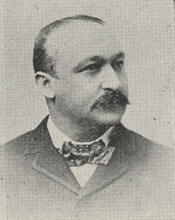
Here you will find contact information for Representative Johnston Cornish, including email address, phone number, and mailing address.
| Name | Johnston Cornish |
| Position | Representative |
| State | New Jersey |
| District | 4 |
| Party | Democratic |
| Status | Former Representative |
| Term Start | August 7, 1893 |
| Term End | March 3, 1895 |
| Terms Served | 1 |
| Born | June 13, 1858 |
| Gender | Male |
| Bioguide ID | C000786 |
About Representative Johnston Cornish
Johnston Cornish (June 13, 1858 – June 26, 1920) was an American Democratic Party politician who represented New Jersey’s 4th congressional district in the United States House of Representatives for one term from 1893 to 1895. Born in the mid-nineteenth century, he came of age during a period of rapid industrialization and political realignment in the United States, developments that would shape both the issues he confronted and the constituencies he served.
Details of Cornish’s early life and education are sparse in the surviving public record, but his later prominence in state and national politics indicates that he was well integrated into the civic and political life of New Jersey by the late nineteenth century. Growing up in an era marked by the aftermath of the Civil War and Reconstruction, he would have been exposed to debates over economic development, infrastructure, and the role of the federal government—issues that featured prominently in his subsequent political career.
Before his election to Congress, Cornish established himself within the Democratic Party in New Jersey, aligning with a political organization that, in the state and nationally, was contending with questions of monetary policy, tariffs, and the regulation of emerging industrial power. His rise to federal office reflected both his personal standing in his community and the strength of the Democratic Party in his district during this period.
Cornish was elected as a Democrat to the Fifty-third Congress and served as a Representative from New Jersey from March 4, 1893, to March 3, 1895. During this single term in the House of Representatives, he represented New Jersey’s 4th congressional district and participated in the legislative process at a time of significant economic and political upheaval, including the Panic of 1893 and the ensuing national depression. As a member of the House, Johnston Cornish contributed to the democratic process and represented the interests of his constituents, engaging with the major questions of federal policy that confronted lawmakers in the closing years of the nineteenth century.
Cornish’s service in Congress occurred during a significant period in American history, when debates over economic reform, labor unrest, and the appropriate scope of federal authority were particularly intense. Although the detailed record of his committee assignments and specific legislative initiatives is limited in the surviving summaries, his participation in the Fifty-third Congress placed him among those responsible for responding to the financial crisis and its impact on both urban and rural communities in New Jersey and across the nation.
After leaving Congress at the conclusion of his term in 1895, Cornish remained identified with the Democratic Party and with public life in New Jersey, part of a generation of politicians who bridged the Gilded Age and the Progressive Era. His experience as a former member of the House of Representatives would have continued to inform his perspective on state and local issues, even as national politics shifted toward new concerns such as trust-busting, regulatory reform, and expanded democratic participation.
Johnston Cornish died on June 26, 1920, closing a life that spanned from the immediate post–Civil War period into the aftermath of World War I. His congressional service from 1893 to 1895, representing New Jersey’s 4th congressional district as a Democrat, remains the central recorded element of his public career and situates him within the broader history of New Jersey’s representation in the United States Congress at a time of profound economic and political change.