Representative Jon C. Hinson
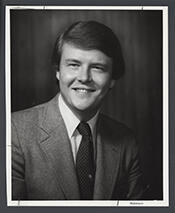
Here you will find contact information for Representative Jon C. Hinson, including email address, phone number, and mailing address.
| Name | Jon C. Hinson |
| Position | Representative |
| State | Mississippi |
| District | 4 |
| Party | Republican |
| Status | Former Representative |
| Term Start | January 15, 1979 |
| Term End | January 3, 1983 |
| Terms Served | 2 |
| Born | March 16, 1942 |
| Gender | Male |
| Bioguide ID | H000641 |
About Representative Jon C. Hinson
Jon Clifton Hinson (March 16, 1942 – July 21, 1995) was an American politician who served as a Republican U.S. Representative from Mississippi. A member of the Republican Party, he represented Mississippi’s 4th congressional district in the United States House of Representatives from January 3, 1979, until his resignation on April 13, 1981. His service in Congress occurred during a significant period in American history, and during his two terms in office he participated in the legislative process and represented the interests of his constituents. Following his resignation after an arrest for engaging in a homosexual act, he became a gay rights activist in metropolitan Washington, D.C.
Hinson was born in Tylertown, Walthall County, Mississippi, on March 16, 1942, the son of Clifton Ford Hinson and Lyndell Newman Hinson. Raised in a small-town, rural environment in southwestern Mississippi, he was introduced early to national politics. In 1959, while still a teenager, he worked as a page in the U.S. House of Representatives for Democratic Representative John Bell Williams of Mississippi, who later became governor of Mississippi in 1968. This early exposure to Capitol Hill and to the workings of Congress helped shape his interest in public service and national affairs.
Hinson attended the University of Mississippi, where he completed his undergraduate education and graduated in 1964. Shortly after graduation, he joined the United States Marine Corps Reserve, in which he served from 1964 until 1970. His reserve service coincided with the Vietnam War era, although his public record centers on his stateside reserve duty rather than overseas deployment. The combination of higher education at a major Southern university and military service provided him with credentials and experience that would later support his entry into congressional staff work and elective office.
By the mid-1960s, Hinson had returned to Washington, D.C., to work on Capitol Hill. In 1967, he was employed as a doorman for the U.S. House of Representatives, a position that placed him in daily contact with members and staff and gave him a close view of legislative operations. He subsequently advanced to staff positions for two Mississippi congressmen: Charles H. Griffin, a Democrat, and Thad Cochran, a Republican. This bipartisan staff experience reflected the shifting political landscape in Mississippi and the broader South, as many white voters and politicians moved from the Democratic to the Republican Party. When Cochran ran successfully for the United States Senate in 1978, Hinson sought to succeed him in the House.
Hinson’s path to elective office was marked by both personal turmoil and political opportunity. On October 24, 1977, prior to his 1978 congressional campaign, he survived a deadly fire at the Gay Cinema Follies in Washington, D.C. Firefighters found him under a pile of bodies; he was one of only four men rescued from the blaze. Despite the potential for scandal in his home state, he proceeded with his campaign. In the 1978 general election for Mississippi’s 4th congressional district, he ran as a Republican and won with 51.6 percent of the vote. He defeated Democrat John H. Stennis, the son of U.S. Senator John C. Stennis, who received 26.4 percent, with the remaining ballots cast for independent candidates. Hinson took office on January 3, 1979, joining a growing cohort of Southern Republicans in Congress.
During his first term, Hinson participated in the legislative work of the House and represented the interests of his south Mississippi constituents, though detailed records of his committee assignments and specific legislative initiatives are less prominent than the controversies that later defined his public career. On August 11, 1979, he married Cynthia Lee Johnson in Alexandria, Virginia, a union that would later come under strain as his private life became the subject of public scrutiny. In 1980, while running for reelection, Hinson publicly acknowledged that in 1976, while serving as an aide to Thad Cochran, he had been arrested for committing an obscene act after exposing himself to an undercover policeman at the Iwo Jima Memorial near Arlington National Cemetery. He denied that he was homosexual, attributed his behavior to alcoholism, and asserted that he had reformed. Refusing calls to resign, he remained in office and stood for reelection.
Despite the 1976 arrest becoming public, Hinson won reelection in November 1980 to a second term in the House. In that three-way race he received a plurality of 39 percent of the vote, while independent candidate Leslie B. McLemore garnered 30 percent and Democrat Britt Singletary received 29 percent. His victory underscored both his political resilience and the strength of Republican support in his district at that time. However, his second term was soon overshadowed by another scandal. On February 4, 1981, Hinson, by then married, was arrested in the Longworth House Office Building after being discovered performing oral sex on a male employee of the Library of Congress in a restroom. He was charged with attempted sodomy following an investigation prompted by complaints about similar incidents in the same restroom.
At that time, homosexual acts, even between consenting adults, were criminal offenses in Washington, D.C. The charge against Hinson was a felony that carried a potential penalty of up to ten years in prison and a fine of up to $10,000. In light of the fact that both parties were consenting adults and amid gradually changing social attitudes toward homosexuality, the U.S. Attorney’s office reduced the charge to a misdemeanor. Facing a maximum penalty of one year in prison and a $1,000 fine, Hinson pleaded not guilty to attempted sodomy the following day and was released without bail pending a trial scheduled for May 4, 1981. Soon afterward, he admitted himself to Sibley Memorial Hospital in Washington, D.C., for professional care and counseling. He ultimately received a 30-day suspended sentence and one year of probation, conditioned on his continued participation in counseling and treatment.
Under intense political and public pressure, Hinson resigned from Congress on April 13, 1981, just three months into his second term. He described his decision to leave office as “the most painful and difficult decision of my life.” His resignation triggered a special election in Mississippi’s 4th congressional district, which was won by Democrat Wayne Dowdy in the summer of 1981, shifting the seat back to Democratic control. The scandal placed Hinson among a number of American federal politicians whose careers were derailed by criminal convictions and sexual controversies, and his case later appeared in discussions of federal political sex scandals in the United States and of LGBT members of Congress whose sexual orientation became a matter of public record under adverse circumstances.
After leaving Congress and eventually acknowledging publicly that he was gay, Hinson rebuilt his life in the Washington, D.C., area and became active in gay rights advocacy. He lived in Alexandria, Virginia, and later in Silver Spring, Maryland, where he worked to organize lobbying efforts on behalf of gay and lesbian Americans. He was particularly involved in campaigns opposing the ban on gays in the U.S. military, lending his experience as a former congressman and Marine Corps reservist to arguments for equal treatment and open service. His activism placed him within a broader movement that, during the 1980s and early 1990s, confronted entrenched legal and social discrimination against LGBT people at the federal level.
Hinson’s personal life continued to evolve during these years. His marriage to Cynthia Lee Johnson, which had begun in 1979, deteriorated amid the public scandals and his eventual coming out. The couple separated on November 22, 1987, and their marriage was formally dissolved by divorce on March 29, 1989. In his later years, he lived more openly as a gay man while contending with the health challenges associated with the AIDS epidemic that devastated the gay community during that period.
Jon Clifton Hinson died of respiratory failure resulting from AIDS in Silver Spring, Maryland, on July 21, 1995, at the age of fifty-three. His body was cremated, and his ashes were returned to his native Mississippi for burial in Tylertown after a private service. By the time of his death, he was divorced from his wife Cynthia and was survived by his brother, Robert Hinson of Gulfport, Mississippi. His life and career, encompassing early promise in public service, a brief but notable tenure in Congress, scandal and resignation, and later work as a gay rights activist, have been cited in historical accounts of LGBT figures in American politics and in studies of how changing social attitudes intersected with the careers of federal officeholders.