Representative Jonas Reece Emrie
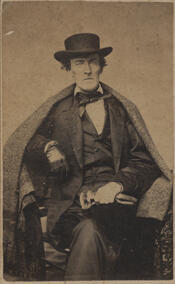
Here you will find contact information for Representative Jonas Reece Emrie, including email address, phone number, and mailing address.
| Name | Jonas Reece Emrie |
| Position | Representative |
| State | Ohio |
| District | 6 |
| Party | Independent |
| Status | Former Representative |
| Term Start | December 3, 1855 |
| Term End | March 3, 1857 |
| Terms Served | 1 |
| Born | April 25, 1812 |
| Gender | Male |
| Bioguide ID | E000177 |
About Representative Jonas Reece Emrie
Jonas Reece Emrie (April 25, 1812 – June 5, 1869) was a U.S. Representative from Ohio who served one term in the United States Congress from 1855 to 1857. Born in Hillsboro, Highland County, Ohio, he pursued preparatory studies in his native community before turning to the study of law. After completing his legal training, he was admitted to the bar and commenced the practice of law in Hillsboro, establishing himself as a local attorney in a growing town in southern Ohio.
In addition to his legal work, Emrie became an influential figure in local journalism and civic affairs. He served as editor and publisher of the Hillsboro Gazette from 1839 to 1848 and again from 1854 to 1856, using the newspaper as a platform for public discourse at a time of increasing political and sectional tension in the United States. He was a leader in organizing the Hillsboro Female College, reflecting his interest in education and the advancement of learning in his community. On April 8, 1839, he was appointed postmaster of Hillsboro, a position he held until February 23, 1841, managing federal postal operations in the town during a period when such appointments were important instruments of local and national communication.
Emrie’s public career expanded into state and county office in the 1840s and early 1850s. He served as a member of the Ohio State Senate in 1847 and 1848, participating in the legislative process at the state level and representing the interests of his district in Columbus. Following his service in the legislature, he became the first probate judge of Highland County, holding that office from 1851 to 1854. In this judicial capacity he oversaw matters relating to estates, guardianships, and other probate issues, helping to shape the legal framework of a county experiencing growth and institutional development.
Building on his record in law, journalism, and state government, Emrie was elected as an Opposition Party candidate to the Thirty-fourth Congress, serving in the U.S. House of Representatives from March 4, 1855, to March 3, 1857. Identified in some accounts as a member of the Independent Party, he sat in Congress during a significant period in American history marked by intensifying sectional conflict over slavery and the realignment of national political parties. As a member of the House of Representatives from Ohio, he participated in the democratic process and contributed to the legislative work of the chamber while representing the interests of his constituents. He was an unsuccessful candidate for reelection in 1856 to the Thirty-fifth Congress, concluding his federal legislative service after a single term.
After leaving Congress, Emrie relocated in 1857 to Mound City, Pulaski County, Illinois, a developing river town on the Ohio River that was emerging as a commercial and transportation center. There he engaged in mercantile pursuits, conducted a newspaper, and continued to practice law, combining business, journalism, and legal work much as he had done in Ohio. His experience in public office and the press made him a prominent figure in the civic life of his new community.
Emrie also held several local offices in Illinois, further extending his record of public service. In 1858 he served as police magistrate of Mound City, exercising judicial and administrative authority in municipal matters. He later acted as township treasurer of schools, overseeing local educational funds, and served as master in chancery of Pulaski County, Illinois, a position that involved handling certain judicial and equity-related functions within the county’s legal system. These roles reflected his continued involvement in law, governance, and education at the local level.
Jonas Reece Emrie died in Mound City, Illinois, on June 5, 1869. He was interred in Beech Grove Cemetery, leaving a legacy as a lawyer, editor, state legislator, probate judge, and one-term U.S. Representative who participated in public life in both Ohio and Illinois during a transformative era in American history.