Representative Martin Frost
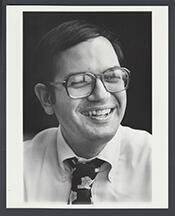
Here you will find contact information for Representative Martin Frost, including email address, phone number, and mailing address.
| Name | Martin Frost |
| Position | Representative |
| State | Texas |
| District | 24 |
| Party | Democratic |
| Status | Former Representative |
| Term Start | January 15, 1979 |
| Term End | January 3, 2005 |
| Terms Served | 13 |
| Born | January 1, 1942 |
| Gender | Male |
| Bioguide ID | F000392 |
About Representative Martin Frost
Jonas Martin Frost III (born January 1, 1942) is an American politician and attorney who represented Texas in the United States House of Representatives from 1979 to 2005. A member of the Democratic Party, he served 13 consecutive terms as the representative for Texas’s 24th congressional district and became a prominent figure in House leadership and national party politics during a period of significant change in American political life.
Frost was born to a Jewish family in Glendale, California, the son of Doris (née Marwil) and Jack Frost. He has one sister, Carol Frost Wagner. His grandfather, Joe Frost, was co‑founder of the Frost Brothers Department Store, a well-known retail establishment in Texas. In 1949, his family moved to Fort Worth, Texas, after his father accepted a position with Convair Aircraft. Growing up in Texas, Frost was part of a small but visible Jewish community, an identity that would later underscore his distinction as the first Jewish member of Congress elected from the state.
Frost attended the University of Missouri, where he graduated in 1964 with a bachelor of journalism and a Bachelor of Arts in history. As an undergraduate, he was editor of the student newspaper, The Maneater, and was active in campus life as a member of the Zeta Beta Tau fraternity. He was also tapped by the leadership and honor societies Omicron Delta Kappa and QEBH, reflecting his early engagement in public affairs and student leadership. He subsequently enrolled at Georgetown University Law Center in Washington, D.C., earning his Juris Doctor degree in 1970. During this period, he also served in the United States Army Reserve from 1966 to 1972.
Before entering elective office, Frost pursued a career in journalism and law. After completing his undergraduate studies, he worked as a newspaper reporter, including for The News Journal in Wilmington, Delaware, gaining firsthand experience in political and governmental reporting. Following his graduation from Georgetown Law, he served as a law clerk to Judge Sarah T. Hughes of the U.S. District Court for the Northern District of Texas, a notable federal jurist. He then entered private practice in the Dallas–Fort Worth area, building a legal career while also appearing as a legal commentator on KERA‑TV, the public television station in North Texas. His combined background in journalism, law, and public commentary helped establish his reputation as a knowledgeable and articulate advocate on public issues.
Frost first sought a seat in the U.S. House of Representatives in 1974 but was unsuccessful. He ran again in 1978 and was elected as the Democratic representative for Texas’s 24th congressional district, taking office in January 1979. With this victory, he became the first Jewish U.S. congressman from Texas. Over the next 26 years, he was reelected 12 times, generally without serious opposition, and became a durable presence in North Texas politics. His district included portions of Dallas, Fort Worth, and Arlington, and he was known for his attention to constituent service and his involvement in issues affecting the rapidly growing Dallas–Fort Worth Metroplex. In the 1980 election, he defeated Republican challenger Clay Smothers, an African American state legislator, in a race that drew regional attention.
During his long congressional tenure, Frost played an increasingly significant role in House leadership and party strategy. He served two terms as chairman of the House Democratic Caucus from 1999 to 2003, the number three position in the House Democratic leadership, ranking after the minority leader and minority whip. In that capacity, he was a key strategist for his party and frequently sparred with Republican leaders, including fellow Dallas‑area congressman Dick Armey, the House Majority Leader. Frost was also deeply involved in redistricting matters, leading the 1991 redistricting effort in Texas, and he developed a reputation as a strong fundraiser for Democratic candidates nationwide. In legislative matters, he served on the powerful House Rules Committee and, during his final term, was the ranking member of that committee, which plays a central role in determining how and when legislation is considered on the House floor. On October 10, 2002, he was among the 81 House Democrats who voted in favor of authorizing the use of military force in Iraq.
Frost’s congressional career was profoundly affected by the mid‑decade redistricting in Texas engineered in the early 2000s under the leadership of House Majority Leader Tom DeLay. Because of his influence in prior redistricting and his effectiveness as a Democratic fundraiser, Frost was singled out as a key target. His 24th District, which had included significant portions of Dallas, Fort Worth, and Arlington, was redrawn to be substantially more Republican. The Fort Worth and Arlington portions were removed and replaced with wealthier, more Republican-leaning areas around Dallas. Whereas Democrat Al Gore had carried the old 24th District in the 2000 presidential election, the newly drawn district would have given Republican George W. Bush approximately 68 percent of the vote. Frost’s home in Arlington was shifted into the heavily Republican 6th District, represented by long‑time Republican incumbent Joe Barton. Rather than challenge Barton, Frost chose to run in the newly configured 32nd District, which included territory he had represented earlier in his career. In the 2004 election, he lost that race by about 10 percentage points to Republican Pete Sessions. At the time, following Ralph Hall’s switch from the Democratic to the Republican Party earlier in 2004, Frost had been the only white Democrat representing a substantial portion of the Dallas–Fort Worth Metroplex.
After leaving Congress in January 2005, Frost remained active in national Democratic politics and public affairs. In 2005, he was a candidate for chairman of the Democratic National Committee, though he withdrew from the race on February 1. Shortly thereafter, on February 15, 2005, he was hired by Fox News as a political commentator, bringing his legislative and campaign experience to a national television audience. He later joined the law firm Polsinelli as an attorney and became president of America Votes, a progressive advocacy and coordination organization. He also joined the ReFormers Caucus of Issue One, a bipartisan group of former elected officials focused on political and campaign finance reform. In a July 2011 op‑ed about the federal debt ceiling crisis, Frost drew attention for comparing the ideological rigidity of some Tea Party–aligned politicians to that of the Taliban, writing that “We now have a group of U.S. politicians seeking political purity, who seem to have much in common with the Taliban. They are tea party members.” He co‑authored the 2014 book “The Partisan Divide” with former Republican congressman Tom Davis, journalist Richard E. Cohen, and David Eisenhower, analyzing the causes of increasing polarization in Congress and proposing potential remedies. In 2021, he joined nine other former members of Congress in co‑authoring an opinion editorial advocating reforms to strengthen the functioning of Congress.
Frost’s personal life has included several notable family milestones. In 1976, he married Valerie H. Hall in Dallas; the couple divorced in 1998. Later that year, he married Kathryn Frost, a major general in the United States Army and one of the highest‑ranking women in the service at the time. She died in 2006. In 2008, Frost married Jo Ellen Ronson. Throughout his career and later life, his identity as a Jewish American and his long service in the House have placed him among the notable Jewish members of the United States Congress, and he has remained engaged in public discourse through legal practice, media commentary, political reform efforts, and authorship.