Representative Jonathan B. Bingham
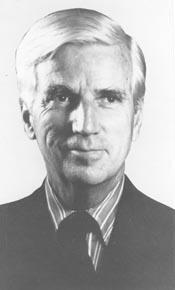
Here you will find contact information for Representative Jonathan B. Bingham, including email address, phone number, and mailing address.
| Name | Jonathan B. Bingham |
| Position | Representative |
| State | New York |
| District | 22 |
| Party | Democratic |
| Status | Former Representative |
| Term Start | January 4, 1965 |
| Term End | January 3, 1983 |
| Terms Served | 9 |
| Born | April 24, 1914 |
| Gender | Male |
| Bioguide ID | B000472 |
About Representative Jonathan B. Bingham
Jonathan Brewster Bingham (April 24, 1914 – July 3, 1986) was an American politician and diplomat who served as a Representative from New York in the United States Congress from 1965 to 1983. A member of the Democratic Party, he was elected to Congress from The Bronx and contributed to the legislative process during nine consecutive terms in office. His congressional service took place during a significant period in American history, encompassing the civil rights era, the Vietnam War, and major shifts in domestic and foreign policy, during which he participated in the democratic process and represented the interests of his constituents.
Bingham was born on April 24, 1914, in New Haven, Connecticut, into a family with a strong tradition of public service. He was the son of Hiram Bingham III, a noted explorer and U.S. senator from Connecticut, and Alfreda Mitchell Bingham, a granddaughter of Charles L. Tiffany, founder of Tiffany & Co. Growing up in this environment exposed him early to politics, international affairs, and civic responsibility, influences that would shape his later career in diplomacy and Congress.
Bingham pursued higher education at Yale University, where he received his undergraduate degree in 1936. He went on to study law at Yale Law School, earning his law degree in 1939. His legal training provided a foundation for his later work in government and international organizations, equipping him with skills in analysis, negotiation, and legislative drafting that would prove valuable in both his diplomatic and congressional roles.
Before entering Congress, Bingham built a career in public service and diplomacy. During World War II he served in the United States Army, gaining firsthand experience with global conflict and postwar reconstruction issues. After the war he held various positions in government and international affairs, culminating in his service as a United States delegate to the United Nations General Assembly. In that capacity he participated in multilateral discussions on international security, development, and human rights, helping to shape U.S. policy in the early decades of the United Nations and reinforcing his reputation as an advocate for international cooperation.
Bingham was elected as a Democrat to the U.S. House of Representatives in 1964 and took office on January 3, 1965, representing a district based in The Bronx, New York. He would be reelected eight times, serving nine terms until January 3, 1983. During his tenure, he was involved in a wide range of legislative matters, reflecting both the needs of his urban constituency and his longstanding interest in foreign affairs. He participated in debates over civil rights, social welfare, urban development, and economic policy, and he supported measures aimed at improving housing, transportation, and public services for residents of New York City. At the same time, he brought his diplomatic background to bear on congressional deliberations over U.S. foreign policy, international trade, and global development.
As a member of the House of Representatives during a transformative era, Bingham’s service coincided with the escalation and conclusion of the Vietnam War, the rise of détente with the Soviet Union, and evolving U.S. engagement with the United Nations and other international institutions. He took part in the legislative oversight of these policies and contributed to shaping the congressional response to changing global conditions. His work in Congress reflected a consistent interest in strengthening international law, promoting human rights, and ensuring that American foreign policy aligned with democratic values, while also attending to the pressing domestic concerns of his Bronx constituents.
After leaving Congress in 1983, Bingham remained associated with public affairs and policy discussions, drawing on his long experience in both domestic legislation and international diplomacy. He continued to be recognized for his contributions to the House of Representatives and for his earlier role as a U.S. delegate to the United Nations General Assembly. Jonathan Brewster Bingham died on July 3, 1986, leaving a record of nearly two decades of congressional service and a broader career devoted to public service at both the national and international levels.