Senator Jonathan Bourne
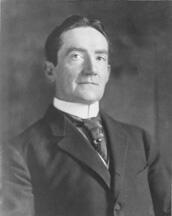
Here you will find contact information for Senator Jonathan Bourne, including email address, phone number, and mailing address.
| Name | Jonathan Bourne |
| Position | Senator |
| State | Oregon |
| Party | Republican |
| Status | Former Representative |
| Term Start | December 2, 1907 |
| Term End | March 3, 1913 |
| Terms Served | 1 |
| Born | February 23, 1855 |
| Gender | Male |
| Bioguide ID | B000670 |
About Senator Jonathan Bourne
Jonathan Bourne Jr. (February 23, 1855 – September 1, 1940) was an American politician, attorney, and businessman who represented Oregon in the United States Senate from 1907 to 1913. A member of the Republican Party and a prominent figure in the Progressive Era, he was an early advocate of direct primaries, the initiative, referendum, and recall, and played a leading role in efforts to reform the mechanisms of representative government. Over the course of his career he served two terms in the Oregon House of Representatives, became an influential industrialist with extensive holdings in mining, mills, and agriculture, and later emerged as a national spokesman for progressive Republican causes.
Bourne was born on February 23, 1855, in New Bedford, Massachusetts. He was educated in private schools before enrolling at Harvard University, which he attended from 1875 to 1877. In 1877 he sailed for Asia, but his ship was wrecked off the island then known as Formosa (now Taiwan). After his rescue from the wreck, he traveled west and arrived in Portland, Oregon, in 1878. This move marked the beginning of his long association with Oregon, where he would establish his legal practice, build substantial business interests, and launch his political career.
After settling in Portland, Bourne studied law and was admitted to the bar in 1881. He practiced law in Portland from 1881 to 1886, during which time he also began to develop a wide range of business enterprises. As an industrialist, he held interests in mining, farming, cotton mills, and other commercial ventures, and he became involved in the development of natural resources in the Pacific Northwest. Earlier in his life he owned large mining interests in the northeastern part of Oregon, where the town of Bourne was named in his honor. His activities in finance and industry, including participation in the regional capital market and stock exchange, helped establish him as a leading figure in Oregon’s business community. Bourne was married three times.
Bourne entered elective office as a Republican member of the Oregon House of Representatives from 1885 to 1886, representing Multnomah County. He returned to the Oregon House in 1897, again as a Republican, representing District 37 and Multnomah County. During this latter term he served only in the regular session that year, which notably failed to organize, reflecting the factional and procedural difficulties that often accompanied state legislative politics in the late nineteenth century. His legislative experience in Oregon, combined with his growing prominence as a businessman and reform advocate, positioned him for higher office and deepened his interest in restructuring the processes of government.
In 1906, Bourne was elected as a Republican to the United States Senate from Oregon, becoming one of the first two senators chosen under Oregon’s direct primary law. Under this system, United States senators were effectively selected by popular vote in a primary election and then formally elected by the Oregon Legislative Assembly in order to comply with Article I of the U.S. Constitution. He took his seat on March 4, 1907, and served one term, concluding his service on March 3, 1913. His tenure in Congress coincided with a significant period in American history marked by the rise of the Progressive movement, and he contributed to the legislative process as Oregon’s senator during the Sixtieth through Sixty-second Congresses. Throughout his service he represented the interests of his constituents while advancing broader reforms in national governance.
While in the Senate, Bourne held important committee assignments and used them to further his reform agenda. He served as chairman of the Committee on Fisheries during the Sixtieth and Sixty-first Congresses and later as chairman of the Committee on Post Offices and Post Roads in the Sixty-second Congress. In the latter role he was the author of the Parcel Post Act, a major piece of legislation that expanded and modernized postal services in the United States by establishing a nationwide parcel post system. Beyond specific legislation, he was a leading advocate for the direct primary system for elected offices and strongly supported the adoption of the initiative and referendum, mechanisms he believed would strengthen popular control over government. His ideas on these subjects were widely disseminated through his writings, including articles such as “Popular v. Delegated Government—A Defense of the Initiative, Referendum and Recall” (Central Law Journal, 1911) and “Functions of the Initiative, Referendum and Recall” (The Annals of the American Academy of Political and Social Science, 1912).
Bourne’s influence extended beyond the Senate chamber into the broader progressive Republican movement. In 1908 he was a leader in the group that attempted to persuade former President Theodore Roosevelt to run for a third term; Roosevelt declined at that time, but the effort underscored Bourne’s alignment with insurgent Republican progressives. From 1911 to 1912 he served as president of the National Republican Progressive League, an organization that sought to unify progressive elements within the Republican Party and advance reforms in areas such as direct democracy and regulatory policy. In 1912 he organized the Republican Publicity Association, reflecting his belief in the importance of public information and transparency in politics. That same year he was not renominated to his Senate seat by the Republican Party; instead, he ran for reelection under the “Popular Government” banner, finishing third and thus concluding his congressional career in March 1913.
After leaving Congress, Bourne resumed his former pursuits in Oregon and Massachusetts, returning to his business and investment activities that had long underpinned his public career. He later moved to Washington, D.C., where he entered the newspaper business and continued to engage in public affairs and political discourse from the nation’s capital. His papers, speeches, and writings on progressive reform and popular government remained a resource for scholars and reformers interested in the evolution of democratic institutions in the United States. Jonathan Bourne Jr. died in Washington, D.C., on September 1, 1940, at the age of 85, and was buried at Cedar Hill Cemetery in Maryland.