Representative Jonathan Hatch Hubbard
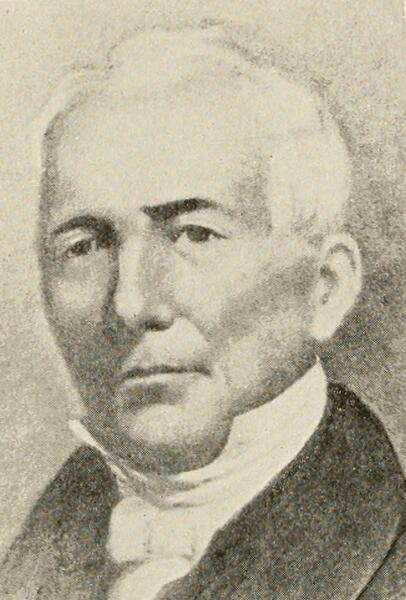
Here you will find contact information for Representative Jonathan Hatch Hubbard, including email address, phone number, and mailing address.
| Name | Jonathan Hatch Hubbard |
| Position | Representative |
| State | Vermont |
| District | 2 |
| Party | Federalist |
| Status | Former Representative |
| Term Start | May 22, 1809 |
| Term End | March 3, 1811 |
| Terms Served | 1 |
| Born | May 7, 1768 |
| Gender | Male |
| Bioguide ID | H000886 |
About Representative Jonathan Hatch Hubbard
Jonathan Hatch Hubbard (May 7, 1768 – September 20, 1849) was an American lawyer, jurist, and politician who served as a U.S. Representative from Vermont. A member of the Federalist Party, he participated in the national legislative process during one term in Congress, representing the interests of his Vermont constituents at a formative period in the early republic.
Hubbard was born on May 7, 1768, in Tolland, in the Connecticut Colony. When he was eleven years old, he moved with his parents to Claremont, in what was then the Province of New Hampshire. His early education was conducted under the guidance of a private tutor, a common arrangement for families of some means in New England during the late eighteenth century. This instruction prepared him for the study of law, which he pursued as a young man.
Hubbard studied law in Charlestown, New Hampshire, following the apprenticeship model typical of the era. He was admitted to the bar in 1790, marking the formal beginning of his legal career. Shortly thereafter, he moved to Windsor, Vermont, where he commenced the practice of law. Windsor, an important commercial and political center in early Vermont, provided a setting in which Hubbard could establish himself professionally and become involved in public affairs. In 1793 he married Elizabeth Hastings; the couple had one child, a daughter, Marie E. Hubbard.
Through his legal practice and growing prominence in Windsor, Hubbard became aligned with the Federalist Party, which advocated a strong national government and commercial development. His political standing in Vermont led to his election as a Federalist to the Eleventh Congress. He served as a U.S. Representative from Vermont from March 4, 1809, to March 3, 1811. During this single term in office, he contributed to the legislative process at a time when the United States was grappling with issues of trade restrictions, relations with Great Britain and France, and the broader challenges of a young nation asserting its place in international affairs. He was an unsuccessful candidate for reelection to the Twelfth Congress in 1810, which ended his brief tenure in the U.S. House of Representatives.
After leaving Congress, Hubbard continued his public service at the state level. He was appointed a justice of the Vermont Supreme Court, serving from 1813 to 1815. In this capacity, he participated in shaping Vermont’s jurisprudence during a period when state courts were refining legal doctrines in areas such as property, contracts, and emerging commercial law. His judicial service reflected both his legal expertise and the confidence placed in him by Vermont’s political leadership.
Following his term on the Vermont Supreme Court, Hubbard resumed the practice of law in Windsor. He continued to be regarded as a respected member of the Vermont bar and a figure of standing in his community. He lived in Windsor for the remainder of his life, maintaining his professional activities and local engagements as the state and nation evolved through the first half of the nineteenth century.
Jonathan Hatch Hubbard died on September 20, 1849, in Windsor, Vermont. His career encompassed service as a practicing attorney, a member of Congress, and a state supreme court justice, reflecting the role of early New England lawyers in both the legal and political development of the United States.