Representative Jonathan Hasson Wallace
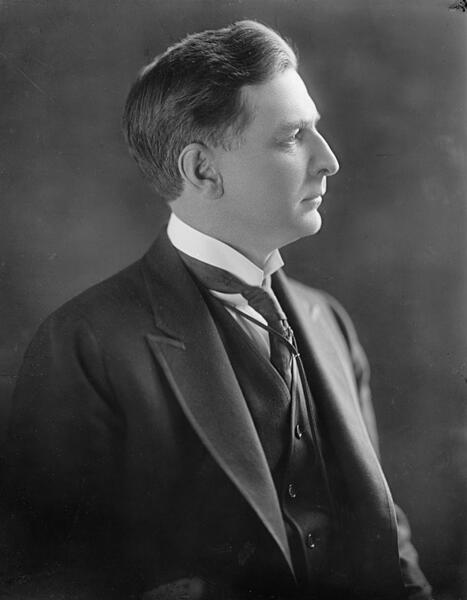
Here you will find contact information for Representative Jonathan Hasson Wallace, including email address, phone number, and mailing address.
| Name | Jonathan Hasson Wallace |
| Position | Representative |
| State | Ohio |
| District | 18 |
| Party | Democratic |
| Status | Former Representative |
| Term Start | December 3, 1883 |
| Term End | March 3, 1885 |
| Terms Served | 1 |
| Born | October 31, 1824 |
| Gender | Male |
| Bioguide ID | W000080 |
About Representative Jonathan Hasson Wallace
Jonathan Hasson Wallace (October 31, 1824 – October 28, 1892) was an American lawyer, jurist, and Democratic politician who represented Ohio in the United States House of Representatives during the Forty-eighth Congress. Serving briefly in Congress from 1884 to 1885, he is particularly noted for securing his seat through a contested election against incumbent Republican Representative, and future U.S. President, William McKinley, in a dispute ultimately resolved by the U.S. House of Representatives.
Wallace was born on October 31, 1824, in St. Clair Township, Columbiana County, Ohio. He was raised in this part of eastern Ohio, which would remain the center of his professional and political life. Seeking higher education, he attended Washington College in Washington, Pennsylvania (an institution later renamed Washington & Jefferson College), from which he graduated in 1844. His collegiate training provided the foundation for his subsequent legal studies and public career.
After completing his formal education, Wallace studied law in the office of Benjamin Stanton, a prominent Ohio lawyer and later a political figure in his own right. Through this apprenticeship, Wallace gained admission to the bar and commenced the practice of law in Columbiana County. His legal abilities soon led to public responsibilities: he was elected prosecuting attorney of Columbiana County, serving in that capacity in 1851 and again in 1853. These early roles established his reputation as a capable attorney and contributed to his standing within the Democratic Party in Ohio.
In his personal life, Wallace married Elizabeth L. McCook of Columbiana County in August 1848. The couple had four children. His family ties and long residence in the region reinforced his connection to the local community, where he balanced his legal practice with growing political involvement. By the early 1880s, Wallace was a well-known Democratic figure in a district increasingly contested between the two major parties.
Wallace’s congressional service arose from one of the more notable contested elections of the era. A member of the Democratic Party, he successfully contested the election of Republican William McKinley to the Forty-eighth United States Congress. After a protracted dispute over the outcome of the election, the matter was brought before the U.S. House of Representatives. The House ultimately ruled in Wallace’s favor, unseating McKinley and declaring Wallace the duly elected Representative. As a result, Wallace served in Congress from May 27, 1884, to March 3, 1885, completing one term in office. During this period, he participated in the legislative process and represented the interests of his Ohio constituents at a time of significant political and economic change in the post–Civil War United States. He ran again in 1884 for the subsequent term but was unsuccessful in his bid for reelection.
Following his brief tenure in the House of Representatives, Wallace continued his public service in the judiciary. On March 5, 1885, Ohio Governor George Hoadly appointed him judge of the court of common pleas to fill a vacancy. Wallace served on the bench for one year, presiding over civil and criminal matters in the state trial court system. After completing this judicial service, he returned to private legal practice, remaining active as an attorney in Lisbon, Ohio.
Wallace continued the practice of law in Lisbon until his death on October 28, 1892. He died just days before his sixty-eighth birthday in the community where he had spent much of his professional life. He was interred in Lisbon Cemetery in Lisbon, Ohio. His career, marked by local legal service, a notable contested congressional victory over William McKinley, and a period on the Ohio court of common pleas, reflects the trajectory of a nineteenth-century lawyer-politician whose influence was felt both in his home county and briefly on the national stage.