Representative Jonathan Spencer Willis
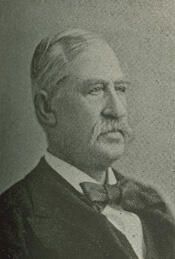
Here you will find contact information for Representative Jonathan Spencer Willis, including email address, phone number, and mailing address.
| Name | Jonathan Spencer Willis |
| Position | Representative |
| State | Delaware |
| District | At-Large |
| Party | Republican |
| Status | Former Representative |
| Term Start | December 2, 1895 |
| Term End | March 3, 1897 |
| Terms Served | 1 |
| Born | April 5, 1830 |
| Gender | Male |
| Bioguide ID | W000562 |
About Representative Jonathan Spencer Willis
Jonathan Spencer Willis (April 5, 1830 – November 24, 1903) was an American politician and clergyman from Milford in Kent County, Delaware, who served as a Republican Representative from Delaware in the United States Congress from 1895 to 1897. His single term in the U.S. House of Representatives placed him in the midst of a significant period in American political and economic history, during which he participated in the legislative process and represented the interests of his Delaware constituents.
Willis was born on April 5, 1830, in Oxford, Talbot County, Maryland. He attended the local district schools there and continued his studies under private tutors, receiving an education that prepared him for both teaching and the ministry. In his early adulthood he moved within the mid-Atlantic region, eventually establishing his long-term residence near Milford, Delaware, which became his home and political base.
Before entering politics, Willis devoted himself first to education and then to religious service. He taught school for seven years, gaining experience in local communities as an educator. He subsequently entered the ministry of the Methodist Episcopal Church, a major Protestant denomination in the region at the time. As a Methodist Episcopal minister, he served various pastoral charges in Maryland and Delaware, as well as in the larger urban centers of Philadelphia, Pennsylvania; New York City, New York; and Stamford, Connecticut. His ministerial career extended over many years and brought him into contact with a broad cross-section of congregants and civic leaders.
In 1884 Willis retired from the ministry and settled on a farm near Milford, Delaware. There he engaged in fruit growing and other agricultural pursuits, becoming part of the state’s important late nineteenth-century agricultural economy. His work as a farmer and fruit grower complemented his earlier experience as a teacher and clergyman and helped establish his standing among rural voters in Kent County and throughout Delaware.
Willis’s formal political career began as a member of the Republican Party, which was then consolidating its strength in Delaware. He was an unsuccessful Republican candidate for election to the Fifty-third Congress in the 1892 election, held on the first Tuesday after November 1, but he remained active in party affairs. In the 1894 election he again sought a seat in the U.S. House of Representatives and was elected as a Republican to the Fifty-fourth Congress. He served as Delaware’s at-large U.S. Representative from March 4, 1895, to March 3, 1897, the standard two-year term then prescribed for members of the House of Representatives. During this period he contributed to the legislative process in Washington, D.C., as a member of the House of Representatives, participating in debates and votes on issues confronting the nation in the post-Reconstruction and Gilded Age era.
In 1896 Willis stood for reelection as the Republican candidate to the Fifty-fifth Congress but was unsuccessful. Following his defeat, he returned to Delaware and resumed his full-time attention to agricultural pursuits on his farm near Milford, continuing his involvement in fruit growing and local affairs rather than seeking further national office. His life after Congress reflected a return to the private and community-oriented roles that had characterized his earlier years as a minister and farmer.
Willis married twice. His first marriage was to Annie Barratt Townsend (1843–1885), with whom he had one daughter, Elizabeth Townsend Willis (1864–1934). After Annie’s death, he married Edith Gillespie (1855–1914), and they had one son, Jonathan Spencer Willis Jr. (1892–1957). These family connections linked him to local Delaware and Maryland communities, including the Barratt family, long associated with Methodism in the region.
Jonathan Spencer Willis died in Milford, Delaware, on November 24, 1903. He was buried in Barratt’s Chapel Cemetery near Frederica, Delaware, a site of historic importance to the Methodist Episcopal Church. His career as educator, minister, farmer, and U.S. Representative from Delaware left a record of service that spanned religious, agricultural, and political life in the mid-Atlantic states during the nineteenth century.