Senator Joseph Hurst Ball
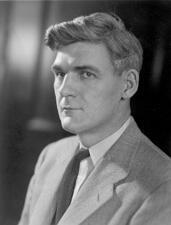
Here you will find contact information for Senator Joseph Hurst Ball, including email address, phone number, and mailing address.
| Name | Joseph Hurst Ball |
| Position | Senator |
| State | Minnesota |
| Party | Republican |
| Status | Former Representative |
| Term Start | October 14, 1940 |
| Term End | January 3, 1949 |
| Terms Served | 2 |
| Born | November 3, 1905 |
| Gender | Male |
| Bioguide ID | B000099 |
About Senator Joseph Hurst Ball
Joseph Hurst Ball (November 3, 1905 – December 18, 1993) was an American journalist, politician, and businessman who served as a Republican senator from Minnesota from 1940 to 1949. A conservative in domestic policy and a leading foe of labor unions, he helped draft the Taft–Hartley Act of 1947. He was best known for his internationalism and his early and forceful support for a postwar world organization that became the United Nations, even as he later opposed the Marshall Plan. Ball’s service in Congress, spanning two terms from 1940 to 1949, occurred during a significant period in American history, and he played an active role in the legislative process while representing the interests of his Minnesota constituents.
Ball was born in Crookston, Minnesota, on November 3, 1905, and graduated from high school in 1922. He financed his education at Antioch College by planting corn on borrowed land and by working as a telephone linesman, construction worker, and factory employee during his two years there. In 1925, he transferred first to Eau Claire Normal and then to the University of Minnesota, but he never completed a degree. On April 28, 1928, he married Elisabeth Josephine Robbins; the couple had two daughters and a son. These early years, marked by financial self-reliance and varied employment, shaped Ball’s outlook and prepared him for a career in journalism and politics.
In 1927, Ball secured a reporting job at the Minneapolis Journal. After selling a story to a pulp magazine for $50, he briefly left newspaper work to become a freelance writer, spending about a year writing paperback fiction. He then returned to journalism with the St. Paul Pioneer Press, where his career advanced rapidly. By 1934 he had become the paper’s state political reporter and developed a close friendship with assistant county attorney Harold Stassen, a rising Republican who would soon be elected governor of Minnesota. As a columnist for the Pioneer Press, Ball was sharply critical of President Franklin D. Roosevelt and the Democratic majority in Congress on domestic issues, yet he opposed isolationism in foreign policy. His columns reflected a blend of conservative economic views and strong internationalist convictions that would later define his Senate career.
Ball’s entry into the United States Senate came under dramatic circumstances. When Senator Ernest Lundeen, an isolationist, was killed in a plane crash in 1940, Governor Harold Stassen appointed Ball to fill the remaining two years of Lundeen’s term. Sworn in on October 14, 1940, Ball, at age thirty-five, was one of the youngest individuals ever to serve in the Senate and the first senator required to register for conscription under the Selective Training and Service Act. In his maiden speech on the Senate floor, he stunned many isolationist Republicans by calling for the United States to aid Britain as “a barrier between us and whatever designs Hitler and his allies may have on this continent.” Though he opposed the economic liberalism of the New Deal, he supported Roosevelt’s foreign policy and backed the Lend–Lease program on March 8, 1941, despite receiving overwhelmingly negative letters from his constituents. Over time, public sentiment shifted, a change memorably captured by the Fairmont Daily Sentinel, which initially greeted his appointment with the headline “Joe Ball for U.S. Senator! Good God!” and, upon his later election, reversed itself with “Joe Ball for U.S. Senator! Thank God!”
In the 1942 election, Ball was elected to the Senate in his own right, receiving 47 percent of the vote against Farmer–Labor, Independent, and Democratic opposition. Because his 1940 appointment had been structured to expire on the date of the next senatorial election rather than at the end of Lundeen’s original term, Ball technically ceased to be a senator on the day he won his six-year term. He then took office again as a freshman senator on January 3, 1943, and served until January 3, 1949. During this period he emerged as a key figure in shaping postwar international institutions. In 1943, he was one of four Senate sponsors of the bill to establish what would become the United Nations, reflecting his strong belief in collective security and international cooperation. At the same time, he was a staunch conservative on domestic matters, a prominent critic of organized labor, and a principal architect of the Taft–Hartley Act of 1947, which significantly restricted the power of labor unions. Despite his internationalist leanings, after 1945 he opposed the Marshall Plan, breaking with many other foreign-policy internationalists who supported large-scale economic aid to rebuild Europe.
Ball’s independence was also evident in presidential politics. In the 1944 U.S. presidential election, he refused to support the Republican nominee, New York Governor Thomas E. Dewey, criticizing Dewey for maintaining such an ambiguous stance on foreign policy that both isolationists and internationalists “could find comfort and support in what he said.” Instead, Ball crossed party lines to endorse President Franklin D. Roosevelt for a fourth term, arguing that Roosevelt’s foreign policy leadership was essential during wartime. His endorsement, which may have been critical to Roosevelt’s victory in Minnesota, drew praise from Democratic Senator Carl Hatch of New Mexico, who declared that Ball had “placed his country above his party.” In 1948, however, Ball’s own political fortunes waned. Running for reelection, he was soundly defeated by Minneapolis Mayor Hubert H. Humphrey, a 37-year-old liberal Democrat and outspoken civil rights advocate, bringing Ball’s Senate career to a close at the start of 1949.
After leaving the Senate, Ball remained active in public affairs and continued to demonstrate an independent streak in the early Cold War climate. During the 1950s, he publicly defended several individuals whom Senator Joseph R. McCarthy accused of having Communist sympathies, positioning himself against the excesses of McCarthyism. Throughout his Senate tenure he had never stopped writing his column for the St. Paul Pioneer Press, and after his defeat he returned fully to journalism, continuing to comment on American foreign policy in a newsletter. He also pursued a business career, working as an executive in the shipping industry until his retirement in 1962. His personal papers, documenting his legislative work and public commentary, are preserved for research use at the Minnesota Historical Society.
In retirement, Ball settled on a farm near Front Royal, Virginia, where he raised Black Angus cattle and lived a relatively private life while maintaining his interest in national and international affairs. His wife, Elisabeth, died in May 1990, and their son Peter died in August 1990. Joseph Hurst Ball died three years later, on December 18, 1993, at the Bethesda Rehabilitation and Nursing Center in Chevy Chase, Maryland, after suffering a stroke. He was 88 years old and was buried at Prospect Hill Cemetery in Front Royal, Virginia.