Senator Joseph Clay Stiles Blackburn
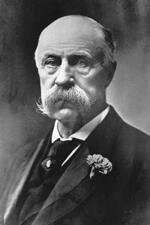
Here you will find contact information for Senator Joseph Clay Stiles Blackburn, including email address, phone number, and mailing address.
| Name | Joseph Clay Stiles Blackburn |
| Position | Senator |
| State | Kentucky |
| Party | Democratic |
| Status | Former Representative |
| Term Start | December 6, 1875 |
| Term End | March 3, 1907 |
| Terms Served | 8 |
| Born | October 1, 1838 |
| Gender | Male |
| Bioguide ID | B000508 |
About Senator Joseph Clay Stiles Blackburn
Joseph Clay Stiles Blackburn (October 1, 1838 – September 12, 1918) was an American politician and lawyer who served as a Democratic U.S. Representative and Senator from Kentucky and later as Governor of the Panama Canal Zone. Over a long public career, he became known as a skilled and spirited orator, a prominent trial lawyer adept at swaying juries, and a significant Democratic figure in the post–Civil War era. A member of the Democratic Party, he contributed to the legislative process during eight terms in the United States Congress, with his service in Congress occurring during a significant period in American history.
Blackburn was born on October 1, 1838, near Spring Station in Woodford County, Kentucky. He was a member of a politically prominent family and the younger brother of Luke P. Blackburn, who later served as governor of Kentucky. He attended Sayres Institute in Frankfort, Kentucky, and then enrolled at Centre College in Danville, from which he graduated in 1857. After college he studied law in Lexington, Kentucky, and was admitted to the bar in 1858. He initially practiced law in Chicago, Illinois, but in 1860 he returned to Woodford County, Kentucky, where he resumed legal work and soon entered military service at the outbreak of the Civil War.
With the onset of the Civil War, Blackburn entered the Confederate Army in 1861 as a private. He served as a staff officer during the conflict, and by the end of the war he had attained the rank of lieutenant colonel. After the war he did not immediately return to Kentucky; instead, he settled in Desha County, Arkansas, where he engaged in both law practice and planting. He remained there until 1868, when he returned to Kentucky and opened law offices in Versailles, resuming his legal career in his home state and building the reputation as a forceful advocate and trial lawyer that would later underpin his political rise.
Blackburn’s formal political career began in the Kentucky House of Representatives, where he served from 1871 to 1875. His work in the state legislature helped establish him as a leading Democrat in Kentucky during the Reconstruction era. In 1874 he was elected as a Democrat to the Forty-fourth Congress and was subsequently reelected to the four succeeding Congresses, serving as a U.S. Representative from March 4, 1875, to March 3, 1885. During his decade in the House of Representatives, he chaired the Committee on the District of Columbia in the Forty-fifth Congress and the Committee on Expenditures in the Department of War in both the Forty-fifth and Forty-sixth Congresses. As a member of the House, he participated actively in the democratic process and represented the interests of his Kentucky constituents at a time of national political realignment and economic change.
Blackburn advanced to the United States Senate after winning election in 1884. He was elected as a Senator from Kentucky in the United States Congress and was reelected in 1890, serving his first Senate tenure from March 4, 1885, to March 3, 1897. During this period he chaired the Senate Committee on Rules in the Fifty-third Congress, a position that gave him influence over the procedures and organization of the Senate. Loosely associated with the free-silver wing of the Democratic Party, he became well known nationally as debates over monetary policy and economic reform intensified in the 1890s. His prominence was such that his name was placed in nomination for the presidency in 1896, though he did not secure the nomination. He failed to be reelected to the Senate in 1896, temporarily interrupting his service in that body.
Blackburn returned to the Senate after winning election again in 1900. In this second Senate tenure he served from March 4, 1901, to March 3, 1907. Over the course of his combined House and Senate service, he held office in Congress from 1875 to 1907, encompassing eight terms and more than three decades of legislative activity. As a Senator, he continued to advocate Democratic positions and to represent Kentucky’s interests during a period marked by industrial expansion, the Spanish–American War, and the early stirrings of the Progressive Era. He sought reelection in 1906 but was unsuccessful, bringing his long congressional career to a close at the end of his term in 1907.
In recognition of his stature, Blackburn’s name was commemorated geographically when U.S. Army Lieutenant Henry T. Allen named a major Alaskan peak in his honor in 1885. Mount Blackburn, so named for Joseph Clay Stiles Blackburn, is the highest peak in the Wrangell Mountains of Alaska and the fifth-highest peak in the United States. This honor reflected Blackburn’s national prominence during his years in federal office.
After leaving the Senate, Blackburn was appointed Governor of the Panama Canal Zone by President Theodore Roosevelt on April 1, 1907. In this role he oversaw civil administration in the Canal Zone during a crucial phase of the canal’s construction, linking his career to one of the most significant engineering and strategic projects of the early twentieth century. He later resigned from this position and returned to his estate in Woodford County, Kentucky, withdrawing from active political life while remaining a respected elder statesman within his party and state.
Joseph Clay Stiles Blackburn died on September 12, 1918, in Washington, D.C. He was interred in the Frankfort Cemetery in Frankfort, Kentucky, a resting place for many of the state’s leading political figures. His long career as a lawyer, legislator, senator, and territorial governor left a lasting imprint on Kentucky and on the national Democratic Party during a transformative era in American history.