Senator Joseph Melville Broughton
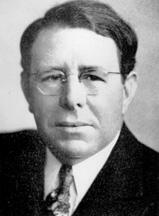
Here you will find contact information for Senator Joseph Melville Broughton, including email address, phone number, and mailing address.
| Name | Joseph Melville Broughton |
| Position | Senator |
| State | North Carolina |
| Party | Democratic |
| Status | Former Representative |
| Term Start | December 31, 1948 |
| Term End | March 6, 1949 |
| Terms Served | 2 |
| Born | November 17, 1888 |
| Gender | Male |
| Bioguide ID | B000894 |
About Senator Joseph Melville Broughton
Joseph Melville Broughton Jr. (November 17, 1888 – March 6, 1949) was an American lawyer and Democratic politician who served as the 60th governor of North Carolina from 1941 to 1945 and later as a United States senator from North Carolina from late 1948 until his death in office in 1949. Over the course of his career he became identified with progressive reforms in education and social policy while remaining a defender of racial segregation, and he played a prominent role in state and national Democratic politics during the New Deal and World War II eras.
Broughton was born on November 17, 1888, in Raleigh, North Carolina, the son of Joseph Melville Broughton and Sallie Harris. He came from a family active in public and religious life; he was the nephew of Needham B. Broughton and a first cousin of state librarian Carrie Lougee Broughton, as well as a first cousin of Len G. Broughton, a medical doctor and Baptist minister. Raised in the state capital, he was educated in local schools before entering Wake Forest College. At Wake Forest he distinguished himself both academically and athletically, playing football for the college and graduating in 1910. He subsequently attended Harvard Law School, receiving advanced legal training that prepared him for a career in law and public service.
Before fully entering the legal profession, Broughton worked as a school principal and as a journalist, experiences that helped shape his interest in public education and civic affairs. After his admission to the bar, he established himself as an attorney in North Carolina and became increasingly involved in Democratic Party politics. His first major elective office came with his service in the North Carolina Senate from 1927 to 1929, where he began to build a reputation as a capable legislator and advocate of reform. During these years he also developed connections within the state’s political leadership that would later support his rise to higher office.
In 1916, Broughton married Alice Willson. The couple had four children and made their home in Raleigh. They lived in the Jolly-Broughton House, a Georgian Revival mansion in Raleigh’s Hayes Barton Historic District, both before and after his tenure in the North Carolina Executive Mansion. Active in civic and religious circles, Broughton was a member of Civitan International and maintained close ties to Baptist institutions and community organizations, reinforcing his image as a representative of the state’s professional and religious middle class.
Broughton was elected governor of North Carolina in 1940 and served one term from 1941 to 1945, becoming the state’s 60th governor. His administration coincided with World War II and the later years of the New Deal, and he was widely identified with progressive politics, particularly in his support for the social justice and economic legislation of President Franklin D. Roosevelt’s administration. One of his most significant legacies as governor was the extension of the public school term in North Carolina from six to nine months, a major step in modernizing and standardizing the state’s educational system. He also supported measures to improve public services and infrastructure and to expand opportunities for both urban and rural residents.
On matters of race, Broughton was described by the North Carolina Department of Natural and Cultural Resources as a typical white moderate of his time. He advocated certain improvements in the lives of African Americans, including efforts to equalize the salaries of Black and white teachers and to improve housing conditions for Black citizens. In a notable episode in August 1941, he deployed the North Carolina National Guard to Roxboro, North Carolina, to protect Cy Winstead, a Black man accused of raping a white woman, after Winstead was nearly lynched. Broughton ordered an investigation of the lynch mob, leading to charges against ten white men. On April 24, 1942, five of them—Coy Harris, A. P. Spriggs, P. I. Holt, Johnny Holt, and Willie Aiken—were found guilty of unlawful assembly for an unlawful purpose, a misdemeanor punishable by up to two years in prison, though they were acquitted of the more serious charge of inciting to riot. Harris and Spriggs were each sentenced to 18 months in the county jail, while the other three received 12-month sentences. Public opinion, largely sympathetic to the mob, was shocked by the verdict, and in June 1942 some 2,000 people petitioned for their parole or pardon. Harris, Spriggs, P. L. Holt, and Aiken were paroled on July 23, 1942; Johnny Holt, initially denied parole because he was a suspect in a California robbery, was paroled sometime before 1943, and all six men were discharged from parole in September 1943. Winstead later pleaded guilty to assault with intent to commit rape and received a sentence of two and a half to five years in prison. In February 1943, the Person County chapter of the NAACP petitioned for his parole, expressing doubt about his guilt, but Winstead declined to apply, objecting to the strict conditions.
Despite his occasional interventions against mob violence and his support for incremental improvements for African Americans, Broughton firmly resisted challenges to segregation. In 1942, in the context of World War II and rising Black expectations for civil rights, he warned African Americans not to use the war as leverage for domestic demands, stating that “Negroes are ill-advised if they take the position they are for victory in this war if something is to be done for them,” and urging them to devote their full energy to the war effort. In 1943 he wrote, “We believe in a policy of purity and high standard as to both races and we recognize the principle that race distinction does not imply race discrimination,” and he rejected criticism from the NAACP, insisting that racism did not affect North Carolina’s judicial system. His stance reflected the complex and often contradictory posture of Southern moderates who combined limited reforms with a defense of the segregated social order. Nationally, Broughton’s prominence grew during his governorship; at the 1944 Democratic National Convention he was among twelve individuals nominated for consideration as President Roosevelt’s running mate in the 1944 presidential election.
After leaving the governorship in 1945, Broughton returned to private law practice and remained an influential figure in North Carolina Democratic politics. In 1948 he sought election to the United States Senate. That year he defeated William B. Umstead, the appointed incumbent, in the Democratic primary, demonstrating his continued strength within the party. In the November 1948 general election, Broughton won both a special election to complete the unexpired Senate term and an election for a full term. According to existing accounts, he is recorded as having served as a senator from North Carolina from 1948 to 1949, and he took office in Washington on December 31, 1948. His service in Congress occurred during a significant period in American history, as the nation transitioned from World War II to the early Cold War, and as a member of the Senate he participated in the legislative process and represented the interests of his North Carolina constituents, though his time in office was too brief for him to leave a substantial legislative record.
Appearing to be in good health, Broughton suddenly collapsed from a heart attack and died in Washington, D.C., on March 6, 1949, approximately two months after taking his Senate seat. At the time of his death he was serving his first term in the United States Senate, and his passing placed him among the members of Congress who died in office between 1900 and 1949. North Carolina Governor W. Kerr Scott appointed Frank Porter Graham to fill the vacant Senate seat until the next election. Broughton’s body was returned to Raleigh, where he was interred at Montlawn Memorial Park. In the years following his death, the State Hospital at Morganton for psychiatric patients was renamed Broughton Hospital in 1959 in his memory, and Broughton Hall at North Carolina State University was also named in his honor, reflecting the enduring recognition of his contributions to the state’s public life.