Senator Joseph Ralph Burton
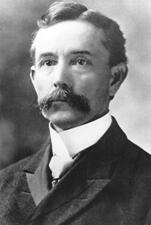
Here you will find contact information for Senator Joseph Ralph Burton, including email address, phone number, and mailing address.
| Name | Joseph Ralph Burton |
| Position | Senator |
| State | Kansas |
| Party | Republican |
| Status | Former Representative |
| Term Start | December 2, 1901 |
| Term End | March 3, 1907 |
| Terms Served | 1 |
| Born | November 16, 1852 |
| Gender | Male |
| Bioguide ID | B001154 |
About Senator Joseph Ralph Burton
Joseph Ralph Burton (November 16, 1852 – February 27, 1923) was an American lawyer, newspaperman, and Republican politician who represented Kansas in the United States Senate from 1901 to 1907. A prominent figure in Kansas Republican politics in the late nineteenth and early twentieth centuries, he was the first United States Senator to be convicted of a crime. His single term in the Senate coincided with a significant period in American political and economic history, and his career became a landmark case in the federal government’s efforts to regulate corruption and conflicts of interest in public office.
Burton was born and reared on his father’s farm near Mitchell, Lawrence County, Indiana. His father, Allen C. Burton, was of English ancestry; the family line traced its American origins to forebears who left England during the time of Oliver Cromwell in the 1650s and settled near Richmond, Virginia. Burton’s great-grandfather, John P. Burton, moved to North Carolina during the Revolutionary War and in 1820 relocated to Indiana, where he established the Indiana branch of the family. Burton’s mother, Elizabeth Holmes, was of Scottish-German descent. He attended local district schools and the academy at Mitchell, receiving a basic education typical of rural Midwestern communities of the era.
As a youth, Burton briefly pursued a military education. At the age of sixteen he received an appointment as a cadet to the United States Naval Academy at Annapolis, but he failed to pass the physical examination and was unable to enroll. He then turned to teaching school for a time before continuing his education in Indiana. He spent three years at Franklin College in Franklin, Indiana, and one year at DePauw University in Greencastle, Indiana, laying the intellectual foundation for his later legal and political career, although he did not complete a formal college degree.
Burton began his legal training in 1874, reading law in the Indianapolis office of the firm Gordon, Brown & Lamb. He was admitted to the bar in 1875. In the spring of that year he married Mrs. Carrie (Mitchell) Webster of Princeton, Indiana. His political involvement commenced early; in 1876 he was nominated by the Republican Party as a presidential elector and made numerous campaign speeches on behalf of the ticket. In 1878 he moved west to Abilene, Kansas, where he formed a law partnership with Judge John H. Mahan and quickly established himself as a capable attorney and rising Republican figure in his adopted state.
Burton’s public career in Kansas began in the state legislature. He was elected to the Kansas House of Representatives in 1882, re-elected in 1884, and again in 1888, serving several terms during a period of rapid growth and political realignment in the state. His prominence in Republican circles grew steadily, and in 1893 he was appointed a member of the World’s Fair Columbian Commission at Chicago, representing Kansas at the exposition. In 1895 he came within one vote of securing the Republican nomination for United States Senator from Kansas, an early indication of his statewide influence and ambition. Although he narrowly missed that opportunity, he remained active in party affairs and continued to practice law.
In January 1901 Burton was elected by the Kansas legislature to the United States Senate, and he commenced his term on March 4, 1901. A member of the Republican Party, he served during the Fifty-seventh and Fifty-eighth Congresses and into the Fifty-ninth Congress, representing the interests of his Kansas constituents at a time when issues such as economic regulation, conservation, and federal oversight of business practices were increasingly prominent. While in the Senate he was chairman of the Committee on Forest Reservations and Game Protection during the Fifty-seventh and Fifty-eighth Congresses, participating in early federal efforts to manage and conserve natural resources. His service in Congress, from 1901 until his resignation in 1906, placed him at the center of national legislative debates in the early Progressive Era.
Burton’s Senate career was overshadowed and ultimately destroyed by a federal corruption case arising from his private legal work while in office. On January 23, 1904, he was indicted by a federal grand jury in St. Louis, Missouri, on charges that he had accepted $2,500 from the Rialto Grain and Securities Company, a speculative “get-rich-quick” concern, in return for representing the company before the Post Office Department. He was alleged to have agreed to use his influence to prevent the issuance of a fraud order that would have barred Rialto from using the United States mails. Tried before Judge Elmer B. Adams in the U.S. District Court for the Eastern District of Missouri, Burton was found guilty in March 1904 and sentenced to pay a $2,500 fine and serve six months in jail at Ironton, Missouri, becoming the first sitting United States Senator to be convicted of a crime.
Burton appealed the conviction to the United States Supreme Court, which in January 1905 reversed the district court’s judgment on the ground that venue in Missouri was improper because the payments to Burton had been made in Washington, D.C. The case was remanded for a new trial in the proper jurisdiction. A second trial was held in Washington before Judge Willis Van Devanter of the United States circuit court, who would later serve on the Supreme Court. In November 1905 Burton was again convicted and received the same sentence of a $2,500 fine and six months’ imprisonment. He appealed a second time to the Supreme Court, but this time the Court sustained the lower court’s decision. With his legal avenues exhausted and under the cloud of a final judgment, Burton resigned his Senate seat on June 4, 1906, ending his congressional service after a single term that had begun in 1901 and formally extended into 1907 but was cut short by his departure in 1906.
Following his resignation from the Senate, Burton returned to Abilene, Kansas, where he resumed the practice of law and engaged in the newspaper business. He lived out the remainder of his life largely outside the national political spotlight, working as both a lawyer and newspaperman. Joseph Ralph Burton died in Los Angeles, California, on February 27, 1923. His body was cremated, and his ashes were initially placed in the columbarium of the Los Angeles Crematory Association. In 1928 the ashes were removed and reinterred in the Burton family plot in Abilene Cemetery in Abilene, Kansas, closing the life of a once-prominent Kansas statesman whose career became a notable episode in the history of congressional ethics and federal political scandals.