Representative Joseph Wellington Byrns
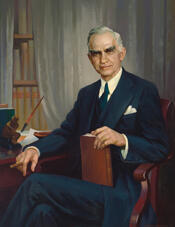
Here you will find contact information for Representative Joseph Wellington Byrns, including email address, phone number, and mailing address.
| Name | Joseph Wellington Byrns |
| Position | Representative |
| State | Tennessee |
| District | 5 |
| Party | Democratic |
| Status | Former Representative |
| Term Start | March 15, 1909 |
| Term End | January 3, 1937 |
| Terms Served | 14 |
| Born | July 20, 1869 |
| Gender | Male |
| Bioguide ID | B001217 |
About Representative Joseph Wellington Byrns
Joseph Wellington Byrns Sr. (July 20, 1869 – June 4, 1936) was an American politician who served as a 14-term Democratic Representative from Tennessee in the United States Congress from 1909 to 1937 and rose to become the 41st Speaker of the United States House of Representatives. Over the course of his long tenure, he contributed significantly to the legislative process and represented the interests of his Tennessee constituents during a transformative period in American history.
Byrns was born on July 20, 1869, in Cedar Hill, Robertson County, Tennessee, the son of James Henry Byrns and Mary Emily Jackson. He was named for his maternal uncle, Joseph William Green Jackson, who had died in the American Civil War. His great-grandfather, James Byrns, Esq., figures in the legend of the Bell Witch and is mentioned in Martin Van Buren Ingram’s Authenticated History of The Bell Witch. In 1885 the Byrns family moved to Nashville, Tennessee, seeking greater educational opportunities for their children. Known familiarly as “Jo,” Byrns attended Fogg High School in Nashville, from which he graduated in 1887.
Following his secondary education, Byrns enrolled at Vanderbilt University in Nashville. There he distinguished himself academically, winning honors in English and history, and he was active in campus life, particularly in debating. He became a member of the Beta Theta Pi fraternity and pursued legal studies, graduating with a law degree in 1890. Shortly thereafter, he was admitted to the bar and began building a successful law practice in Nashville, laying the professional foundation for his later political career.
Byrns displayed a strong early interest in politics and quickly entered public life. He was elected to the Tennessee House of Representatives in 1894 and was reelected in 1896 and 1898, serving three consecutive terms. In 1900 he advanced to the Tennessee State Senate. In 1902 he sought the office of district attorney of Davidson County, Tennessee, but was defeated in what would prove to be his only unsuccessful political race in 18 efforts. Outside elective office, he was active in civic and fraternal organizations, including service as Worshipful Master of West Nashville Phoenix Lodge No. 131 of the Freemasons in 1906 and 1907, and he was also an active member of Civitan.
In 1908 Byrns secured the Democratic nomination for U.S. Representative from Tennessee and was elected in November of that year to the Sixty-first Congress, with his term beginning on March 4, 1909. He served in the House of Representatives for the rest of his life, ultimately completing 14 terms in office. As a member of the Democratic Party, Joseph Wellington Byrns participated in the democratic process during a significant period in American history, which encompassed the Progressive Era, World War I, the Roaring Twenties, the onset of the Great Depression, and the early New Deal. He became widely respected among his colleagues, and his influence grew steadily as his seniority increased.
Within the House, Byrns assumed a series of increasingly powerful leadership roles. He served as chairman of the Democratic Congressional Campaign Committee from 1928 to 1935, helping to coordinate his party’s electoral strategy during a period of shifting national politics. In 1931 he was appointed chairman of the influential House Appropriations Committee, where he played a central role in shaping federal spending. With the advent of the Franklin D. Roosevelt administration and the New Deal, Byrns’s stature continued to rise; in 1933 he became House Majority Leader, working closely with the administration on major legislative initiatives. In 1935 he was elected Speaker of the House, becoming the 41st person to hold that office and one of the key congressional figures of the early New Deal era.
Byrns’s congressional service, extending from 1909 to 1937, coincided with profound changes in the role of the federal government and in American society, and he was an active participant in the legislative responses to those changes. As Speaker and earlier as Majority Leader and Appropriations Committee chairman, he was deeply involved in managing the House’s agenda, guiding appropriations measures, and advancing Democratic Party priorities. His long record of electoral success and his leadership positions reflected both his political skill and the confidence placed in him by his colleagues and constituents.
On the evening of June 4, 1936, while still serving as Speaker of the House, Byrns suffered a serious heart attack at his home in Washington, D.C. He died before he could be taken to a hospital, thus becoming one of the members of the United States Congress who died in office in the first half of the twentieth century. His funeral, attended by President Franklin D. Roosevelt and other national dignitaries, was held in Nashville, Tennessee, and he was interred at Mount Olivet Cemetery in Nashville. His legacy endured in both public memory and family service: his son, Jo Byrns Jr., later served a single term in the House of Representatives, though he never achieved the popularity of his father. In his hometown of Cedar Hill, Tennessee, Jo Byrns High School and Jo Byrns Elementary School were named in his honor, commemorating his long service to the state and the nation.