Senator Joseph Maull Carey
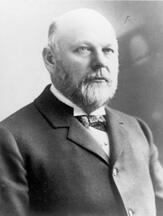
Here you will find contact information for Senator Joseph Maull Carey, including email address, phone number, and mailing address.
| Name | Joseph Maull Carey |
| Position | Senator |
| State | Wyoming |
| Party | Republican |
| Status | Former Representative |
| Term Start | December 7, 1885 |
| Term End | March 3, 1895 |
| Terms Served | 4 |
| Born | January 19, 1845 |
| Gender | Male |
| Bioguide ID | C000145 |
About Senator Joseph Maull Carey
Joseph Maull Carey (January 19, 1845 – February 5, 1924) was an American lawyer, rancher, judge, and politician who played a central role in the political development of Wyoming at the local, territorial, state, and federal levels. A member of the Republican Party for most of his career, he later aligned with progressive and Democratic forces and served as Wyoming’s delegate to the United States House of Representatives, as a United States Senator from Wyoming from 1885 to 1895, and as Governor of Wyoming from 1911 to 1915. He was active in the legislative process during four terms in Congress and was instrumental in securing Wyoming’s admission to the Union.
Carey was born on January 19, 1845, in Milton, Delaware, to Robert Hood Carey and Susan Pitt Davis. He attended the Fort Edward Collegiate Institute in New York, remaining there until his sophomore year in 1865. Deciding to pursue a legal career, he studied law in the offices of B. F. Temple, W. L. Dennis, and Henry Flanders, and then enrolled at the University of Pennsylvania, from which he graduated with a bachelor of laws degree in 1867. On September 27, 1877, he married Louisa David; the couple later had two children. In addition to his legal pursuits, Carey would become a rancher and land developer, interests that shaped his later work in irrigation and agricultural development in Wyoming.
In the 1860s, Carey practiced law in the eastern United States and became involved in Republican politics in Pennsylvania and New Jersey. He supported Governor John W. Geary in the Pennsylvania gubernatorial elections of 1866 and 1869, giving speeches on Geary’s behalf, and cast his first vote in 1866. His political reputation grew to the point that the chairman of the Republican Party of New Jersey invited him to speak in multiple towns across that state. On April 3, 1869, President Ulysses S. Grant nominated Carey as the first United States attorney for the newly organized Wyoming Territory, and Carey arrived there on May 8, 1869. On December 14, 1871, Grant nominated him as an associate justice of the Wyoming Territorial Supreme Court; he was confirmed by the United States Senate on January 18, 1872, and served on the court until 1876. During this period he also represented the Wyoming Territory at the second session of the United States Centennial Commission, serving on the Committee on Nomination of Secretaries of Departments and abstaining when the commission voted on whether the Centennial Exposition should remain open on Sundays. In 1876 he was selected as Wyoming Territory’s member of the Republican National Committee, serving as its national committeeman from 1876 until 1897.
Carey’s prominence in territorial affairs extended to elective office and business development. On July 30, 1874, the Wyoming Republican Party unanimously nominated him at its territorial convention as the Republican candidate for delegate to the United States House of Representatives from the at-large congressional district, but he was narrowly defeated by the incumbent Democratic delegate, William Randolph Steele. In 1880, while he was out of state, Carey was elected as the 14th mayor of Cheyenne, Wyoming, running on a platform emphasizing public works improvements. He was reelected in 1881 and again, without opposition, in 1882. As mayor, he oversaw the completion of Cheyenne’s water and sewage systems, the construction of an opera house, and the organization of the Stock Growers National Bank, which selected him as its first president. In 1883, the Wyoming Development Company was founded to bring irrigation water to the arid Wheatland Flats. Carey was chosen to lead the organization in 1885 and directed the construction of a reservoir on the Laramie River, from which water was carried through canals and ditches to irrigate approximately 50,000 acres of land, transforming the region into habitable and productive agricultural land.
Carey’s national political career began with his election as Wyoming’s territorial delegate to Congress. On October 22, 1884, after Francis E. Warren declined the nomination, Carey received the Republican nomination for the at-large congressional district and defeated Democratic nominee William H. Holliday in the general election. He was reelected in 1886, when the Wyoming Democratic Party chose not to nominate an opponent and he received nearly ninety percent of the popular vote, the remainder going to various Democratic write-in candidates. On October 8, 1888, he again secured the Republican nomination and was reelected over Democratic nominee Caleb P. Organ. During his tenure as delegate, Carey worked vigorously for Wyoming’s advancement, delivering a speech at the dedication of the Wyoming State Capitol on May 18, 1887, and advocating for local control of territorial offices. When Territorial Governor William Hale died, Carey urged President Chester A. Arthur to appoint Francis E. Warren, a Wyoming resident, as governor rather than a nonresident, and Warren was duly nominated; thereafter, all territorial governors until statehood were Wyoming residents. President Benjamin Harrison later offered Carey an important territorial appointment, which Carey declined in order to concentrate on achieving statehood for Wyoming.
Carey’s most significant congressional achievement as delegate was his leadership in the movement to admit Wyoming as a state. In 1889 he introduced a proposal in Congress to admit Wyoming, but no action was taken. Nevertheless, Governor Warren proceeded to call an election for delegates to a constitutional convention, which drafted a state constitution. On March 26, 1890, Carey introduced statehood legislation in the House of Representatives. The bill passed the House by a vote of 139 to 127 and the Senate by a vote of 29 to 18, and President Benjamin Harrison signed it into law on July 10, 1890, making Wyoming the forty-fourth state. Although Wyoming’s population was under 60,000 at the time, Carey argued that population should not be a barrier, noting that several other states had been admitted with smaller populations. Following statehood, the first Wyoming state legislature convened at Governor Warren’s call and, on November 12, 1890, elected the state’s first United States senators. Carey defeated George W. Baxter for one of the seats, while Warren defeated M. C. Brown, John McCormick, H. R. Mann, and Henry A. Coffeen for the other. As a Republican United States Senator from Wyoming, Carey served from 1885 to 1895, participating in the legislative process during four terms in Congress and representing the interests of his constituents during a significant period in American history. In 1895, seeking reelection, he was opposed by advocates of the free silver movement; the state legislature unanimously chose Francis E. Warren for the Senate seat, in part because of Carey’s opposition to free silver.
After leaving the Senate, Carey remained an influential public figure and continued to engage in national and regional issues. In 1894 he was named honorary chancellor of Union College and received an honorary LL.D. degree. During the 1896 presidential election he predicted that Republican candidate William McKinley would narrowly defeat Democrat William Jennings Bryan. In 1897, during a constitutional convention in Delaware, a letter from Carey supporting women’s suffrage was read on February 16, reflecting his advocacy for expanded political rights. On September 6 of that year, he and his brother Davis Carey were thrown from a carriage; Joseph Carey suffered cuts to his head, while his brother was uninjured. He also continued his ranching and irrigation interests, and in 1897 concluded his long service as Wyoming’s representative on the Republican National Committee.
In the early twentieth century, Carey reemerged as a major force in Wyoming state politics. In May 1910 he announced his candidacy for the Republican nomination for governor and, with former state treasurer William C. Irvine as his campaign manager, toured Wyoming in June. Disillusioned with the state’s Republican political machine, he declared on September 10 that he would run as an independent in the gubernatorial election in an effort to break its control. On September 21, 1910, he accepted the Democratic nomination for governor, thus formally leaving the Republican Party and running with Democratic support. In the general election he defeated Republican nominee William E. Mullen and Socialist nominee W. W. Paterson, carrying every county in the state. Taking office in January 1911, he served as Governor of Wyoming until 1915, retiring from elective politics after leaving the governorship in 1914. He remains the last mayor of Cheyenne to have been elected governor of Wyoming.
As governor, Carey aligned himself with progressive reform movements. On January 21, 1911, he joined nine senators, six governors, and thirteen representatives in the Republican Progressive League in signing a declaration of principles calling for progressive legislation. On January 29, 1912, he endorsed former President Theodore Roosevelt for the Republican presidential nomination over incumbent President William Howard Taft. On July 15, 1912, he issued a call for a Progressive state convention in Wyoming to select delegates to the national convention of Roosevelt’s Progressive Party. Despite having a Progressive-aligned governor, Wyoming gave its 1912 presidential vote to Democrat Woodrow Wilson, with Roosevelt placing third behind Taft. In the state’s at-large House race that year, Progressive candidate Charles E. Winter finished third behind Democratic nominee Thomas P. Fahey and incumbent Republican Representative Frank Wheeler Mondell. During a contentious struggle over the speakership of the Wyoming House of Representatives on January 20, 1913, Carey was asked to intervene to restore order but declined. Over the course of his gubernatorial term he exercised clemency extensively, pardoning sixty-three individuals and commuting the sentences of ninety-six others.
In his later years, Carey continued to participate in public affairs and to influence Wyoming politics through his family. On October 14, 1916, he endorsed President Woodrow Wilson for reelection against Republican nominee Charles Evans Hughes, and in 1917 he publicly supported national prohibition of alcohol. In 1918 his son, Robert D. Carey, was elected governor of Wyoming as a Republican, making Joseph M. Carey the only Wyoming governor to be the father of another governor of the state. In January 1922, Joseph and Robert Carey traveled together through the eastern United States. Joseph Carey suffered a stroke in January 1924 and died on February 5, 1924. Following his death, he was honored by the Casper Kiwanis Club alongside former President Woodrow Wilson, and on February 8, 1924, business across Wyoming was suspended while state officials, including Governor William B. Ross, delivered eulogies. On February 13, 1924, the Wyoming Supreme Court ordered resolutions by Hugo Donzelman, Thomas Hunter, and Anthony C. Campbell eulogizing Carey to be entered into the court record. In recognition of his contributions to ranching and the development of the American West, he was inducted into the National Cowboy Hall of Fame in 1959.