Senator Joseph Cilley
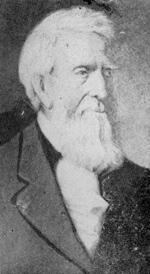
Here you will find contact information for Senator Joseph Cilley, including email address, phone number, and mailing address.
| Name | Joseph Cilley |
| Position | Senator |
| State | New Hampshire |
| Party | Liberty |
| Status | Former Representative |
| Term Start | January 1, 1846 |
| Term End | March 3, 1847 |
| Terms Served | 1 |
| Born | January 4, 1791 |
| Gender | Male |
| Bioguide ID | C000396 |
About Senator Joseph Cilley
Joseph Cilley was a United States Senator from New Hampshire who served one term in the United States Congress from 1845 to 1847. A member of the Liberty Party, he represented New Hampshire in the Senate during a significant period in American history and contributed to the legislative process while in office. He was part of a prominent New Hampshire family whose public service spanned generations; his grandfather, also named Joseph Cilley (1734–1799), was a soldier in the American Revolutionary War and later a New Hampshire state senator.
The elder Joseph Cilley, born in 1734, established the family’s early reputation for military and public service. He served as an officer during the Revolutionary War and gained distinction for his role in the Continental Army. Following the war, he continued his service to New Hampshire as a state senator, participating in the development of the new state government in the late eighteenth century. His career in both military and civil spheres laid the groundwork for the Cilley family’s continued involvement in public affairs.
Joseph Cilley, the U.S. senator, was born in 1791, twelve years before the death of his grandfather, and inherited this tradition of civic engagement. Growing up in New Hampshire, he was part of a community and a family deeply shaped by the legacy of the Revolution and the early years of the republic. The political and social environment of New England in the early nineteenth century, marked by debates over federal power, economic development, and the expansion of slavery, formed the backdrop to his early life and eventual political commitments.
As he entered public life, Joseph Cilley aligned himself with the Liberty Party, a political organization that emerged in the 1840s in opposition to the expansion of slavery. The Liberty Party sought to place antislavery principles at the center of national politics, and Cilley’s affiliation with it reflected his position within the broader reform currents of his time. His political career developed in an era when New Hampshire and other northern states were increasingly engaged in national debates over slavery, territorial expansion, and the balance of power between free and slave states.
Cilley’s service in the United States Senate began in 1845, when he took office as a Senator from New Hampshire. Serving until 1847, he completed one term in the Senate, during which he participated in the democratic process and represented the interests of his constituents. His tenure coincided with the administration of President James K. Polk and the onset of the Mexican–American War, a period in which questions about the extension of slavery into newly acquired territories dominated congressional deliberations. As a Liberty Party senator, Cilley’s presence in the chamber underscored the growing influence of antislavery sentiment in national politics, even as the major parties struggled to contain sectional tensions.
During his time in Congress, Joseph Cilley contributed to the legislative process as part of a small but symbolically important antislavery contingent. While the Liberty Party never commanded large numbers in the Senate, its members helped keep the issue of slavery and its expansion before the national legislature and the public. Cilley’s role as a Liberty Party senator from New Hampshire thus linked his state’s political life to the emerging national struggle over slavery that would intensify in the following decade.
Joseph Cilley lived a long life, spanning nearly the entire nineteenth century, and died in 1887. His career, together with that of his grandfather, illustrates the continuity of public service within a New Hampshire family over more than a hundred years, from the Revolutionary era through the turbulent antebellum period. The elder Joseph Cilley’s service as a soldier and state senator, and the younger Joseph Cilley’s tenure as a U.S. senator and Liberty Party member, together mark the Cilley name as one associated with both the founding generation and the reform movements that reshaped the United States in the decades before the Civil War.