Representative Joseph Jonathan Davis
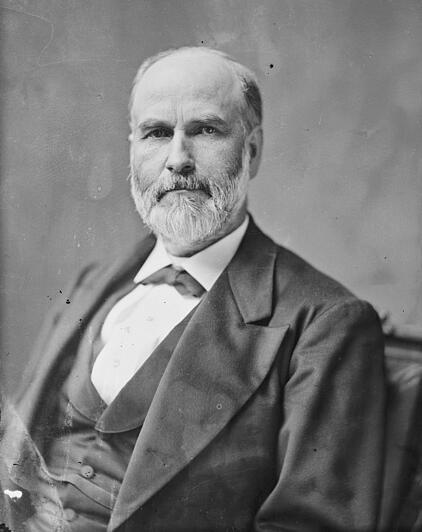
Here you will find contact information for Representative Joseph Jonathan Davis, including email address, phone number, and mailing address.
| Name | Joseph Jonathan Davis |
| Position | Representative |
| State | North Carolina |
| District | 4 |
| Party | Democratic |
| Status | Former Representative |
| Term Start | December 6, 1875 |
| Term End | March 3, 1881 |
| Terms Served | 3 |
| Born | April 13, 1828 |
| Gender | Male |
| Bioguide ID | D000123 |
About Representative Joseph Jonathan Davis
Joseph Jonathan Davis (April 13, 1828 – August 7, 1892) was an American lawyer, legislator, judge, and Democratic member of the United States House of Representatives who represented North Carolina’s 4th congressional district from 1875 to 1881. Over the course of three consecutive terms in Congress, he participated in the legislative process during a significant period in American history, representing the interests of his constituents during the post–Civil War and Reconstruction era.
Davis was born near the small town of Louisburg in Franklin County, North Carolina. He received his early education at Louisburg Academy before pursuing higher studies at Wake Forest College and the College of William & Mary in Virginia. Seeking professional training in the law, he enrolled in the law department of the University of North Carolina at Chapel Hill, from which he graduated in 1850. That same year he was admitted to the bar, marking the formal beginning of his legal career.
Following his admission to the bar, Davis commenced the practice of law in Oxford, North Carolina. After establishing himself professionally there, he later returned to his native Franklin County and continued his legal practice in Louisburg. His work as a lawyer during this antebellum period helped build the reputation and experience that would later support his entry into public office.
During the American Civil War, Davis served in the Confederate Army, reflecting the alignment of many North Carolinians of his generation. He held the rank of captain and commanded Company G of the 47th North Carolina Infantry Regiment. His military service placed him in the midst of the conflict that reshaped the political, social, and economic landscape of the South and the nation.
In the years following the war, Davis entered state politics. He served as a member of the North Carolina House of Representatives from 1868 to 1870, participating in the difficult work of governance and reconstruction in a Southern state readjusting to the postwar order. As a Democratic legislator, he was part of the political realignment that followed the end of the Confederacy and the re-establishment of civil government under new constitutional conditions.
Davis was elected as a Democrat to the United States House of Representatives in 1874, taking his seat in March 1875 as the representative of North Carolina’s 4th congressional district. He served three terms in the House, from 1875 to 1881, during which he contributed to the legislative process in the Forty-fourth, Forty-fifth, and Forty-sixth Congresses. His tenure coincided with the closing years of Reconstruction and the emergence of new national debates over economic policy, civil rights, and federal–state relations. Throughout this period, he represented the interests of his North Carolina constituents in the federal legislature.
After leaving Congress in 1881, Davis returned to North Carolina and resumed the practice of law in Louisburg. His legal and legislative experience led to further judicial responsibilities when he was appointed an associate justice of the North Carolina Supreme Court in 1887. The following year, in 1888, he was elected to that position, confirming his standing as a leading jurist in the state. He continued to serve on the state’s highest court until his death.
Joseph Jonathan Davis died in Louisburg, North Carolina, on August 7, 1892, at the age of 64. He was interred in Oaklawn Cemetery in Louisburg. His career encompassed service as a practicing attorney, state legislator, three-term member of the United States House of Representatives, and associate justice of the North Carolina Supreme Court, marking him as a significant figure in North Carolina’s legal and political history in the nineteenth century.