Representative Joseph Thomas Deal
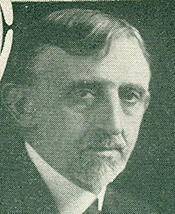
Here you will find contact information for Representative Joseph Thomas Deal, including email address, phone number, and mailing address.
| Name | Joseph Thomas Deal |
| Position | Representative |
| State | Virginia |
| District | 2 |
| Party | Democratic |
| Status | Former Representative |
| Term Start | April 11, 1921 |
| Term End | March 3, 1929 |
| Terms Served | 4 |
| Born | November 19, 1860 |
| Gender | Male |
| Bioguide ID | D000169 |
About Representative Joseph Thomas Deal
Joseph Thomas Deal (November 19, 1860 – March 7, 1942) was an American businessman and Democratic politician who served four terms as a U.S. Representative from Virginia from 1921 to 1929. His congressional service, spanning the Sixty-seventh through the Seventieth Congresses, took place during a significant period in American history in the years following World War I and during the early 1920s, when he participated in the legislative process and represented the interests of his Virginia constituents.
Deal was born near Surry, Surry County, Virginia, on November 19, 1860. He attended the public schools of the area, receiving his early education in the local school system. His upbringing in rural Virginia during the post–Civil War era shaped his familiarity with the economic and social conditions of the region he would later represent in public office.
After completing his early schooling, Deal pursued higher education at the Virginia Military Institute in Lexington, Virginia. He graduated from VMI in 1882, an institution known for its rigorous military and engineering curriculum. Soon after his graduation, in 1883, he engaged in civil engineering and lumber manufacturing in Surry County, Virginia, beginning a business career that would remain central to his professional life even as he entered politics.
In 1891, Deal moved from Surry County to Norfolk, Virginia, a growing urban and commercial center in the state. In Norfolk he expanded his business interests, particularly in the lumber industry, and became increasingly involved in local civic affairs. From 1905 to 1910 he served as chairman of the Improvement Board of Norfolk, a position that placed him at the forefront of municipal development and public works in the city. His rising prominence within the Democratic Party was reflected in his role as a delegate to the Democratic National Convention in 1908.
Deal’s formal political career in elective office began at the state level. He served as a member of the Virginia House of Delegates from 1910 to 1912, participating in the legislative affairs of the Commonwealth during a period of progressive-era reforms and economic change. He later advanced to the upper chamber of the state legislature, serving in the Senate of Virginia in 1919. These state legislative roles provided him with experience in lawmaking and party politics that would prove important when he sought national office.
In 1920, Deal was elected as a Democrat to the U.S. House of Representatives, defeating Republican Menalcus Lankford and Independent Colin F. Munro with 73.59 percent of the vote. He took his seat in the Sixty-seventh Congress on March 4, 1921. He was subsequently re-elected three times: in 1922 he defeated Republicans P. S. Stephenson and W. W. Foreman, winning 86.54 percent of the vote; in 1924 he was re-elected over Republican Menalcus Lankford with 65.75 percent of the vote; and in 1926 he secured another term by defeating Republican L. S. Parsons with 65.41 percent of the vote. Serving from March 4, 1921, to March 3, 1929, Deal contributed to the legislative process during four consecutive terms, aligning with the Democratic Party in the U.S. House of Representatives and participating in the democratic process on behalf of his Virginia district.
Deal’s congressional tenure came to an end following the 1928 election. That year he was an unsuccessful candidate for reelection to the Seventy-first Congress, losing his seat to Republican Menalcus Lankford. Remaining active in politics, he later sought higher office within the state. In 1933 he was an unsuccessful candidate for the Democratic nomination for Governor of Virginia, receiving 21.25 percent of the primary vote against Byrd Organization candidate George Campbell Peery, who prevailed in the contest.
After leaving Congress, Deal resumed his activities in the lumber business in Norfolk, returning to the private sector that had formed the foundation of his career before and during his time in public office. He continued to reside in Norfolk until his death there on March 7, 1942. Joseph Thomas Deal was interred in Forest Lawn Cemetery in Norfolk, Virginia, closing a life that combined business enterprise with decades of service in local, state, and national government.