Representative Joseph Eggleston
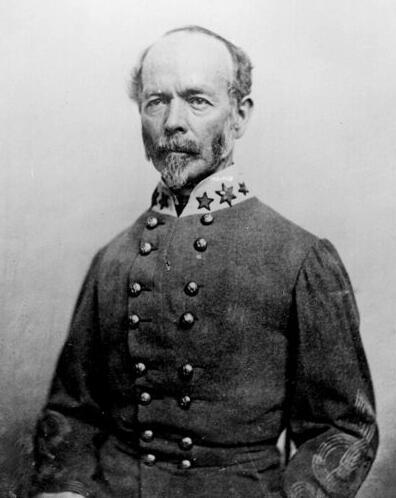
Here you will find contact information for Representative Joseph Eggleston, including email address, phone number, and mailing address.
| Name | Joseph Eggleston |
| Position | Representative |
| State | Virginia |
| District | 9 |
| Party | Republican |
| Status | Former Representative |
| Term Start | May 15, 1797 |
| Term End | March 3, 1801 |
| Terms Served | 2 |
| Born | November 24, 1754 |
| Gender | Male |
| Bioguide ID | E000091 |
About Representative Joseph Eggleston
Joseph Eggleston (November 24, 1754 – February 13, 1811) was an American farmer, soldier, and politician from Amelia County, Virginia, who represented Virginia in the United States Congress from 1798 until 1801. He was born in Middlesex County, Virginia, to Joseph Eggleston (1721–1792) and Judith Segar Eggleston (1729–1806). In 1759 his parents moved inland to Amelia County, where they established the family plantation and built the house known as Egglestetton. This estate would remain central to Eggleston’s life and identity, anchoring his later roles as planter, local official, and public servant. He was the uncle of William S. Archer, who would later serve as a United States Representative and Senator from Virginia.
Eggleston received his early education at home under private tutors, a common practice among the Virginia gentry of the colonial era. He later attended the College of William and Mary in Williamsburg, one of the principal institutions of higher learning in British North America. He graduated with honors in 1776, the year of American independence, completing his studies just as the Revolutionary War intensified. His education prepared him for leadership in both military and civil spheres and placed him within the social and political networks of Virginia’s planter elite.
In 1776, upon leaving college, Eggleston entered military service in the American Revolutionary War, joining the cavalry commanded by Henry “Light Horse Harry” Lee. When Lee organized his own irregular corps, known as Lee’s Legion, within the Continental Army in 1778, Eggleston became a captain in that unit. He served with Lee’s Legion throughout the war and gained particular distinction in the Southern Campaign. On March 15, 1781, at the Battle of Guilford Court House in North Carolina, he was cited for gallantry for his conduct in action. In June 1781 he again won praise during the siege of Augusta in Georgia, where his performance contributed to American success and earned him promotion to the rank of major. Later that year, in September 1781, Major Eggleston led an attack on the British advance units at the Battle of Eutaw Springs in South Carolina, helping to secure the initial American success in that engagement, although the overall outcome of the battle was indecisive despite British casualties being roughly twice those of the American forces.
Following the end of the Revolutionary War, Eggleston returned to civilian life at Egglestetton in Amelia County. On February 23, 1788, he married Sarah “Sally” Meade. The couple had three children: Joseph Everard (born 1790), Charles (born 1791), and William (born 1792). When his father, Joseph Eggleston Sr., died in 1792, he inherited the family seat along with 400 acres (1.6 km²) of land. Over the ensuing years he expanded his holdings through additional purchases, ultimately increasing the plantation to approximately 730 acres (3.0 km²). His first wife, Sally Eggleston, died in 1794. In 1798 he remarried, taking as his second wife his first cousin, Ann Cary Eggleston, the daughter of his uncle John Eggleston. They had two children together: Francis (born 1798) and Sarah Meade Eggleston (born 1802), the latter named in honor of his first wife. The main house at Egglestetton, located on what is now Egglestetton Road (Route 630) about four kilometers north of Amelia Court House, continued as the family residence and was later listed on the National Register of Historic Places in 1980, though it remains a private home.
Eggleston’s prominence as a landowner and veteran translated into a substantial political career in Virginia. He was elected multiple times to the Virginia House of Delegates as a representative for Amelia County. In total, he served thirteen years in the House of Delegates, holding office from 1785 to 1788 and again from 1791 to 1799. During these years he participated in the legislative life of the Commonwealth in the formative period following independence, when Virginia was adjusting its institutions to republican governance and grappling with issues of finance, law, and westward expansion. After his service in the lower house, he became a member of the Virginia State Senate, further solidifying his role in state politics.
Eggleston entered national office when U.S. Representative William B. Giles resigned his seat in the United States House of Representatives on October 2, 1798. At that time Eggleston was serving in the Virginia State Senate. In the special election held to fill the vacancy, he was chosen to complete the remainder of Giles’s term. He subsequently won the regular election for the succeeding term and served in the Sixth Congress. His tenure in the U.S. House of Representatives extended from December 3, 1798, to March 3, 1801, during the administrations of Presidents John Adams and the early election of Thomas Jefferson, a period marked by intense partisan conflict between Federalists and Democratic-Republicans over issues such as the Alien and Sedition Acts and the direction of the young federal government. Eggleston declined to be nominated for another term in 1800, thereby concluding his service in Congress at the close of the Sixth Congress.
After leaving Congress, Eggleston returned to his plantation in Amelia County and resumed his life as a farmer and local leader. He was appointed a justice of the peace for Amelia County, a position of considerable local authority in Virginia’s county-based system of governance. He held this office from his return from Congress until his death in 1811, overseeing local judicial and administrative matters and continuing to play a role in community affairs. Joseph Eggleston died at his home, Egglestetton, on February 13, 1811. He was buried in the churchyard of St. John’s Episcopal Church, also known as St. John’s of Grub Hill, in Amelia County; the cemetery is now referred to as Grub Hill Cemetery. His legacy endured not only through his descendants and his estate but also in the naming of Confederate General Joseph Eggleston Johnston, whose father had served under Eggleston’s command during the Revolutionary War.