Representative Joseph Rider Farrington
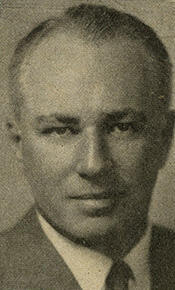
Here you will find contact information for Representative Joseph Rider Farrington, including email address, phone number, and mailing address.
| Name | Joseph Rider Farrington |
| Position | Representative |
| State | Hawaii |
| District | At-Large |
| Party | Republican |
| Status | Former Representative |
| Term Start | January 6, 1943 |
| Term End | January 3, 1955 |
| Terms Served | 6 |
| Born | October 15, 1897 |
| Gender | Male |
| Bioguide ID | F000034 |
About Representative Joseph Rider Farrington
Joseph Rider Farrington (October 15, 1897 – June 19, 1954) was an American newspaper editor and statesman who served in the United States Congress as delegate for the Territory of Hawaiʻi. A member of the Republican Party, he represented Hawaiʻi as a nonvoting delegate in the U.S. House of Representatives from January 3, 1943, until his death in 1954, contributing to the legislative process during six terms in office. His service in Congress occurred during a significant period in American history, spanning World War II and the early Cold War, during which he participated in the democratic process and represented the interests of his territorial constituents.
Farrington was born in Washington, D.C., to Wallace Rider Farrington, who would later become Territorial Governor of Hawaiʻi. While still an infant, he moved with his parents to Honolulu, Hawaiʻi, where his father began work as an editor for the Honolulu Advertiser and later the Honolulu Star-Bulletin. Growing up in this journalistic and political environment, Farrington attended Punahou School in Honolulu. After his graduation from Punahou, he left Hawaiʻi to pursue higher education at the University of Wisconsin.
In June 1918, during World War I, Farrington interrupted his studies to enlist in the United States Army. He was commissioned a second lieutenant of field artillery in September 1918 and served until his discharge in December 1918. Following his brief military service, he returned to the University of Wisconsin–Madison and completed his studies, graduating in 1919. This combination of Midwestern university training and military experience helped shape his later career in journalism and public life.
Upon obtaining his degree, Farrington began his professional career in journalism as a reporter on the staff of the Public Ledger in Philadelphia. He spent three years with the newspaper’s Washington bureau, gaining familiarity with national politics and the workings of the federal government. After this period on the mainland, he returned to Honolulu and entered the newspaper business there, following in his father’s footsteps. He joined the Honolulu Star-Bulletin as a reporter, rose through the editorial ranks, and eventually became editor of the paper. In 1939, he succeeded his father as president and general manager of the Honolulu Star-Bulletin, positions he held concurrently with his political career and retained until his death.
Farrington’s entry into public service began with a part-time political role. In 1933 he served as secretary to the Hawaiʻi Legislative Commission, a body concerned with territorial legislative matters and relations with the federal government. Building on this experience, he was elected in 1934 to the Hawaii Territorial Senate, where he served through 1942. During his tenure in the Territorial Senate, he developed a reputation as a prominent Republican voice in Hawaiʻi and a strong advocate for the territory’s interests, particularly in matters of governance, defense, and economic development.
On January 3, 1943, Farrington was sworn in as a Republican delegate to Congress from the Territory of Hawaiʻi. As a delegate, he did not possess a vote on the House floor but served on committees, introduced legislation, and spoke on behalf of Hawaiʻi’s residents. He was reelected repeatedly, serving six terms in the U.S. House of Representatives from 1943 to 1955. Throughout his congressional service, Farrington was a consistent supporter of Hawaiian statehood and helped advise and promote early postwar efforts for the admission of Hawaiʻi as a state. His work in Congress focused on securing greater political recognition for the territory, improving its defense infrastructure in the wake of World War II, and fostering economic and social development in the islands.
Farrington remained active in both journalism and politics until his death. While serving in office in Washington, D.C., he continued to oversee the Honolulu Star-Bulletin as its president and general manager, maintaining close ties to Hawaiʻi’s public discourse. He also appeared in contemporary media, including a filmed interview, “Longines Chronoscope with Delegate-to-Congress Joseph R. Farrington (June 13, 1952),” which is available for viewing at the Internet Archive and provides a contemporaneous record of his views and public persona.
Joseph Rider Farrington died in office in Washington, D.C., on June 19, 1954, of an apparent heart attack. His death placed him among the members of the United States Congress who died in office in the mid-twentieth century. He was buried in Oʻahu Cemetery in Nuʻuanu Valley in Honolulu, returning to the city where he had spent most of his life and career. Following his death, his wife, Elizabeth P. Farrington, was elected to replace him in Congress as Hawaiʻi’s delegate, continuing the family’s combined legacy in journalism, territorial politics, and the long campaign for Hawaiian statehood.