Senator Joseph Sherman Frelinghuysen
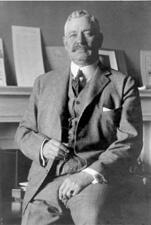
Here you will find contact information for Senator Joseph Sherman Frelinghuysen, including email address, phone number, and mailing address.
| Name | Joseph Sherman Frelinghuysen |
| Position | Senator |
| State | New Jersey |
| Party | Republican |
| Status | Former Representative |
| Term Start | April 2, 1917 |
| Term End | March 3, 1923 |
| Terms Served | 1 |
| Born | March 12, 1869 |
| Gender | Male |
| Bioguide ID | F000370 |
About Senator Joseph Sherman Frelinghuysen
Joseph Sherman Frelinghuysen Sr. (March 12, 1869 – February 8, 1948) was a Republican politician who represented New Jersey in the United States Senate from 1917 to 1923. His service in Congress occurred during a significant period in American history, encompassing the First World War and its aftermath, and he contributed to the legislative process during one term in office. He was New Jersey’s first United States senator to be elected by direct popular vote following the ratification of the Seventeenth Amendment in 1913.
Frelinghuysen was born in Raritan, Somerset County, New Jersey, on March 12, 1869, into a prominent New Jersey political family. He was the son of Frederick Frelinghuysen (1818–1891), a lawyer who had studied under Richard Stockton Field, and Victoria Bowen (1830–1914). His paternal grandparents were John Frederick Frelinghuysen (1776–1833), a lawyer and brigadier general in the War of 1812, and his second wife, Elizabeth Mercereau Van Vechten. His great‑grandparents were Frederick Theodore Frelinghuysen (1753–1804), a lawyer, soldier, and United States senator from New Jersey, and his first wife, Gertrude Schenck (1752/53–1794). This lineage placed him squarely within one of New Jersey’s historic political dynasties and helped shape his path into public life.
As a young man, Frelinghuysen served in the Spanish–American War, an experience that preceded and informed his later public service. After his military service, he entered the insurance business, establishing himself in that field before embarking on a political career. His work in insurance provided him with business experience and community standing that would prove useful as he moved into state and national politics.
Frelinghuysen’s formal political career began in New Jersey state government. He was elected to the New Jersey Senate in 1905 and quickly rose in influence, becoming president of that body in 1909. Over the following years he held several statewide offices, building a reputation within the Republican Party and among New Jersey voters. In the 1916 election he was chosen as a United States senator from New Jersey, taking office in 1917 as the state’s first senator elected directly by popular vote under the Seventeenth Amendment.
During his tenure in the United States Senate from 1917 to 1923, Frelinghuysen served at a time when the nation was engaged in World War I and then adjusting to peace. As a member of the Senate, he participated in the democratic process and represented the interests of his New Jersey constituents in debates over war, peace, and domestic policy. He was socially and politically well connected in Washington, frequently visiting the Chevy Chase Club and often golfing with fellow senators Warren G. Harding, Stephen B. Elkins, and Eugene Hale. His close association with Harding was reflected in a notable episode of his Senate years: on July 2, 1921, President Harding signed the Knox–Porter Resolution, formally ending America’s involvement in World War I, at Frelinghuysen’s estate in Raritan. Harding remained at the estate until at least July 4. Frelinghuysen also owned an 88‑foot houseboat, the Victoria, which Harding used for 12 days after winning the 1920 presidential election and before his inauguration in March 1921.
Frelinghuysen sought reelection in 1922 but was unsuccessful, bringing his Senate service to a close in March 1923 after a single term. Following his defeat, he returned to the insurance business, resuming the private‑sector career he had established before entering national politics. He remained active in Republican circles, and in 1938 he considered running again for one of New Jersey’s Senate seats. Ultimately he chose not to enter the race and instead supported another former senator and fellow Republican, W. Warren Barbour, who went on to win the seat and serve until his death in 1943.
In his personal life, Frelinghuysen married Emily Macy Brewster. The couple had three children: Victoria Frelinghuysen (1907–2002), who married John Grenville Bates Jr.; Emily Frelinghuysen, who married H. Edward Bilkey until his death in 1950 and later married Dr. Ross A. McFarland of the Harvard School of Public Health; and Joseph S. Frelinghuysen Jr. (1912–2005), who married Emily Lawrance (1911–2004), daughter of Charles Lawrance (1882–1950) and Emily Margaret Gordon Dix, and granddaughter of the Rev. Morgan Dix (1827–1908), rector of Trinity Parish in New York. In 1916, Swiss‑born American artist Adolfo Müller‑Ury painted a portrait of Frelinghuysen’s wife and son; this work is now held by the Newark Museum in New Jersey.
Joseph Sherman Frelinghuysen Sr. died on February 8, 1948, in Tucson, Arizona. He was interred at St. Bernard’s Cemetery in Bernardsville, New Jersey, returning in death to the state that had long been the center of his family’s political and personal life. A memorial plaque was later placed on the grounds of his former Raritan estate to commemorate the signing of the Knox–Porter Resolution there. Although the estate itself was eventually demolished and the area transformed by suburban development and commercial construction, the marker endures in a small patch of grass near a Burger King parking lot along Route 28, just north of the Somerville traffic circle, as a reminder of his role in a pivotal moment in American history.