Representative Joseph Andrew Gavagan
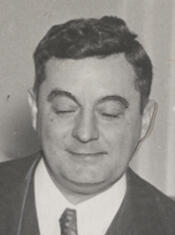
Here you will find contact information for Representative Joseph Andrew Gavagan, including email address, phone number, and mailing address.
| Name | Joseph Andrew Gavagan |
| Position | Representative |
| State | New York |
| District | 21 |
| Party | Democratic |
| Status | Former Representative |
| Term Start | April 15, 1929 |
| Term End | January 3, 1945 |
| Terms Served | 8 |
| Born | August 20, 1892 |
| Gender | Male |
| Bioguide ID | G000101 |
About Representative Joseph Andrew Gavagan
Joseph Andrew Gavagan (August 20, 1892 – October 18, 1968) was an American politician, lawyer, and World War I veteran who served as a Democratic representative from New York in the United States Congress during a critical period in American history. Over the course of his congressional career, he served eight terms in office and was a prominent advocate for civil rights legislation, particularly federal anti-lynching measures. His tenure in the House of Representatives extended from November 5, 1929, to December 30, 1943, and is often noted for his leadership on key committees and his efforts to strengthen the rule of law.
Gavagan was born in New York City on August 20, 1892. He grew up in the Hell’s Kitchen neighborhood of Manhattan, an area known for its working-class immigrant population and ethnic tensions. This environment exposed him early to discrimination against Irish Americans, African Americans, and other ethnic and racial minorities, experiences that later shaped his legislative priorities. He attended both public and parochial schools in New York City before pursuing legal studies. He enrolled in the law department of Fordham University and graduated in 1920, laying the foundation for a career that would combine law, public service, and politics.
During World War I, Gavagan enlisted in the United States Army as a private and subsequently received a commission as a second lieutenant in the Quartermaster Corps. He served on active duty from August 20, 1917, to October 13, 1919. His assignments included postings at Fort Totten, New York; Camp Alfred Vail, New Jersey; and Camp Gordon Johnston, Florida. After the war, he continued his military association as a first lieutenant in the Quartermaster Reserve Corps from 1920 to 1925. His wartime service and continued reserve duty contributed to his public reputation as a veteran committed to national service and the welfare of former servicemembers.
Following his graduation from Fordham and admission to the bar in 1920, Gavagan began practicing law in New York City. A member of the Democratic Party, he quickly entered elective politics. He was elected to the New York State Assembly from New York County’s 22nd District and served there for seven consecutive years, from 1923 through 1929. In the Assembly, he developed a reputation as a capable legislator and party loyalist, building the political base and experience that would support his later election to Congress.
Gavagan was elected to the 71st United States Congress to fill the vacancy caused by the death of Representative Royal H. Weller. He took his seat on November 5, 1929, and was subsequently re-elected to the 72nd Congress and to six succeeding Congresses. He thus served as a United States representative from New York from 1929 to 1943, a period that encompassed the Great Depression, the New Deal era, and the early years of World War II. During his time in the House of Representatives, he participated actively in the democratic process and represented the interests of his urban New York constituents while also engaging in national legislative debates.
Within Congress, Gavagan held significant committee responsibilities. He served as chairman of the Committee on Elections No. 2 from the Seventy-second through the Seventy-sixth Congresses, overseeing contested election cases and matters related to the integrity of congressional elections. He later chaired the Committee on War Claims during the Seventy-seventh and Seventy-eighth Congresses, where he dealt with claims arising from wartime losses and obligations. Among his most notable legislative efforts was his long campaign to secure passage of a federal anti-lynching law. Drawing on his experiences in Hell’s Kitchen and his belief that lynching represented “mob rule” and a fundamental breakdown of the rule of law, he introduced and supported anti-lynching measures over a period of years. In 1937, a bill he championed passed the House of Representatives but was blocked in the Senate by Southern senators, reflecting the entrenched opposition to federal civil rights legislation at the time.
Gavagan’s congressional service continued until December 30, 1943, when he resigned after winning election as a justice of the New York Supreme Court. His departure from the House marked the end of nearly fifteen years of continuous federal legislative service. On the state bench, he continued his public career in a judicial capacity, hearing and deciding cases in one of New York’s highest trial courts. He was re-elected to the New York Supreme Court in 1957 and remained on the bench for the remainder of his life, with mandatory retirement scheduled for December 31, 1968.
In his personal life, Gavagan married Dorothy Whitehead in November 1933. She had previously served as his secretary in his Washington congressional office. The couple had two children: a son, Joseph Andrew Gavagan Jr., and a daughter, Joan, who later married Thomas G. Gorman. Outside of his official duties, Gavagan maintained a summer house in Manchester, Vermont, where he spent time away from New York’s political and judicial demands.
Joseph Andrew Gavagan died on October 18, 1968, at Putnam Memorial Hospital in Bennington, Vermont, a few months before his scheduled retirement from the New York Supreme Court. He was interred at Gate of Heaven Cemetery in Hawthorne, New York. His career spanned military service, state and federal legislative work, and a long tenure on the bench, and his record in Congress included sustained efforts to combat racial violence and uphold the rule of law during a transformative era in American history.