Senator Joseph F. Guffey
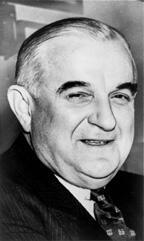
Here you will find contact information for Senator Joseph F. Guffey, including email address, phone number, and mailing address.
| Name | Joseph F. Guffey |
| Position | Senator |
| State | Pennsylvania |
| Party | Democratic |
| Status | Former Representative |
| Term Start | January 3, 1935 |
| Term End | January 3, 1947 |
| Terms Served | 2 |
| Born | December 29, 1870 |
| Gender | Male |
| Bioguide ID | G000519 |
About Senator Joseph F. Guffey
Joseph Finch Guffey (December 29, 1870 – March 6, 1959) was an American business executive and Democratic Party politician from Pittsburgh, Pennsylvania, who represented Pennsylvania in the United States Senate for two terms from 1935 to 1947. A prominent New Deal supporter and party organizer, he played a significant role in the resurgence of the Democratic Party in Pennsylvania during the 1930s and 1940s and participated actively in the legislative process during a critical period in American history.
Guffey was born on December 29, 1870, at Guffey Station in Sewickley Township, Pennsylvania, to John and Barbaretta (Hough) Guffey. His family was of Scots-Irish and English ancestry; his paternal ancestors had owned land along the Youghiogheny River since the 1780s and prospered with the coming of the railroads, while his mother’s Hough family name was common in Lancashire, England. He was the youngest of eight children, with brothers James C. and Alexander S. and sisters Ida Virginia, Pauletta, Mary Emma, Jane Campbell, and Elizabeth Irwin. Raised in a family whose fortunes were tied to transportation and landholding, he grew up in an environment that acquainted him early with business and economic development in western Pennsylvania.
Guffey attended Princeton University but did not graduate. During his time at Princeton he became a disciple of Professor Woodrow Wilson, then a rising academic figure. When Wilson later became president of Princeton University, Guffey and other former students supported Wilson’s controversial “Quad Plan” for reorganizing the university. This early association with Wilson helped draw Guffey into national Democratic politics. He became active in the Democratic Party and worked to help secure Wilson the Democratic presidential nomination in 1912 and to support his subsequent election, laying the foundation for Guffey’s long-standing identification with Wilsonian and later New Deal progressivism.
In his early career, Guffey was primarily a businessman. From 1901 to 1918 he served as general manager of the Philadelphia Company in Pittsburgh, a major public utilities concern, while also participating in other business enterprises. In September 1918, he incorporated the Guffey Gillespie Oil Company with E. N. Gillespie. This firm leased approximately 220,000 acres in the Mid-Continent and Texas oil fields and by 1921 was valued at around $3,500,000. Guffey also engaged in oil speculation in Mexico during World War I, ventures that later contributed to financial setbacks and complicated his public service record.
After the United States entered World War I, Guffey entered federal service. He was appointed a member of the War Industries Board, serving in its Petroleum Service Division, and also served as Director of the Bureau of Sales in the Office of the Alien Property Custodian. In these roles he handled, according to contemporary accounts in The New York Times, sums in excess of $50,000,000, while receiving a nominal salary of one dollar. His tenure lasted until March 1921. On December 28, 1922, he was indicted by a federal grand jury on twelve counts of embezzlement related to alleged misappropriation of funds managed during his service as Director of the Bureau of Sales. A Justice Department accountant, George W. Storck, claimed that Guffey had mishandled interest—approximately $400,000—generated by deposits of government funds in thirty-two banks while at the same time obtaining personal loans from those institutions. In 1926 he was named in another federal indictment involving alleged undervaluation of property and collusive bidding in the sale of the Bosch Magneto Company, which had been seized as enemy-owned property by the Alien Property Custodian. Guffey’s attorney, Joseph Patrick Tumulty, former personal secretary to President Wilson, asserted that the charges were politically motivated and argued that Guffey had not withheld the accrued interest but had merely held it pending his retirement from office. After Guffey settled his accounts in full with the Bureau of Sales, the charges were dropped as part of a broader settlement of questionable transactions associated with the Harding and Coolidge administrations, including matters related to the Teapot Dome scandal.
Parallel to his business and wartime service, Guffey rose within the Democratic Party. He served as a member of the Democratic National Committee from 1920 through 1928 and, together with his close associate David L. Lawrence, helped lead a resurgence of the Pennsylvania Democratic Party, which had long been dominated by Republicans. This organizational work culminated in the Democratic breakthrough of 1934, when Guffey was elected to the United States Senate, defeating incumbent Republican Senator David A. Reed. His victory made him the first Democrat elected to the Senate from Pennsylvania since William A. Wallace in 1874. In the same election cycle, George H. Earle was elected governor, becoming the first Democratic Governor of Pennsylvania since the nineteenth century, underscoring the scale of the party’s revival in the state.
In the Senate, where he served from January 3, 1935, to January 3, 1947, Guffey was a steadfast supporter of President Franklin D. Roosevelt and the New Deal. He chaired the Committee on Mines and Mining and was closely identified with legislation affecting the coal industry and labor relations, including efforts to stabilize bituminous coal production and strengthen the position of mine workers. He supported the policies of Vice President Henry A. Wallace and endorsed Wallace’s sharp criticisms of the Republican Party, which Wallace at times compared to fascist movements. Guffey’s alignment with organized labor was evident in his close ties to John L. Lewis, head of the United Mine Workers of America, and in his intervention in Pennsylvania politics on behalf of Lieutenant Governor Thomas Kennedy, a Lewis ally, over Charles Alvin Jones, the candidate favored by Governor Earle and other Democratic leaders. Jones subsequently lost the gubernatorial race to Republican Arthur H. James. At the federal level, Guffey and Lewis pressed for the replacement of Charles F. Hosford Jr. as chairman of the National Bituminous Coal Commission with Pleas E. Greenlee, whom they regarded as more effective.
Guffey’s Senate career was also marked by controversy and outspoken positions. He publicly criticized Harry Anslinger, head of the newly formed Federal Bureau of Narcotics and son-in-law of Andrew Mellon, for using racial slurs, specifically the term “niggers,” in official correspondence. In 1938 he became embroiled in the so‑called “publishers’ war” when he was sued for libel and slander by Moses Annenberg, owner of The Philadelphia Inquirer, after Guffey declared in an October 1938 radio address that Annenberg planned to “buy the governorship of Pennsylvania for his hand-picked candidate,” Arthur H. James. During World War II, his staunch loyalty to Roosevelt was noted abroad; in April 1943, British scholar Isaiah Berlin, in a confidential analysis of the Senate Foreign Relations Committee prepared for the British Foreign Office, described Guffey as a “noisy Administration supporter who wraps himself in the Roosevelt flag and has been advocating for a fourth term for some time,” characterizing him as a typical Pennsylvania politician who had become an “obedient party hack not of the purest integrity” and noting that he consistently voted opposite his fellow Pennsylvania senator, James J. Davis.
Guffey was reelected to the Senate in 1940, aided in part by national Democratic strength and by campaign support from figures such as Senator Claude Pepper of Florida, who campaigned with him in Pennsylvania. During his second term he continued to back New Deal and pro-labor measures, but his influence waned as political currents shifted. After World War II, Republicans gained control of Congress and moved to roll back portions of the New Deal labor program, culminating in the passage of the Taft–Hartley Act in 1947. Guffey, a strong opponent of such measures, was defeated for reelection in 1946 by Republican Governor Edward Martin by a wide margin, ending his twelve-year tenure in the Senate.
After leaving Congress in January 1947, Guffey retired from active politics and settled in Washington, D.C. He remained engaged intellectually with the political movements he had supported, publishing a memoir, “Seventy Years on the Red-Fire Wagon: From Tilden to Truman, Through New Freedom and New Deal,” in 1952, in which he recounted his long involvement in Democratic politics from the late nineteenth century through the Roosevelt and Truman eras. He died in Washington, D.C., on March 6, 1959. Following his death, his remains were returned to West Newton, Pennsylvania, for burial in West Newton Cemetery. His papers are preserved in several archival collections, including Washington & Jefferson College in Washington, Pennsylvania; the Princeton University Library in Princeton, New Jersey; the Claude Pepper Center at the Florida State University Library, which holds the text of a campaign speech he delivered on March 11, 1940; and the National Archives at College Park, Maryland, providing extensive documentation of his business activities, wartime service, and congressional career.