Representative Joseph J. Heck
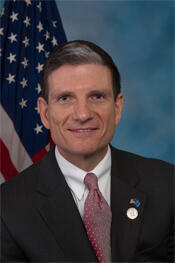
Here you will find contact information for Representative Joseph J. Heck, including email address, phone number, and mailing address.
| Name | Joseph J. Heck |
| Position | Representative |
| State | Nevada |
| District | 3 |
| Party | Republican |
| Status | Former Representative |
| Term Start | January 5, 2011 |
| Term End | January 3, 2017 |
| Terms Served | 3 |
| Born | October 30, 1961 |
| Gender | Male |
| Bioguide ID | H001055 |
About Representative Joseph J. Heck
Joseph John Heck (born October 30, 1961) is an American politician, physician, and retired United States Army major general who served as the United States representative for Nevada’s 3rd congressional district from January 3, 2011, to January 3, 2017. A member of the Republican Party, he served three terms in the House of Representatives, during which he participated in the legislative process and represented the interests of his southern Nevada constituents. Heck is a board-certified physician and previously served one four-year term in the Nevada Senate from 2004 to 2008. In 2016 he was the Republican nominee for the United States Senate from Nevada, losing the general election to Democrat Catherine Cortez Masto.
Heck was born in Jamaica, Queens, a neighborhood of New York City, and was raised in Pennsylvania. He graduated from Wallenpaupack Area High School in Hawley, Pennsylvania, in 1979. He went on to attend the Pennsylvania State University, where he earned a degree in health education in 1984 and became a member of the Beta Theta Pi fraternity. Heck received his Doctor of Osteopathic Medicine (D.O.) degree in 1988 from the Philadelphia College of Osteopathic Medicine. He completed a residency in emergency medicine at Albert Einstein Medical Center in Philadelphia in 1992. That same year he moved to Clark County, Nevada, beginning a long association with the Las Vegas area. While continuing his civilian medical career, he later pursued advanced military education and earned a Master of Strategic Studies degree from the U.S. Army War College in 2006.
Heck’s medical career began in emergency services as a volunteer firefighter and ambulance attendant in rural Pennsylvania, experience that informed his later work in emergency medicine and disaster preparedness. In Nevada and at the national level, he developed a specialty in medical support for high-risk and tactical operations. From 1998 to 2003, he served as the medical director of the Casualty Care Research Center at the Uniformed Services University of the Health Sciences in Bethesda, Maryland, where he provided medical support for several federal law enforcement agencies and oversaw planning for medical response to acts of terrorism. In private practice, Heck was the president, owner, and medical director of Specialized Medical Operations until 2011. The company provided medical training, consulting, and operational support to law enforcement agencies, emergency medical services, and military special operations units. He has lectured and been published on special operations medical support, the medical response to terrorism, and emergency preparedness and response. In Nevada, he volunteered as a medical team manager with the Nevada Urban Search & Rescue Team – Task Force 1, served as a member of the Las Vegas Metropolitan Police Department (LVMPD) Search & Rescue team, and worked as a tactical physician with the LVMPD SWAT team.
Parallel to his civilian medical work, Heck built a lengthy career in the United States Army Reserve. He entered the Army Reserve in 1991 and served in a series of medical and command assignments over more than three decades. He deployed in support of Operation Joint Endeavor in the Balkans, Operation Noble Eagle following the September 11, 2001, terrorist attacks, and Operation Iraqi Freedom. His last overseas deployment began in January 2008, when he commanded an emergency room in a combat support hospital outside Baghdad, Iraq. Rising through the ranks, he was promoted to brigadier general in 2014. As a general officer, he commanded a Medical Readiness Support Group responsible for more than 2,000 soldiers in six western states, a position he continued to hold while serving in Congress. He was promoted to the rank of major general in a ceremony at Fort Douglas, Utah, on November 7, 2020, and retired from the Army Reserve in February 2024.
Heck’s expertise in emergency medicine and homeland security led to a variety of advisory and leadership roles in Nevada’s public health and security infrastructure. He served as a member of the Nevada State Homeland Security Commission Sub-committee on Health, contributed to the American Osteopathic Association’s Task Force on Bioterrorism, and was the medical director for the Nevada Hospital Association’s Hospital Preparedness program. He also served as the medical director for the Southern Nevada Health District’s Office of Public Health Preparedness, helping to shape regional planning for disaster and terrorism response.
Heck entered elective office in 2004, when he was first elected to the Nevada Senate to represent Clark County’s 5th district. He won the Republican primary that year by defeating incumbent Senator Ann O’Connell and went on to serve one four-year term. In the Nevada Senate, he served on the Natural Resources, Human Resources and Education, and Commerce and Labor Committees, and was vice chair of the Transportation and Homeland Security Committee, reflecting his policy focus on public safety, infrastructure, and emergency preparedness. In 2008 he narrowly lost his bid for re-election to Democrat Shirley Breeden by a margin of 47 percent to 46 percent, a plurality of 765 votes; Libertarian candidate T. Rex Hagan received 4,754 votes, or 8 percent. Although Heck had earlier announced that he would challenge incumbent Republican Governor Jim Gibbons, he ultimately decided against a gubernatorial run in favor of seeking a seat in the U.S. House of Representatives.
In 2010 Heck ran for Nevada’s 3rd congressional district, a swing district based in the southern portion of the state. He defeated incumbent Democratic Representative Dina Titus by a margin of 48 percent to 47 percent, a difference of 1,748 votes; Titus had herself unseated Republican Jon C. Porter in 2008. Following redistricting after the 2010 census, Heck chose to run in the newly redrawn 3rd district, which President Barack Obama had carried in 2008 with 54 percent of the vote. In the 2012 general election, held on November 6, he defeated Democratic challenger John Oceguera, Speaker of the Nevada Assembly, by a margin of 50 percent to 43 percent. Heck won reelection to a third term in 2014, defeating Democrat Erin Bilbray by a wide margin of 61 percent to 36 percent. His service in Congress from 2011 to 2017 coincided with a period of intense national debate over federal spending, health care, energy policy, and national security.
During his tenure in the House of Representatives, Heck was quickly integrated into Republican leadership circles. He was one of three freshmen named to the House Republican Steering Committee in the 112th Congress and was re-elected to that committee in both 2012 and 2014. His voting record and legislative activity reflected a generally conservative approach to fiscal and regulatory policy. He signed Americans for Prosperity’s “No Climate Tax” pledge in 2010 and supported an “all of the above” energy policy that included natural gas, domestic oil production, and alternative energy sources such as wind, solar, hydropower, geothermal, and nuclear power. In 2011 he voted to prevent the Environmental Protection Agency from regulating greenhouse gases. When asked in 2012 about climate change and regulating carbon dioxide, he stated that regulating “something like carbon dioxide, which is a natural, biological process” raised concerns, and remarked that climate had changed “both ways” over millennia and would continue to do so, emphasizing that, in his view, the central issue for the election was short-term economic conditions rather than long-term climate projections. He supported construction of the Keystone XL Pipeline and voted to ease the exploration and extraction of minerals and energy resources from Native American lands, while supporting restrictions on the ability of non-resident tribal members to vote on such issues.
On fiscal and economic matters, Heck supported an audit of the Federal Reserve and advocated for a balanced budget amendment to the Constitution. He voted against increasing the federal debt limit in 2011, arguing that raising the debt ceiling without significant spending cuts would prolong economic uncertainty and hinder recovery. That same year, he referred to Social Security as a “pyramid scheme,” a characterization that generated controversy in Nevada; he later clarified that he meant to describe the program as an “inverted pyramid” and suggested that younger workers might need to retire later in order to maintain the program’s long-term solvency. Heck signed the Taxpayer Protection Pledge of Americans for Tax Reform in 2010, committing to oppose net tax increases, and in 2015 he voted to eliminate the federal estate tax. He was critical of Nevada Governor Brian Sandoval’s Commerce Tax and opposed raising the federal minimum wage, favoring instead leaving minimum wage decisions to state and local governments. Despite his generally conservative voting record, Heck was ranked as the 74th most bipartisan member of the U.S. House of Representatives during the 114th Congress, and the most bipartisan House member from Nevada, according to the Bipartisan Index developed by The Lugar Center and the McCourt School of Public Policy, which measures cross-party co-sponsorship of legislation.
In 2016 Heck declined to seek a fourth House term and instead ran for the open U.S. Senate seat being vacated by Democratic Senator Harry Reid. He secured the Republican nomination but was defeated in the general election by Democrat Catherine Cortez Masto. His departure from Congress in January 2017 marked the end of his three-term tenure representing Nevada’s 3rd district, but he continued his military service until his retirement from the Army Reserve in 2024 and remained active in medical, security, and policy circles in Nevada and nationally.