Representative Joseph Clifford Hendrix
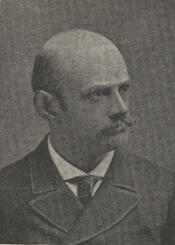
Here you will find contact information for Representative Joseph Clifford Hendrix, including email address, phone number, and mailing address.
| Name | Joseph Clifford Hendrix |
| Position | Representative |
| State | New York |
| District | 3 |
| Party | Democratic |
| Status | Former Representative |
| Term Start | August 7, 1893 |
| Term End | March 3, 1895 |
| Terms Served | 1 |
| Born | May 25, 1853 |
| Gender | Male |
| Bioguide ID | H000496 |
About Representative Joseph Clifford Hendrix
Joseph Clifford Hendrix (May 25, 1853 – November 9, 1904) was an American educator, banker, and politician who served one term as a U.S. Representative from New York from 1893 to 1895. A member of the Democratic Party, he contributed to the legislative process during this single term in office, representing the interests of his constituents in the House of Representatives during a significant period in American history.
Hendrix was born in Fayette, Howard County, Missouri, on May 25, 1853. He attended private schools in his hometown and then pursued higher education at Central College in Fayette. Seeking further academic advancement, he enrolled at Cornell University in Ithaca, New York, where he studied from 1870 to 1873. His years at Cornell helped establish the connections and experience that later informed both his public service and his involvement in educational and cultural institutions.
In 1873 Hendrix moved to New York City, where he began his career in journalism with the New York Sun. His work in the press introduced him to the political and civic life of the growing metropolis. He soon became active in educational affairs in Brooklyn, and in 1882 he was appointed a member of the Board of Education of Brooklyn. Demonstrating growing prominence in local Democratic politics, he ran as the Democratic candidate for mayor of Brooklyn in 1883, though he was unsuccessful in that bid. In 1884 he was appointed a trustee of the New York and Brooklyn Bridge, a key piece of infrastructure linking the two cities, and in 1885 he was elected secretary of the board of bridge trustees, reflecting the confidence placed in his administrative abilities.
Hendrix’s public career continued to expand in the later 1880s. In 1886 President Grover Cleveland appointed him postmaster of Brooklyn, a position he held until July 1, 1890. During his tenure he oversaw postal operations in one of the nation’s largest urban centers. At the same time, he remained deeply involved in educational governance, being elected president of the Board of Education of Brooklyn in 1887. His leadership roles in both civic administration and education underscored his reputation as an able organizer and public servant.
Parallel to his public offices, Hendrix developed a substantial career in banking and finance. He served as president of the Kings County Trust Company from 1889 to 1893, a period in which Brooklyn was experiencing rapid growth and increasing financial complexity. In 1893 he became president of the National Union Bank of New York City, a position he held until 1900. His prominence in the banking sector placed him among the leading financial figures in New York at the close of the nineteenth century and provided him with a platform of influence that extended beyond local politics.
Hendrix was elected as a Democrat to the Fifty-third Congress and served as a Representative from New York from March 4, 1893, to March 3, 1895. During this single term in the United States House of Representatives, he participated in the democratic process at the national level and contributed to the legislative work of the era, representing his New York constituency during a time marked by economic and political challenges, including the Panic of 1893. He did not seek renomination in 1894 and thus concluded his congressional service after one term.
After leaving Congress, Hendrix returned to his financial and institutional responsibilities. In 1900 he became president of the National Bank of Commerce in New York, further solidifying his standing in the nation’s banking community. Beyond finance, he served as a trustee of the Brooklyn Institute of Arts and Sciences, reflecting his continued interest in education and culture, and as a trustee of Cornell University, maintaining a formal connection to his alma mater and contributing to its governance.
Joseph Clifford Hendrix died in Brooklyn, New York, on November 9, 1904. He was interred in Green-Wood Cemetery in Brooklyn. His career encompassed journalism, educational leadership, municipal administration, federal office, and high-level banking, and his service as a Democratic Representative from New York from 1893 to 1895 formed a central part of his varied public life.