Representative Joseph Marion Hernández
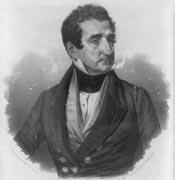
Here you will find contact information for Representative Joseph Marion Hernández, including email address, phone number, and mailing address.
| Name | Joseph Marion Hernández |
| Position | Representative |
| State | Florida |
| District | -1 |
| Party | Unknown |
| Status | Former Representative |
| Term Start | December 3, 1821 |
| Term End | March 3, 1823 |
| Terms Served | 1 |
| Born | May 26, 1788 |
| Gender | Male |
| Bioguide ID | H000533 |
About Representative Joseph Marion Hernández
Joseph Marion Hernández (May 26, 1788 – June 8, 1857) was a slave-owning Spanish-American planter, politician, and military officer who became the first delegate from the Florida Territory and the first Hispanic American to serve in the United States Congress. Born under Spanish rule, he was part of the Hispanic elite that held land and influence in East Florida prior to its transfer to the United States. His background as a Spanish subject and landowner in Florida shaped his later role in territorial politics and his efforts to navigate the transition from Spanish to American governance.
Hernández’s early life was rooted in the social and political world of Spanish Florida, where large landholdings and plantation agriculture formed the basis of local power. As a planter, he owned enslaved people and participated in the plantation economy that dominated the region. His Spanish-American heritage and status as a landowner positioned him as a key intermediary between the existing Hispanic population and incoming American authorities after the United States acquired Florida under the Adams–Onís Treaty, which took effect in 1821.
With the formal organization of Florida as a U.S. territory, Hernández quickly emerged as a political figure. Aligning himself with the Democratic-Republican Party, he became involved in the new territorial structures that replaced Spanish colonial administration. His prominence among local elites and his ability to operate in both Spanish and Anglo-American political cultures made him a natural choice to represent the territory’s interests at the federal level during this formative period.
Joseph Marion Hernández served as a Representative from Florida in the United States Congress from 1821 to 1823, during a significant period in American history marked by territorial expansion and the integration of newly acquired lands. Officially, he served as the first delegate from the Florida Territory and the first Hispanic American to serve in the United States Congress, holding office as a non-voting delegate from September 1822 to March 1823. A member of the Democratic-Republican Party, he contributed to the legislative process during his single term in office, participating in the democratic process and representing the interests of his Florida constituents as the territory adjusted to U.S. laws and institutions.
In addition to his political service, Hernández had a notable military career connected to U.S. operations in Florida. As a military officer serving with the U.S. Army, he was involved in efforts to secure and develop the territory, which was then a frontier region marked by conflict and ongoing military activity. His dual role as both a political leader and a military officer reflected the intertwined nature of governance and security in early territorial Florida, where civil authority and military operations often overlapped.
Hernández’s military responsibilities included important infrastructure work in support of U.S. forces. In 1837, while serving with the U.S. Army, he was ordered to build a road between St. Augustine, Florida, and Fort Capron, located near present-day Fort Pierce, Florida, on the St. Lucie River. He directed the blazing and clearing of a route that, twelve years earlier, Colonel James Gadsden had cleared along the Atlantic Coastal Ridge to the St. Lucie River. Under Hernández’s direction, the road extended from Fort Capron through Fort Vinton, Fort Drum, Fort Kissimmee, and Fort Meade to Fort Brooke at Tampa, creating a strategic line of communication and movement across the peninsula that supported military logistics and the broader American consolidation of control in Florida.
In his later years, Hernández remained identified with the planter class and with the political and military legacy of the early territorial period. His life spanned the transition of Florida from a Spanish colony to an American territory and, eventually, toward statehood, and he occupied a distinctive place as a Spanish-American figure who helped bridge those eras. Joseph Marion Hernández died on June 8, 1857, leaving a record as a pioneering Hispanic American officeholder, a territorial delegate in the United States Congress, and a military officer whose work contributed to the development and integration of Florida into the United States.