Senator Joseph Lister Hill
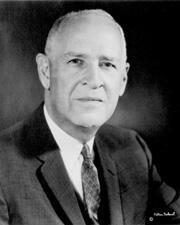
Here you will find contact information for Senator Joseph Lister Hill, including email address, phone number, and mailing address.
| Name | Joseph Lister Hill |
| Position | Senator |
| State | Alabama |
| Party | Democratic |
| Status | Former Representative |
| Term Start | December 3, 1923 |
| Term End | January 2, 1969 |
| Terms Served | 14 |
| Born | December 29, 1894 |
| Gender | Male |
| Bioguide ID | H000598 |
About Senator Joseph Lister Hill
Joseph Lister Hill (December 27, 1894 – December 20, 1984) was an American attorney and Democratic Party politician who represented Alabama in the United States House of Representatives from 1923 to 1938 and the United States Senate from 1938 to 1969. Over fourteen consecutive terms in Congress, he became one of the most influential Southern Democrats of the mid‑twentieth century, noted particularly for his leadership on health, education, and public welfare legislation, and for his long tenure as a senior member of the Senate.
Hill was born in Montgomery, Alabama, on December 27, 1894, along with his twin sister, Amelie, to Dr. Luther Leonidas Hill Jr., a surgeon, and his wife, Lilly. He was named “Lister” in honor of Dr. Joseph Lister, the British pioneer of antiseptic surgery, a tribute that foreshadowed his later legislative focus on public health. He attended the Starke University School in Montgomery and, at the age of sixteen, entered the University of Alabama. There he distinguished himself academically, earning both a Bachelor of Arts and a law degree in four years and being elected to Phi Beta Kappa. As an undergraduate, he was a member of Delta Kappa Epsilon and played a formative role in campus life, founding the Student Government Association and serving as its first president, as well as helping to establish the Jasons Senior Men’s Honorary and “The Machine,” the local chapter of Theta Nu Epsilon.
Following his initial legal training in Alabama, Hill pursued further legal studies at the University of Michigan Law School in Ann Arbor and at Columbia Law School in New York City. He was admitted to the Alabama bar in 1916 and commenced the practice of law in Montgomery. During World War I he served in the United States Army, being assigned to the Seventeenth and Seventy‑first United States Infantry Regiments. Returning to civilian life, he quickly entered public service at the local level, serving as president of the Montgomery Board of Education from 1917 to 1922, where he gained early experience in educational administration and public policy.
Hill’s national political career began in the House of Representatives. On August 14, 1923, he was elected as a Democrat from Alabama’s 2nd congressional district to fill the vacancy caused by the death of Representative John R. Tyson. He was repeatedly re‑elected and served in the House until 1938. During his House service he rose to become chairman of the House Committee on Military Affairs, a position that placed him at the center of defense and preparedness debates in the interwar period. His tenure in the House coincided with the New Deal era, and he aligned himself with the populist and interventionist wing of the Democratic Party that supported expanded federal involvement in economic and social policy.
On January 10, 1938, Hill was appointed to the United States Senate as a Democrat to fill the vacancy created by the resignation of Senator Dixie Bibb Graves for the term ending January 3, 1939. He was subsequently elected on April 26, 1938, to complete the remainder of that term and then won a full term in November 1938. He was re‑elected to the Senate in 1944, 1950, 1956, and 1962, serving continuously until his retirement in January 1969. During World War II he was a prominent supporter of interventionist foreign policy and took an outspokenly pro‑British stance. He spoke and voted in favor of the Lend‑Lease program, including supplemental lend‑lease funding on October 23, 1941, and supported amendments to the neutrality acts on November 7, 1941, to facilitate direct military aid to the United Kingdom. British officials privately regarded him as “reliably pro‑British.” Within the Senate Democratic leadership, Hill served as Senate Majority Whip from 1941 to 1947, helping to marshal support for the Roosevelt administration’s wartime and domestic programs.
A moderate‑to‑liberal populist Democrat on economic and social issues, Hill became best known for his legislative work in health, education, and public welfare. He was co‑author of the Hospital and Health Center Construction Act of 1946, widely known as the Hill‑Burton Act, which provided federal assistance for the construction and modernization of hospitals and health centers across the nation and dramatically expanded access to medical facilities, particularly in underserved rural areas. He later sponsored the Hill‑Harris Act of 1963, which provided assistance for constructing facilities for individuals with intellectual disabilities and for the mentally ill. Hill was widely recognized as one of the most instrumental members of Congress in securing greatly increased federal support for medical research at the nation’s medical schools and research institutions. He also sponsored major legislation including the Rural Telephone Act, the Rural Housing Act, the Vocational Education Act, and the National Defense Education Act of 1958, which strengthened science, engineering, and language education in the context of Cold War competition. He used his influence to improve conditions in rural areas by directing federal funds to rural libraries and was a key architect of the Library Services Act, which ensured federal funding for the development of rural library systems; in recognition of this work, the American Library Association honored him in 1956 for his support of the act.
Within the Senate, Hill held several powerful committee assignments that amplified his legislative impact. He served as chairman of the Senate Committee on Labor and Public Welfare (often referred to as the Senate Committee on Labor) from 1955 to 1969, overseeing important legislation related to veterans’ education, public health, hospitals, libraries, and labor‑management relations. He was also a ranking member of the Senate Appropriations Committee and a member of the Senate Democratic Policy Committee, positions that enabled him to influence federal spending priorities and party strategy. Hill strongly supported rural electrification, federally subsidized freight rates, and large public works projects, including funding for the deepening of the Mobile Ship Channel, the construction of the Gainesville Lock and Dam in Sumter County, and the long‑sought Tennessee‑Tombigbee Waterway to link the Tennessee River with the Gulf of Mexico. He favored federal control of offshore oil with revenues earmarked for education, a stance that sometimes put him at odds with other Southern colleagues. In the 1950s he criticized President Dwight D. Eisenhower’s efforts to reduce hospital funding authorized under the Hill‑Burton Act, defending the program as essential to national health infrastructure. On September 4, 1964, President Lyndon B. Johnson signed the Nurse Training Act of 1964 and publicly named Hill as one of the members of Congress who had pioneered that legislation.
Hill’s long Senate career also reflected the complex and often contradictory politics of the mid‑century South on civil rights. In 1954 he signed the Southern Manifesto, which condemned the Supreme Court’s unanimous decision in Brown v. Board of Education mandating school desegregation, even as he remained a close personal friend of Justice Hugo Black, a fellow Alabamian who had joined the Court’s opinion. Hill voted against the Civil Rights Acts of 1957, 1960, 1964, and 1968, opposed the 24th Amendment to the Constitution abolishing the poll tax in federal elections, and voted against the Voting Rights Act of 1965. Despite these positions, he was regarded nationally as more moderate than many of his Southern contemporaries and, on certain economic and resource issues, broke with regional orthodoxy in favor of broader national policies.
Hill’s final Senate campaign in 1962 was one of the most closely watched races in modern Southern political history. Seeking what would be his last term, he faced an unusually strong Republican challenger in James D. Martin, a petroleum products distributor from Gadsden. Both candidates supported the Tennessee Valley Authority, and Martin emphasized that TVA’s original sponsor had been Republican Senator George W. Norris of Nebraska, proposing that TVA headquarters be moved from Knoxville, Tennessee, to Muscle Shoals, Alabama. Hill campaigned on his record of securing federal investment in Alabama, including public works and defense installations, and pledged to seek renewed funding for Redstone Arsenal and the Marshall Space Flight Center in Huntsville. He criticized former President Eisenhower for neglecting the space program during the period when the Soviet Union launched Sputnik and argued that Alabama’s continued progress depended on remaining loyal to the Democratic Party. The campaign unfolded against the backdrop of the Cuban Missile Crisis; both candidates endorsed President John F. Kennedy’s quarantine of Cuba, though Martin linked the crisis to the failed Bay of Pigs invasion, while Hill asserted that Soviet Premier Nikita Khrushchev had “chickened out” in the face of American strength. National commentators, including Drew Pearson and The New York Times, described the contest as a major test of two‑party politics in the Deep South. Hill ultimately defeated Martin by a narrow margin of 6,019 votes, receiving 201,937 votes (50.9 percent) to Martin’s 195,134 (49.1 percent), carrying thirty‑seven of Alabama’s sixty‑seven counties in an election marked by significantly reduced turnout compared with 1960. Martin’s strong showing helped propel him to later election to the U.S. House of Representatives in 1964 from Alabama’s 7th District.
At the time of his retirement in January 1969, Hill was the fourth‑most senior member of the United States Senate. He chose not to seek re‑election in 1968 and was succeeded by fellow Democrat James B. Allen of Gadsden, a former lieutenant governor and a leader of Alabama’s conservative faction. In recognition of his decades of work in public health and welfare, Hill received the Public Welfare Medal from the National Academy of Sciences in 1969. Over the course of his career he was awarded honorary degrees from thirteen colleges and universities, including the University of Alabama and Auburn University. A Methodist, a Freemason, and a member of the American Legion, he remained closely identified with Alabama throughout his life. The small community of Listerhill, Alabama, bears his name, and his contributions to health and medical information are commemorated by institutions such as the Lister Hill National Center for Biomedical Communications at the National Institutes of Health in Bethesda, Maryland, and the Lister Hill Library of the Health Sciences at the University of Alabama at Birmingham.
Hill retired from public office after leaving the Senate and lived quietly in Montgomery. He died there on December 20, 1984, one week before his ninetieth birthday, and was interred at Greenwood Cemetery in Montgomery. His family’s involvement in Alabama politics continued into the twenty‑first century through his great‑grandson, Joseph Lister Hubbard, who represented District 73 in the Alabama House of Representatives from 2010 to 2014 and was the Democratic nominee for Attorney General of Alabama in the 2014 elections.