Representative Joseph M. Hoeffel
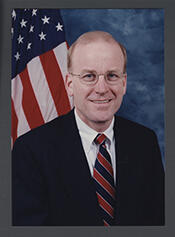
Here you will find contact information for Representative Joseph M. Hoeffel, including email address, phone number, and mailing address.
| Name | Joseph M. Hoeffel |
| Position | Representative |
| State | Pennsylvania |
| District | 13 |
| Party | Democratic |
| Status | Former Representative |
| Term Start | January 6, 1999 |
| Term End | January 3, 2005 |
| Terms Served | 3 |
| Born | September 3, 1950 |
| Gender | Male |
| Bioguide ID | H001031 |
About Representative Joseph M. Hoeffel
Joseph Merrill Hoeffel III (HUF-əl; born September 3, 1950) is an American author and Democratic politician who represented Pennsylvania’s 13th congressional district in the United States House of Representatives from 1999 to 2005. A native of Philadelphia, Pennsylvania, he has held elected office at the county, state, and federal levels, including multiple terms on the Montgomery County Board of Commissioners and service in the Pennsylvania House of Representatives from 1977 to 1985. Over the course of his career, he became known as a progressive Democrat with a strong interest in foreign policy, campaign finance reform, and social justice issues.
Hoeffel was born in Philadelphia to Joseph and Eleanore Hoeffel. He attended William Penn Charter School, graduating in 1968, and went on to Boston University, where he earned a Bachelor of Arts degree in English in 1972. While in college, he served in the Army Reserves from 1970 to 1976. His opposition to the Vietnam War drew him into politics during the 1972 presidential election, when he became an active supporter of Senator George McGovern. In 1973, he moved to Washington, D.C., to work as a legislative aide to Representative Gerry Studds of Massachusetts, conducting research on foreign overfishing and gaining early experience in federal legislative work. He later returned to Pennsylvania and enrolled at Temple University School of Law, from which he received his Juris Doctor degree in 1986.
Hoeffel’s first bid for elective office came in 1974, when he challenged four-term Republican incumbent Daniel Beren for the Pennsylvania House of Representatives in the Abington-based 153rd district. He lost that race by 1,505 votes and subsequently worked from 1975 to 1976 as the Central Montgomery County administrator for the American Red Cross. In 1976, after Beren chose not to seek re-election, Hoeffel again ran for the 153rd district seat and this time was successful, becoming the first Democrat to represent the Abington area in the state legislature since World War I. He served in the Pennsylvania House of Representatives from 1977 to 1985. During his tenure, he focused on ethics and campaign reform; his first bill to pass, in 1978, was a campaign reform measure improving financial disclosure requirements. In 1984, he gave up his state House seat to run for the U.S. House of Representatives in Pennsylvania’s 13th congressional district, but was defeated by longtime Republican incumbent Lawrence Coughlin. He sought a rematch in 1986 and again lost to Coughlin. After completing law school in 1986, Hoeffel practiced law at the Norristown firms of Wright, Manning, Kinkaid & Oliver from 1987 to 1990 and Kane, Pugh & Driscoll from 1990 to 1991.
After several years out of elected office, Hoeffel returned to politics at the county level. In 1991 he won a seat on the Montgomery County Board of Commissioners, entering the leadership of one of Pennsylvania’s most populous suburban counties. In a move that surprised many in the political establishment, he supported Republican Mario Mele for commission chairman over fellow Republican Jon Fox, helping to shape the bipartisan power structure on the board. His service on the commission enhanced his profile in the Philadelphia suburbs and positioned him for another run for Congress. In 1996, he challenged his former commission colleague Jon Fox, then a first-term Republican congressman, in the 13th congressional district. Fox narrowly retained the seat by 84 votes, but the close margin set the stage for a rematch two years later.
In 1998, in his fourth attempt at a congressional seat, Hoeffel defeated Fox and was elected to the U.S. House of Representatives from Pennsylvania’s 13th congressional district, becoming only the second Democrat to represent the largely Montgomery County–based district in 86 years. He took office on January 3, 1999, and served three consecutive terms until January 3, 2005. He was re-elected in 2000 after an expensive campaign against Republican State Senator Stewart Greenleaf, who represented much of the eastern portion of the district; with that victory, Hoeffel became the first Democrat in decades to serve more than one term in the district. In 2002, after redistricting added a portion of Philadelphia and made the district somewhat more Democratic, he defeated Republican ophthalmologist Melissa Brown, though by a smaller margin than expected. During the 2002 election cycle, his campaign website was singled out for praise as one of the best of that year. In Congress, Hoeffel served on the Committee on International Relations and the Committee on Transportation and Infrastructure, where he participated in legislative deliberations on foreign policy, national security, transportation, and public works. His tenure coincided with a period of significant national events, including the impeachment of President Bill Clinton, the September 11, 2001 terrorist attacks, and the run-up to the Iraq War, and he contributed to the legislative process during this consequential era while representing the interests of his suburban Philadelphia constituents.
Hoeffel’s congressional career also reflected his engagement with human rights and progressive causes. On July 20, 2004, he was arrested for trespassing during a protest in front of the Sudanese Embassy in Washington, D.C., becoming the third sitting member of Congress in one week, after Representatives Charles Rangel and Bobby Rush, to be arrested while demonstrating against alleged human rights violations in Sudan. His Republican opponent in that year’s U.S. Senate race, Senator Arlen Specter, criticized the arrest as a publicity stunt, but the incident underscored Hoeffel’s willingness to engage in civil disobedience on international human rights issues. Rather than seek a fourth House term in 2004, Hoeffel ran for the United States Senate against Specter. In the November 2, 2004 general election, he was defeated by a margin of 53 percent to 42 percent, carrying only four counties in the state, a result widely attributed in part to Specter’s longstanding popularity in the Philadelphia suburbs. Hoeffel’s House service concluded in January 2005.
Following his departure from Congress, Hoeffel remained active in Democratic politics and public policy. In 2006 he endorsed Democrat Bob Casey Jr. for the U.S. Senate; Casey went on to defeat incumbent Republican Senator Rick Santorum by a wide margin. That same year, Hoeffel briefly announced a campaign for lieutenant governor, challenging incumbent Democrat Catherine Baker Knoll, but he withdrew from the race a day later after Governor Ed Rendell argued that the ticket needed geographic balance, as Rendell was from Philadelphia and Knoll from Allegheny County. In February 2007, Hoeffel announced that he would resign his then-current post in order to run again for the Montgomery County Board of Commissioners, this time on a ticket with incumbent Democrat Ruth Damsker. Their Republican opponents were incumbent commissioner Jim Matthews and county district attorney Bruce Castor. Amid Democratic gains in the county and internal divisions among Republicans, expectations were high that Democrats might capture majority control of the commission. In the election, Hoeffel finished second overall, behind Castor, and secured a seat, but Damsker fell short, leaving Republicans in control. Hoeffel nonetheless became vice chairman of the commission after reaching an agreement to support Matthews for chairman over Castor.
In the late 2000s and 2010s, Hoeffel continued to seek higher office and remained a voice in state and national Democratic debates. On September 20, 2009, he announced his candidacy for the Democratic nomination for Governor of Pennsylvania. During the 2010 gubernatorial primary campaign, he advocated a graduated state income tax, supported a statewide single-payer health care program, emphasized his pro-choice stance on abortion and opposition to school vouchers, and distinguished himself as the only candidate openly supporting the legalization of same-sex marriage. He received endorsements from the National Organization for Women (NOW), the Stonewall Democrats, the United Auto Workers, and various local affiliates of Democracy for America. In the May 18, 2010 Democratic primary, he placed fourth out of four candidates, receiving 130,799 votes, or 12.7 percent of the total, though he carried his home base of Montgomery County without winning a majority there. Within days of that defeat, he announced his intention to seek another term as Montgomery County commissioner in the 2011 election cycle, paralleling an initial re-election announcement by Matthews. A subsequent grand jury report examined private breakfast meetings at which Hoeffel, Matthews, and senior aides discussed county business, raising questions under Pennsylvania’s Sunshine Act. The report found questionable conduct in holding such meetings outside public view, but while Matthews was later alleged to have perjured himself in grand jury testimony, Hoeffel was not charged with any criminal wrongdoing.
Hoeffel remained engaged in electoral politics and public advocacy into the late 2010s. On March 10, 2018, he announced that he would seek to retake his former congressional seat, by then renumbered as Pennsylvania’s 4th congressional district following a court-ordered redrawing of the state’s congressional map. The new district, though stripped of its former share of Philadelphia, was geographically similar to the area he had represented during his first two terms in Congress. In the Democratic primary, however, he finished a distant third, receiving about 11 percent of the vote, well behind State Representative Madeleine Dean, a fellow Abington resident who went on to win the seat. Throughout his later campaigns and public statements, Hoeffel consistently advocated expanded funding for early childhood education, dropout prevention and reengagement programs, and enhanced basic education for school board members. He supported maintaining the existing defined-benefit pension plan for teachers rather than shifting new hires to a defined-contribution plan, and he favored continuing the school funding formula implemented under Governor Ed Rendell to reduce reliance on local property taxes for school funding. His policy positions earned him a lifetime 97 percent rating from the AFL–CIO and endorsements from several labor unions in the Philadelphia area. He also received a 100 percent rating from NARAL Pro-Choice America and endorsements from former NARAL president Kate Michelman and the Pennsylvania chapter of NOW. Hoeffel has supported amending Pennsylvania’s hate crimes law to include crimes targeting LGBT people and has been an advocate of full marriage rights for same-sex couples.
In addition to his political career, Hoeffel has been active as an author and commentator. In 2014 he published The Iraq Lie: How the White House Sold the War (Progressive Press), a first-person account of the congressional debate over the Iraq War Resolution. In the book, he argues that the administration of President George W. Bush misled Congress and the American public and took the United States to war in Iraq under false pretenses, and he proposes intelligence reforms intended to prevent similar deceptions in the future. His second book, Fighting for the Progressive Center in the Age of Trump, was released in August 2017 by Praeger. In that work, Hoeffel contends that progressives must “fight for the political center” with policies that are socially liberal and fiscally responsible in order to win broad public support in opposition to President Donald Trump. Drawing on roughly twenty-five years in elected office at the county, state, and federal levels, the book combines policy prescriptions with anecdotes from his political career, reflecting his long-standing effort to define and advance a pragmatic, progressive center within American politics.