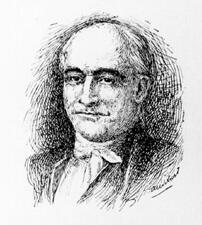
Bios     Joseph Kent

Senator Joseph Kent

Whig | Maryland

Senator Joseph Kent - Maryland Whig

Here you will find contact information for Senator Joseph Kent, including email address, phone number, and mailing address.

NameJoseph Kent
PositionSenator
StateMaryland
PartyWhig
StatusFormer Representative
Term StartNovember 4, 1811
Term EndDecember 31, 1837
Terms Served7
BornJanuary 14, 1779
GenderMale
Bioguide IDK000125
Senator Joseph Kent
Joseph Kent served as a senator for Maryland (1811-1837).

About Senator Joseph Kent


Joseph Kerr (1765 – August 22, 1837) was a Democratic-Republican politician from Ohio who served in the United States Senate. During his time in the United States Congress, he was associated in later descriptions with the Whig Party tradition of legislative engagement, and he contributed to the legislative process during a period of significant political and territorial development in the early United States. His service in Congress occurred during a significant period in American history, and as a member of the Senate he participated in the democratic process and represented the interests of his constituents.

Kerr (pronounced “car”) was born in Kerrtown, Pennsylvania, now known as Chambersburg, in 1765. Little is recorded about his early childhood, but he came of age in the closing years of the colonial era and the early years of the new republic. In 1792 he moved west to the Northwest Territory, settling in what would later become the state of Ohio. This move placed him on the American frontier at a time when new communities were being organized, local institutions were being formed, and the basic framework of civil government in the territory was still taking shape.

In the Northwest Territory, Kerr quickly became involved in local administration and the machinery of frontier government. He served in a number of positions as clerk, surveyor, judge, and justice of the peace. In 1797 he was appointed justice of the peace at Manchester in Adams County, Ohio, reflecting the trust placed in him by territorial authorities and local residents. That same year he also served as a judge of the first quarter session court of Adams County in the Northwest Territory, participating in the establishment of the region’s early judicial system and helping to administer law and order in a sparsely settled area.

With the transition from territorial status to statehood, Kerr moved into formal elective office in Ohio. After Ohio was admitted to the Union, he was elected to the Ohio State Senate in 1804, marking his entry into state-level legislative service. He later returned to the state senate in 1810. In addition, he was elected to the Ohio House of Representatives in 1808, 1816, 1818, and 1819, serving multiple nonconsecutive terms. Through these positions he took part in shaping the laws and institutions of the young state, representing his constituents in a period of rapid population growth and economic development.

Kerr also played a role in the military affairs of Ohio during the War of 1812. He served as a brigadier general of Ohio Volunteers, with responsibility for supplying provisions to the Army of the Northwest. In this capacity he was involved in the logistical support of American forces operating in the Old Northwest, an area that was then a principal theater of conflict between the United States, British forces, and their Native American allies. His combined experience in civil administration and military provisioning reflected the multifaceted responsibilities often assumed by leading citizens on the frontier.

Kerr’s service in the United States Senate came during this same formative era. He was elected to the U.S. Senate in 1814 to fill the vacancy created by the resignation of Senator Thomas Worthington of Ohio. Kerr served as a Senator from Ohio in the United States Congress from December 10, 1814, to March 3, 1815. Although his tenure was brief and he did not seek re-election, it coincided with the closing phase of the War of 1812 and the immediate postwar period, when questions of national defense, finance, and western expansion were central to congressional deliberations. During this time, he contributed to the legislative process and participated in the representation of Ohio’s interests at the federal level, serving during what later accounts have described as seven terms of legislative office across his state and federal career.

In his personal and family life, Kerr experienced both prominence and tragedy. He was the father of Joseph Kerr Jr., who later became one of the defenders of the Alamo in Texas. Joseph Kerr Jr. died in the Battle of the Alamo in 1836, a pivotal event in the Texas Revolution that underscored the family’s continuing involvement in the nation’s westward expansion and conflicts on the frontier. The elder Kerr’s own fortunes, however, declined in the years following his political and military service.

Kerr owned an extensive farm, but by 1826 his agricultural enterprises went bankrupt. Following this financial reversal, he left Ohio and moved south, first to Memphis, Tennessee. Seeking a new start, he subsequently relocated to rural Louisiana, where he purchased a homestead near Lake Providence. There he spent his later years away from public office, living in relative obscurity compared with his earlier prominence in Ohio politics and national service. Joseph Kerr died on August 22, 1837, at his homestead near Lake Providence, Louisiana, closing the life of a frontier official, state legislator, military officer, and United States Senator whose career spanned the formative decades of the early republic.