Representative Joseph Russell Knowland
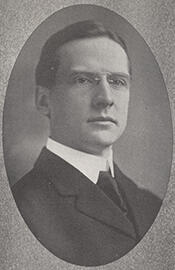
Here you will find contact information for Representative Joseph Russell Knowland, including email address, phone number, and mailing address.
| Name | Joseph Russell Knowland |
| Position | Representative |
| State | California |
| District | 6 |
| Party | Republican |
| Status | Former Representative |
| Term Start | November 9, 1903 |
| Term End | March 3, 1915 |
| Terms Served | 6 |
| Born | August 5, 1873 |
| Gender | Male |
| Bioguide ID | K000291 |
About Representative Joseph Russell Knowland
Joseph Russell Knowland (August 5, 1873 – February 1, 1966) was an American politician, newspaper publisher, and civic leader who served as a Republican Representative from California in the United States Congress from 1903 to 1915. Over six terms in the House of Representatives, he contributed to the legislative process during a significant period in American history, and later became owner, editor, president, and publisher of the Oakland Tribune. A prominent figure in California public life for more than half a century, he was also the father of United States Senator William F. Knowland.
Knowland was born in Alameda, California, on August 5, 1873, the son of Joseph Knowland (1833–1912) and Hannah Bailey Russell (1832–1921). He grew up in a family of modest means but increasing local prominence; his siblings included two sisters, Sadie (1864–1905) and Lucille (1870–1926), and a brother, Hollis, who died in infancy. He attended Alameda Park Street Primary School and Hopkins Academy, and pursued higher education at the University of the Pacific, from which he graduated in 1895. His early exposure to the growing commercial and civic life of the San Francisco Bay Area helped shape his later interests in business, politics, and California history.
After college, Knowland entered his father’s wholesale lumber and shipping business, where he quickly proved himself an able businessman. He became president of the Gardiner Mill Company and served as a director of the Kennedy Mine & Milling Company, the Alameda National Bank, and the Union Savings Bank of Oakland. His business activities were complemented by extensive involvement in fraternal and civic organizations. He was active in the Freemasons, Shriners, Elks, Modern Woodmen of America, and Native Sons of the Golden West, and participated in the California Landmarks League. His memberships also included the California Centennials Council, California Historical Society, California Chamber of Commerce, California State Automobile Association, Oakland Chamber of Commerce, Oakland Community Chest, the Mills College Board of Trustees, the Oakland National Horse Show, and the Athens Athletic Club.
Knowland’s political career began at the local level. In early 1895 he joined the Alameda Good Government Club, reflecting his interest in municipal reform. The following year, in 1896, he was appointed to the Alameda Library Board of Trustees. In 1898 he was elected as a Republican to the California State Assembly and was reelected in 1900, serving from 1899 to 1903. During his Assembly tenure he chaired the committee that investigated corruption in the San Francisco police department, an effort that led to passage of a law prohibiting the human trafficking of Chinese women. In 1902 he was elected to the California State Senate, where he served until resigning to take his seat in the United States House of Representatives. While in the State Senate he chaired the committee on banking, further cementing his reputation as a legislator with a strong interest in financial and regulatory matters.
In 1904, Knowland was elected to Congress in a special election to fill the vacancy caused by the resignation of Victor H. Metcalf. He was subsequently reelected to five full terms, serving from September 24, 1904, to March 3, 1915. His district included the U.S. Army’s Benicia Arsenal and the U.S. Naval Shipyard at Mare Island, which fostered his keen interest in military and naval affairs. As a member of the House of Representatives, he participated in the democratic process and represented the interests of his constituents during a transformative era that included debates over naval expansion, the Panama Canal, and national defense. He worked to obtain approval for the construction of Navy capital ships in California and advocated for a two-ocean fleet. In addition, he supported allowing American ships to use the Panama Canal toll free, reflecting his broader interest in maritime commerce and national security. In 1914, he sought to succeed George C. Perkins in the United States Senate. He won the Republican primary over Samuel M. Shortridge but was unsuccessful in the general election, a three-way contest with Progressive Party candidate Francis J. Heney and the eventual winner, Democrat James D. Phelan. His congressional service, variously dated from 1903 in some references and from his 1904 special election in others, concluded in March 1915 after six terms.
Following his departure from Congress, Knowland turned his full attention to journalism and publishing. On November 3, 1915, he became owner, editor, president, and publisher of the Oakland Tribune. Upon assuming control, he declared that the newspaper would be judged by its actions rather than its promises, writing that “what it [the Tribune] does, rather than what it promises, will determine the true measure of its worth; and with this understanding, the Tribune, under its new control, girds to its work.” Years of legal disputes with Hermina Peralta Dargie, widow of former owner William E. Dargie, followed before he secured full control of the paper. Under his leadership, the Tribune became a powerful voice in Bay Area and California politics. He oversaw construction of the Tribune Tower at 13th and Franklin Streets in Oakland, a city landmark that symbolized the paper’s influence. The Tribune’s radio station, KLX, began operation in 1921 and continued broadcasting until its sale in 1959. Oakland became a one-newspaper city on September 1, 1950, when William Randolph Hearst closed his Oakland Post-Enquirer, further consolidating the Tribune’s position.
Knowland’s interests extended far beyond politics and publishing into historic preservation and public infrastructure. He developed a deep commitment to restoring the California missions, beginning in 1903 with work on Mission San Antonio de Padua. He served as a historical advisor during the 1927 California State Park Survey and was a driving force in the state park movement. From 1934 to 1960 he served on the California State Park Commission, acting as its chairman from 1938 to 1960. In 1932 he traveled to Washington, D.C., where he persuaded President Herbert Hoover and the Reconstruction Finance Corporation to advance $62 million for completion of the San Francisco–Oakland Bay Bridge, a critical infrastructure project for the region. In 1936, together with Bruno Albert Forsterer and Joseph Blum, he created the Franklin Investment Company, later known as the Franklin Credit Union. He attained the 33rd Degree in the Ancient Accepted Scottish Rite of Freemasonry in 1937 and served on the Finance Committee of the Golden Gate International Exposition of 1939–1940. In 1941 he authored “California: A Landmark History,” reflecting his long-standing dedication to the state’s heritage. He was also a political mentor to Earl Warren, guiding Warren’s rise from assistant Oakland city attorney to Governor of California and ultimately Chief Justice of the United States.
In the postwar years, Knowland remained a central figure in California’s commemorative and civic activities. Governor Earl Warren appointed him chairman of the California Centennial Commission, in which capacity he served from 1948 to 1950. On September 9, 1951, the City of Oakland and the State of California honored him by dedicating the Joseph Knowland State Arboretum and Park in Oakland. He later served as chairman of the Oakland Centennial in 1952 and the Alameda County Centennial in 1953. He was proud of the political career of his son, William F. Knowland, who represented California in the United States Senate from 1945 to 1959 and served as Senate Majority Leader from 1953 to 1955 and Senate Minority Leader from 1955 to 1959. Joseph Knowland reportedly believed that the only serious mistake his son made was his unsuccessful 1958 campaign for Governor of California. A lifelong Republican, Joseph Knowland attended his first Republican National Convention in 1904 and continued to attend GOP conventions as either a delegate or newspaperman until 1964.
Knowland’s personal life was marked by three marriages and a close-knit family. While a student at the University of the Pacific he met Elinor (Ellie) J. Fife (1873–1908) of Tacoma, Washington, the daughter of businessman W. H. Fife. They were married on April 2, 1894, in Tacoma. The couple had three children: Elinor Knowland Lion (1895–1978); Joseph Russell “Russ” Knowland Jr. (1901–1961); and future U.S. Senator William F. Knowland (1908–1974). Shortly after the birth of William, Ellie Knowland died in 1908, leaving her husband a young widower with three children. On September 28, 1909, in Chicago, Illinois, Knowland married Emelyn S. West (1884–1950) of West Lynne, Virginia. Emelyn became a devoted stepmother and an active partner in his social and political life until her death on July 14, 1950, during the California Centennial observances. His third marriage was to Clarice E. “Cookie” Cook (1902–1979), an officer of the Native Daughters of the Golden West. They were married on April 6, 1952, in Stockton, California. Sharing a strong interest in California history, they enjoyed a close companionship in his later years, and Knowland continued to come daily to the Tribune well into old age.
Joseph Russell Knowland died on February 1, 1966, at his residence at 25 Seaview Avenue in Piedmont, California. At his bedside were his wife Clarice and granddaughters Emelyn K. Jewett and Josephine L. Church. The Oakland Tribune marked his passing with the headline “Joseph R. Knowland Dead,” and tributes came from across the political spectrum. California Governor Edmund G. “Pat” Brown stated that Knowland “strongly believed in California…the State he loved so well.” A public funeral was held at the First Methodist Church in Oakland, followed by a private family service at the Mountain View Cemetery Chapel. He was cremated at the Mountain View Cemetery Crematory and is inurned with his third wife, Clarice, in the Serenity Section, Tier N-4, Number 3, at the Chapel of Memories Columbarium in Oakland. His papers, documenting a long career in business, politics, journalism, and historic preservation, are preserved at the Bancroft Library of the University of California, Berkeley.