Representative Joseph James Little
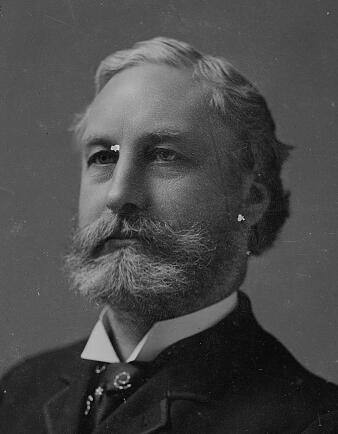
Here you will find contact information for Representative Joseph James Little, including email address, phone number, and mailing address.
| Name | Joseph James Little |
| Position | Representative |
| State | New York |
| District | 12 |
| Party | Democratic |
| Status | Former Representative |
| Term Start | December 7, 1891 |
| Term End | March 3, 1893 |
| Terms Served | 1 |
| Born | June 5, 1841 |
| Gender | Male |
| Bioguide ID | L000353 |
About Representative Joseph James Little
Joseph James Little (June 5, 1841 – February 11, 1913) was an American printer, publisher, and Democratic politician who served as a U.S. Representative from New York from 1891 to 1893, after winning a special election to fill a vacancy caused by the resignation of Roswell P. Flower. A member of the Democratic Party, he served one term in the United States House of Representatives, where he participated in the legislative process and represented the interests of his New York constituents during a significant period in American history.
Little was born in Bristol, England, on June 5, 1841. In 1846 he immigrated to the United States with his parents, and the family settled in Morris, Otsego County, New York. He attended the common schools there and, as a youth, was apprenticed to a local printer, learning the fundamentals of the printing trade. Seeking broader opportunities in his chosen field, he later entered a book-printing office in New York City to complete his training, gaining practical experience that would form the foundation of his later business career.
During the American Civil War, Little served in the Union Army from 1862 to 1864. Over the course of his military service he rose through the noncommissioned and commissioned ranks, serving successively as a corporal, first sergeant, and first lieutenant. His Civil War service established him as a veteran of the conflict and contributed to his public standing in the decades that followed.
After the war, Little returned to New York and resumed work in the printing trade. He eventually began business on his own account in a modest way, taking as a junior partner his former employer, Mr. Rennie. A third associate later joined them, and with a combined capital of $5,000 the three partners founded the printing office of Little, Rennie & Co. on Broome Street in New York City in 1867. Through practical skill and steady effort, the firm expanded gradually. The business grew sufficiently that in 1871 it was moved to a more advantageous uptown location. In 1873, William Jennings Demorest joined the firm and brought with him the printing of his widely circulated fashion papers, further increasing the company’s volume of work. The firm adopted the title J. J. Little & Co. in 1876 and ultimately occupied large quarters on Astor Place, where it conducted an extensive business in the printing of books, magazines, and other publications, employing about 500 persons. Little remained continuously engaged in the printing and publishing business for the rest of his life.
Little’s prominence in business and civic affairs led to his involvement in public service and education. In New York City he served as commissioner of education and as president of the Board of Education, positions in which he helped oversee the administration and development of the city’s public school system. His work in these roles reflected his longstanding interest in educational matters and his commitment to the civic life of the city.
In national politics, Little was elected as a Democrat to the Fifty-second Congress to fill the vacancy in the U.S. House of Representatives caused by the resignation of Roswell P. Flower, who had left Congress after being elected governor of New York. Little took his seat on November 3, 1891, and served until March 3, 1893. During this single term in Congress, he participated in the legislative deliberations of the House of Representatives and contributed to the democratic process at the federal level. He did not seek renomination in 1892 to the Fifty-third Congress, and his congressional service concluded at the expiration of his term.
After leaving Congress, Little returned full time to his printing and publishing enterprise, continuing to direct J. J. Little & Co. as it remained one of the substantial printing houses in New York City. He maintained his residence and business interests in New York until his death. Little died in New York City on February 11, 1913. He was interred in Kensico Cemetery in Valhalla, Westchester County, New York. He was survived in part by his son, Raymond D. Little, who achieved distinction as a tennis player.