Representative Joseph Jefferson Mansfield
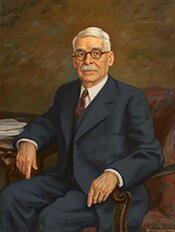
Here you will find contact information for Representative Joseph Jefferson Mansfield, including email address, phone number, and mailing address.
| Name | Joseph Jefferson Mansfield |
| Position | Representative |
| State | Texas |
| District | 9 |
| Party | Democratic |
| Status | Former Representative |
| Term Start | April 2, 1917 |
| Term End | January 3, 1949 |
| Terms Served | 16 |
| Born | February 9, 1861 |
| Gender | Male |
| Bioguide ID | M000112 |
About Representative Joseph Jefferson Mansfield
Joseph Jefferson Mansfield (February 9, 1861 – July 12, 1947) was a Democratic member of the United States House of Representatives from the state of Texas, serving from 1917 until his death in 1947. Over the course of 16 consecutive terms in Congress, he became a prominent figure in national legislative affairs, particularly in the development of the nation’s waterways and infrastructure, and his long tenure spanned World War I, the Great Depression, the New Deal era, World War II, and the early postwar period.
Mansfield was born on February 9, 1861, in Wayne, what was then still part of the Commonwealth of Virginia and later became Wayne, West Virginia. He attended public schools in West Virginia, receiving a basic education that prepared him for a career in law and public service. His early years in a rural, developing region exposed him to the challenges of frontier and small-town life, experiences that would later inform his understanding of local governance and infrastructure needs.
In 1881, Mansfield moved to Texas and settled in the community of Alleyton in Colorado County. During his first years in Texas, he worked in farm and railroad laboring jobs, gaining firsthand familiarity with the agricultural and transportation sectors that were central to the state’s economy. By the mid-1880s he had relocated to Eagle Lake, Texas, where he read law and was admitted to the bar in 1886. That same year he organized two companies of the Texas National Guard, in which he rose to the rank of captain, reflecting both his leadership abilities and his interest in public order and defense. Around this time he also founded the first newspaper in Eagle Lake, demonstrating an early engagement with public discourse and community affairs.
Mansfield’s formal political career began at the local level. In 1889 he was elected mayor of Eagle Lake, a position that placed him at the center of municipal governance during a period of growth and modernization in small Texas towns. In 1892 he became county prosecutor of Colorado County, where both Alleyton and Eagle Lake are located, handling criminal matters and representing the public interest in the courts. From 1896 until 1916 he served as judge of Colorado County. Until 1910, the office of county judge also made him the effective superintendent of schools for the county, giving him significant influence over local educational policy and administration. His two decades on the bench established him as a respected legal authority and community leader in southeast Texas.
Building on his long record in local and county government, Mansfield was elected to Congress as a Democrat in 1916 and took his seat in the House of Representatives in 1917. His service in Congress occurred during a significant period in American history, encompassing major domestic and international challenges. In the early 1920s he became paralyzed and thereafter used a wheelchair to move about the Capitol, continuing his legislative work for approximately 25 years despite his disability. Over 16 terms in office, he participated actively in the legislative process and represented the interests of his Texas constituents, particularly in matters related to rivers, harbors, and regional development.
Mansfield rose to national prominence through his work on infrastructure and navigation. From the Seventy-second Congress until the Seventy-ninth Congress, he served as chairman of the House Committee on Rivers and Harbors, a powerful committee responsible for legislation affecting the nation’s waterways, ports, and flood-control projects. In this role he helped shape federal investment in river and harbor improvements during the New Deal and World War II eras, influencing projects that supported commerce, transportation, and regional economic growth. In recognition of his contributions to water resources development, Mansfield Dam in Texas was named in his honor, underscoring his lasting impact on the state’s infrastructure and the broader national program of river and harbor development.
On January 18, 1888, Mansfield married Annie Scott Bruce (1867–1937). The couple had four children: a son, Bruce Jefferson Mansfield (c. 1890–1966), and three daughters, Susie, who died in infancy, Margaret (1893–1970), and Jaquelin (1900–1997). His family life in Eagle Lake and Colorado County provided a stable base for his long public career, and his descendants remained connected to the region and to his legacy in Texas public life.
Joseph Jefferson Mansfield served in the House of Representatives until his death in office at Bethesda, Maryland, on July 12, 1947. His three-decade congressional career, marked by persistence in the face of physical disability and by leadership on rivers and harbors legislation, made him one of the more enduring Texas figures in the U.S. House during the first half of the twentieth century.