Senator Joseph Medill McCormick
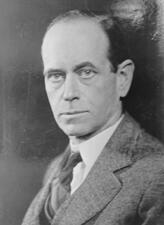
Here you will find contact information for Senator Joseph Medill McCormick, including email address, phone number, and mailing address.
| Name | Joseph Medill McCormick |
| Position | Senator |
| State | Illinois |
| Party | Republican |
| Status | Former Representative |
| Term Start | April 2, 1917 |
| Term End | March 3, 1925 |
| Terms Served | 2 |
| Born | May 16, 1877 |
| Gender | Male |
| Bioguide ID | M000369 |
About Senator Joseph Medill McCormick
Joseph Medill McCormick (May 16, 1877 – February 25, 1925) was an American newspaper publisher and Republican politician who served Illinois in both houses of the United States Congress, including as a United States Senator from 1919 until his death in 1925. A member of the prominent McCormick family of Chicago businessmen and politicians, he combined a career in journalism with influential roles in state and national politics during a significant period in American history.
McCormick was born in Chicago, Illinois, on May 16, 1877. He was the son of Robert Sanderson McCormick (1849–1919), who later became a United States diplomat, and Katherine Medill McCormick. Through his father he was a nephew of Cyrus McCormick, the industrialist and inventor associated with the McCormick reaper, and through his mother he was a grandson of Joseph Medill, the influential owner and editor of the Chicago Tribune. His mother hoped that leadership of the Tribune would pass from her brother-in-law, Robert Wilson Patterson, to her first son, thereby continuing the Medill family’s influence over the paper. McCormick spent part of his childhood in Europe while his father was posted there, and during this period he was an early pupil at Ludgrove School in England.
Returning to the United States, McCormick attended the Groton School in Groton, Massachusetts, a leading preparatory school that educated many future political figures. He went on to Yale University, where he graduated in 1900. While at Yale he was elected to the secret society Scroll and Key, a distinction that reflected his social standing and connections within the American elite. His education and family background positioned him to move easily between journalism, business, and politics in the early twentieth century.
After college, McCormick embarked on a career in journalism and publishing. He worked as a newspaper reporter and publisher and became an owner of the Chicago Daily Tribune, the paper founded and long controlled by his maternal grandfather. In 1901 he served as a war correspondent in the Philippine Islands, covering events in the aftermath of the Spanish–American War. He later expanded his publishing interests by purchasing stakes in The Cleveland Leader and the Cleveland News. Between 1903 and 1907 he took over much of the management of the Chicago Tribune, but during this period he became increasingly depressed and developed alcoholism. In 1907–1908 he underwent treatment under the care of the psychoanalyst Carl Jung in Zurich, Switzerland, and, following Jung’s advice, he detached himself from direct involvement in the family newspaper. His younger brother, Colonel Robert R. McCormick (1880–1955), subsequently assumed a leading role at the Tribune and became a prominent isolationist figure in the Republican Party.
On June 10, 1903, McCormick married Ruth Hanna, the daughter of powerful Ohio Senator and Republican leader Mark Hanna. The marriage further cemented his ties to national Republican politics. The couple had three children: Katrina McCormick (1913–2011), who married Courtlandt Dixon Barnes Jr.; John Medill “Johnny” McCormick, who died in a mountain-climbing accident in 1938; and Ruth “Bazy” McCormick (1921–2013), who married Peter Miller and later Garvin Tankersley. Under the name Bazy Miller, their daughter became known for founding Al-Marah Arabians, a prominent Arabian horse breeding and training farm originally located in Tucson, Arizona, and later operating in Florida under the ownership of her son, Mark Miller.
McCormick’s formal political career began in the Progressive Era. From 1912 to 1914 he served as vice chairman of the national campaign committee of the Progressive Republican movement, aligning himself with reform-minded elements within the party. He was elected to the Illinois House of Representatives in 1912 and again in 1914, marking his entry into elective office. His legislative work in the state house helped establish his credentials as a public official and provided a platform for his advancement to national office.
Advancing to the federal level, McCormick was elected as a Republican to the United States House of Representatives, where he served one term from March 4, 1917, to March 3, 1919. He represented Illinois during World War I and participated in the legislative process at a time of major domestic and international upheaval. In 1918 he successfully sought higher office and was elected to the United States Senate from Illinois. He began his Senate service on March 4, 1919, and remained in that position until his death in 1925, serving two terms in Congress—first in the House and then in the Senate. As a senator, McCormick was chairman of the Committee on Expenditures in the Department of Labor and later of the Committee on Expenditures in Executive Departments, positions that placed him at the center of efforts to oversee and rationalize federal spending in the postwar period. Throughout his tenure, he represented the interests of his Illinois constituents and took part in the broader national debates that shaped American policy in the early twentieth century.
McCormick’s political fortunes declined in the mid-1920s. In the 1924 Republican primary election for the U.S. Senate seat from Illinois, he sought renomination but was narrowly defeated by Charles S. Deneen, a former governor of Illinois who had served as the state’s 23rd chief executive. Deneen prevailed by a margin of only 0.69 percent, a difference of 5,944 votes, a close result that ended McCormick’s Senate career. His loss in the primary meant that his term would expire in March 1925, and he prepared to leave office at the conclusion of his service.
On February 25, 1925, shortly before the end of his Senate term, Joseph Medill McCormick died in his suite at the Hamilton Hotel in Washington, D.C., at the age of 48. Although not publicly characterized as such at the time, his death was regarded by contemporaries as a suicide, and his recent electoral defeat is believed to have contributed to his despair. His passing while still in office placed him among the members of the United States Congress who died during their terms between 1900 and 1949. McCormick’s career left a record of service that spanned state and national legislatures, and his life reflected both the influence and the personal strains associated with one of the most prominent political and publishing families in early twentieth-century America.