Representative Joseph Michael McDade
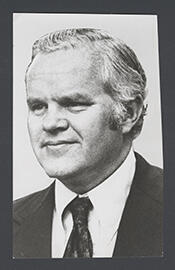
Here you will find contact information for Representative Joseph Michael McDade, including email address, phone number, and mailing address.
| Name | Joseph Michael McDade |
| Position | Representative |
| State | Pennsylvania |
| District | 10 |
| Party | Republican |
| Status | Former Representative |
| Term Start | January 9, 1963 |
| Term End | January 3, 1999 |
| Terms Served | 18 |
| Born | September 29, 1931 |
| Gender | Male |
| Bioguide ID | M000399 |
About Representative Joseph Michael McDade
Joseph Michael McDade (September 29, 1931 – September 24, 2017) was an American politician and attorney who served as a Republican member of the United States House of Representatives from Pennsylvania from 1963 to 1999. Over the course of 18 consecutive terms, he represented Pennsylvania’s 10th congressional district and played a significant role in the legislative process during a transformative period in American political and social history.
McDade was born in Scranton, Pennsylvania, into a family with ties to the region’s coal industry; his father, John B. McDade, served as president of the Heidelberg Coal Company and later donated land that would help establish the Wilkes-Barre/Scranton International Airport. Joseph McDade was educated in local schools before attending the University of Notre Dame, from which he graduated in 1953. He then pursued legal studies at the University of Pennsylvania, earning an LL.B. and preparing for a career in law and public service.
After completing law school, McDade served a clerkship in the office of John W. Murphy, chief federal judge for the United States District Court for the Middle District of Pennsylvania. He entered private practice in 1957, opening his own law office in Scranton. His early legal career coincided with growing involvement in local affairs, and in 1962 he was elected Scranton City Solicitor. He had only just taken office in that municipal role when he successfully sought election to Congress, marking a rapid ascent from local legal practice to national legislative office.
McDade was first elected to the U.S. House of Representatives in 1962 as a Republican, beginning his service on January 3, 1963. His early years in Congress were politically challenging; in the 1964 election, held during President Lyndon B. Johnson’s landslide victory, McDade narrowly retained his seat by just over 2,800 votes against Democratic challenger James Haggerty. After that close call, he consolidated his political position in the district and would never again face a race as competitive, even running unopposed in 1990. Although a Republican, he maintained strong ties to organized labor, an unusual alignment for his party at the time, which proved crucial in a district where roughly 60 percent of the vote was cast in the heavily Democratic and unionized city of Scranton.
During his long congressional tenure, McDade became a prominent member of the House Appropriations Committee. He served for many years on that powerful panel and, after Republicans gained control of the House in 1994, rose to become vice chairman of the full committee. He also chaired the Appropriations Subcommittee on Energy and Water Development and served as vice chairman of the Appropriations Subcommittee on National Security. Ideologically, McDade was generally conservative on social issues: he was a member of the National Rifle Association and cosponsored several bills aimed at banning abortion and flag burning. At the same time, he was a strong supporter of tax and welfare reform but opposed major free trade agreements, reflecting a concern for the economic interests of his industrial and labor-oriented constituency. In 1966, he joined seven other Republican members of Congress in signing a telegram to Georgia Governor Carl E. Sanders condemning the Georgia General Assembly’s refusal to seat Julian Bond in the state House of Representatives, calling the action “a dangerous attack on representative government” while explicitly repudiating Bond’s views on the Vietnam War.
Regionally, McDade was a key advocate for federal investment in northeastern Pennsylvania. He was the principal congressional supporter of the Tobyhanna Army Depot, helping secure its role as a major military and economic asset for the region. He was instrumental in the creation of the Delaware Water Gap National Recreation Area and the Steamtown National Historic Site in Scranton, as well as the establishment of the National Fishery Laboratory in Wellsboro, Pennsylvania. The federal acquisition and funding of Steamtown, U.S.A., and the subsequent development of the National Historic Site drew criticism from some observers as an example of pork barrel spending, but the projects became enduring features of the regional landscape. McDade also secured federal support to reclaim the Old Continental strip mine in Scranton’s Keyser Valley, transforming a scarred coal surface mine into McDade Park, which was dedicated in 1978 and became the flagship of the Lackawanna County park system and an environmental laboratory for mine reclamation practices.
McDade’s congressional career was marked by both influence and controversy. In 1992, he was indicted on federal charges of bribery, racketeering, and conspiracy, accused of accepting gifts and trips in exchange for diverting government contracts to particular entities. The indictment had significant political consequences: although he was the most senior Republican on the Appropriations Committee when his party took control of the House in 1995, he was passed over for the chairmanship in favor of Bob Livingston of Louisiana, who had first been elected in 1977. McDade steadfastly maintained his innocence and was acquitted by a jury in 1996. In the aftermath of his acquittal, he turned his experience into a legislative effort to curb what he viewed as overreach by the Department of Justice, particularly regarding its attorneys’ compliance with state bar ethics rules governing ex parte contacts.
This effort culminated in what became known as the “McDade Amendment,” codified at 28 U.S.C. § 530B. The provision requires that “an attorney for the Government shall be subject to State laws and rules, and local Federal court rules, governing attorneys in each State where such attorney engages in that attorney’s duties, to the same extent and in the same manner as other attorneys in that State.” It further directs the Attorney General to promulgate rules to ensure compliance and defines “attorney for the Government” broadly to include Department of Justice lawyers, independent counsels, and their employees, as described in 28 C.F.R. § 77.2. Although principally applicable to Department of Justice attorneys, the amendment also extends to lawyers from other federal departments and agencies working with the DOJ. This statutory change reflected McDade’s determination that federal prosecutors should not be exempt from the professional conduct standards of the states in which they are licensed and practice.
After more than three and a half decades in Congress, McDade retired from the House of Representatives in 1999, concluding his service on January 3 of that year. In retirement, he continued to be honored in his home region. The terminal building at the Wilkes-Barre/Scranton International Airport was named the McDade Airport Terminal in 2006, recognizing both his father’s 1941 donation of 122 acres of land that helped make the airport possible and McDade’s later success in securing federal funds and grants in the 1990s to modernize the facility. The University of Scranton named its Center for Literary and Performing Arts the McDade Center for Literary and Performing Arts and also created the McDade Center for Technology Transfer in his honor. Additional regional landmarks bearing his name include the McDade Recreational Trail, a 37-mile trail along the Pennsylvania side of the Delaware Water Gap National Recreation Area, and the McDade Trade and Transit Centre in downtown Williamsport, Pennsylvania.
McDade’s later years were not without personal difficulty. He suffered from Parkinson’s disease, which affected him in the years following his departure from Congress. On January 18, 2007, several years after leaving office, he was accused by at least three women of “masturbating on the beach and by the pool area of the hotel” at a resort in Sanibel, Florida, and was charged with a first-degree misdemeanor count of indecent exposure. Despite such controversies, his long tenure left a substantial imprint on northeastern Pennsylvania through federal projects, infrastructure improvements, and environmental reclamation efforts that bore his name and reflected his focus on regional development.
Joseph Michael McDade died on September 24, 2017, in Fairfax, Virginia, five days before his 86th birthday. His nearly 36 years in the House of Representatives, his senior roles on the Appropriations Committee, his authorship of the McDade Amendment, and his advocacy for his district’s economic and environmental interests secured him a lasting place in the political history of Pennsylvania and the United States Congress.