Senator Joseph Ewing McDonald
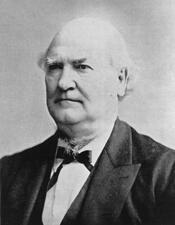
Here you will find contact information for Senator Joseph Ewing McDonald, including email address, phone number, and mailing address.
| Name | Joseph Ewing McDonald |
| Position | Senator |
| State | Indiana |
| Party | Democratic |
| Status | Former Representative |
| Term Start | December 3, 1849 |
| Term End | March 3, 1881 |
| Terms Served | 2 |
| Born | August 29, 1819 |
| Gender | Male |
| Bioguide ID | M000412 |
About Senator Joseph Ewing McDonald
Joseph Ewing McDonald (August 29, 1819 – June 21, 1891) was an American politician and lawyer who served as both a United States Representative and a United States Senator from Indiana. A member of the Democratic Party, he also served as Indiana’s second Attorney General and, late in his career, unsuccessfully sought the Democratic nomination for President in 1884. His service in Congress, which included terms in both the House of Representatives and the Senate, occurred during a significant period in American history, and he participated actively in the legislative process and represented the interests of his Indiana constituents.
McDonald was born in Butler County, Ohio, the son of Eleanor (Piatt) McDonald and John McDonald. In 1826 he moved with his mother to Montgomery County, Indiana, then a developing area of the Old Northwest. At the age of twelve he was apprenticed to the saddler’s trade in Lafayette, Indiana, an early indication of the modest circumstances from which he rose. Despite the demands of his apprenticeship, he pursued education, attending Wabash College in Crawfordsville before enrolling at Indiana Asbury University in Greencastle (now DePauw University). He graduated from Indiana Asbury University in 1840.
In addition to his studies, McDonald worked on the Wabash and Erie Canal in 1840, a major internal improvement project that was central to the economic development of Indiana and the broader region. He subsequently turned to the study of law in Lafayette and was admitted to the bar in 1843. That same year he began practicing law and was soon elected prosecuting attorney, a position he held from 1843 to 1847. In 1847 he moved to Crawfordsville, Indiana, where he continued in private legal practice until 1859, building a reputation as a capable advocate and establishing himself in Democratic Party circles.
McDonald entered national politics when he was elected as a Democrat to the Thirty-first Congress, serving as a United States Representative from Indiana from March 4, 1849, to March 3, 1851. His tenure in the House of Representatives marked his first service in the United States Congress. He was not a candidate for renomination in 1850, instead returning to his legal practice and state-level politics. In 1856 he was elected Attorney General of Indiana, becoming the state’s second Attorney General, and he was reelected to that office in 1858, serving through a period of growing sectional tension preceding the Civil War.
In 1859 McDonald moved to Indianapolis, the state capital, where he formed a law partnership with former Indiana Supreme Court Justice Addison Roache. From this base he became one of the leading Democratic figures in Indiana. In 1864 he was the Democratic candidate for Governor of Indiana but was unsuccessful in that bid, a defeat that occurred in the midst of the Civil War when political divisions in the state were particularly sharp. He continued, however, to be influential in party affairs and remained active in the practice of law.
McDonald returned to federal office when he was elected to the United States Senate from Indiana as a Democrat, serving from March 4, 1875, to March 3, 1881. His Senate service, comprising one full term, placed him at the center of national debates during the Reconstruction and post-Reconstruction era. While in the Senate he served as chairman of the Committee on Public Lands during the Forty-sixth Congress, a role that involved oversight of federal land policy at a time of western expansion and development. He was an unsuccessful candidate for reelection to the Senate, leaving office at the conclusion of his term in 1881, but his years in the upper chamber added to the long span of his public career, which stretched in various capacities from 1849 to 1881.
After his Senate service, McDonald remained an important figure in the Democratic Party. In 1884 he sought his party’s nomination for President of the United States at the Democratic National Convention in Chicago. Although he had substantial support from some Midwestern and Western delegates, he was ultimately defeated by New York Governor Grover Cleveland, who went on to win the presidency. McDonald then returned to his legal practice in Indianapolis, where he continued to be regarded as a senior statesman of Indiana Democracy.
Joseph Ewing McDonald died in Indianapolis, Indiana, on June 21, 1891. He was interred in Crown Hill Cemetery in Indianapolis, in Section 13, Lot 13. His career, encompassing service as a prosecuting attorney, state attorney general, United States Representative, and United States Senator, as well as a presidential aspirant, reflected more than three decades of involvement in state and national affairs and sustained participation in the democratic process on behalf of his Indiana constituents.