Senator Joseph McIlvaine
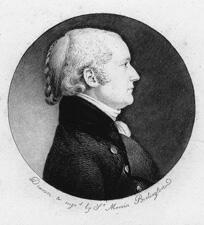
Here you will find contact information for Senator Joseph McIlvaine, including email address, phone number, and mailing address.
| Name | Joseph McIlvaine |
| Position | Senator |
| State | New Jersey |
| Party | Adams |
| Status | Former Representative |
| Term Start | November 12, 1823 |
| Term End | August 19, 1826 |
| Terms Served | 1 |
| Born | October 2, 1769 |
| Gender | Male |
| Bioguide ID | M000475 |
About Senator Joseph McIlvaine
Joseph McIlvaine (October 2, 1769 – August 19, 1826) was a United States senator from New Jersey from 1823 until his death, serving one term in office as a member of the Adams Party. His service in Congress occurred during a significant period in American history, and as a member of the Senate he participated in the democratic process and represented the interests of his New Jersey constituents. Before entering national office, he was a prominent lawyer and local official in Burlington, New Jersey, and served as mayor of that city from 1816 to 1823.
McIlvaine was born on October 2, 1769, in Bristol, Pennsylvania, to Col. Joseph McIlvaine (1749–1787) and Catherine Swan. He was connected by family ties to notable political figures of the early republic; his aunt, Mary McIlvaine (1752–1818), married Joseph Bloomfield, who later became Governor of New Jersey. Raised in this environment of public service and political engagement, McIlvaine pursued an academic course of study that prepared him for a career in the law and in public life.
After completing his preparatory studies, McIlvaine studied law and was admitted to the bar of New Jersey in 1790. He commenced the practice of law in Burlington, New Jersey, in 1791, quickly establishing himself in the legal community. His professional competence and growing reputation led to a series of important legal and administrative appointments at the county and federal levels, anchoring his career in Burlington for more than three decades.
McIlvaine’s early public career was closely tied to Burlington County. He served as clerk of Burlington County, New Jersey, from 1796 to 1800, and then as clerk of the Burlington County Court from 1800 to 1823. In addition to his county responsibilities, he held a significant federal legal post as United States Attorney for the District of New Jersey from 1804 to 1820. In this capacity he represented the federal government in legal matters within the state, reinforcing his standing as a leading lawyer in New Jersey. In 1818 he was appointed as a judge to the New Jersey Superior Court, but he declined the appointment, choosing instead to continue in his existing roles and local practice.
Alongside his legal and federal responsibilities, McIlvaine played an important role in municipal government. He served as mayor of Burlington, New Jersey, from 1816 to 1823, overseeing local affairs during a period of growth and development for the community. His long tenure in county, court, and municipal offices reflected the confidence placed in him by his fellow citizens and provided the administrative and political experience that would later inform his work in the United States Senate.
McIlvaine entered national legislative service when he was elected to the United States Senate to fill the vacancy caused by the resignation of Senator Samuel L. Southard. He took his seat on November 12, 1823, as a member of the Adams Party, aligned with the nationalist and pro–John Quincy Adams faction that emerged in the 1820s. In the Senate he contributed to the legislative process during a formative era in American politics, participating in debates and votes on issues that shaped the nation in the years following the War of 1812 and during the transition toward the Second Party System. He continued to serve in the Senate until his death in 1826.
On September 19, 1793, McIlvaine married Maria Reed, the daughter of Bowes Reed, Secretary of State of New Jersey, and the niece of Joseph Reed, a Continental Congressman and Governor of Pennsylvania. Their marriage further linked McIlvaine to prominent political families in both New Jersey and Pennsylvania. Joseph and Maria McIlvaine had a large family, including Bowes Reed McIlvaine, born in 1794; Joseph McIlvaine III, born about 1796 in Burlington, New Jersey; the Reverend Charles Pettit McIlvaine (1798–1873), who became Bishop of the Episcopal Diocese of Ohio; Bloomfield McIlvaine, born about 1799 and deceased in 1826 in Burlington; Henry McIlvaine, born about 1805 in Burlington; William McIlvaine, born about 1806; Emerson McIlvaine, born about 1807; Edward McIlvaine, born about 1808; Mary McIlvaine, born about 1809; and Ellen McIlvaine, born about 1810.
Joseph McIlvaine died in office on August 19, 1826, in Burlington, New Jersey, while still serving as a United States senator. His death placed him among the members of the United States Congress who died in office between 1790 and 1899. He was buried in Saint Mary’s Episcopal Churchyard in Burlington, the community where he had practiced law, held local office, and spent much of his life in public service.