Representative Joseph Chambers McKibbin
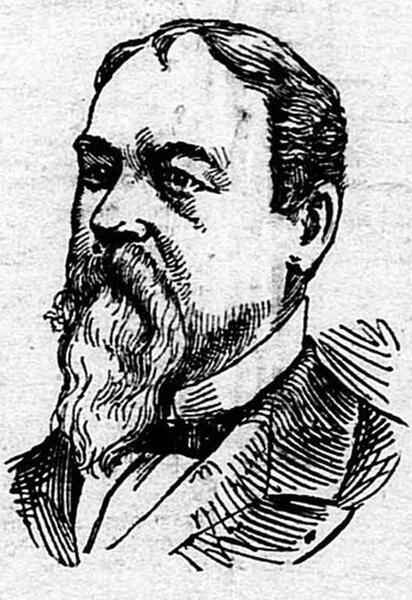
Here you will find contact information for Representative Joseph Chambers McKibbin, including email address, phone number, and mailing address.
| Name | Joseph Chambers McKibbin |
| Position | Representative |
| State | California |
| District | -1 |
| Party | Democratic |
| Status | Former Representative |
| Term Start | December 7, 1857 |
| Term End | March 3, 1859 |
| Terms Served | 1 |
| Born | May 14, 1824 |
| Gender | Male |
| Bioguide ID | M000514 |
About Representative Joseph Chambers McKibbin
Joseph Chambers McKibbin (May 14, 1824 – July 1, 1896) was an American lawyer, Civil War veteran, and California Democratic politician who served one term in the United States House of Representatives from 1857 to 1859. He was born in Chambersburg, Pennsylvania, on May 14, 1824, into a family that included at least one notable sibling, his brother David B. McKibbin. He received a common-school education in Pennsylvania before pursuing higher studies. From 1840 to 1842 he attended Princeton College, laying the educational foundation for his later legal and political career.
Following his time at Princeton, McKibbin joined the westward movement prompted by the California Gold Rush. In 1849 he moved to California, settling in Sierra County, a region that was rapidly developing due to mining and related commercial activity. While in California he turned to the study of law, and in 1852 he was admitted to the bar. He established a legal practice in Downieville, California, where his work as an attorney brought him into contact with the emerging political and economic structures of the new state.
McKibbin’s legal career quickly led to public office. He was elected to the California State Senate and served there in 1852 and 1853, representing his constituency during the formative years of California’s state government. As a member of the Democratic Party, he participated in debates over the organization and governance of the rapidly growing state, gaining experience and prominence that would support his later bid for national office.
In 1856 McKibbin was elected as a Democrat to the Thirty-fifth Congress, representing California in the United States House of Representatives. He served one term in Congress from March 4, 1857, to March 3, 1859. His tenure in the House occurred during a significant and turbulent period in American history, marked by intensifying sectional conflict in the years leading up to the Civil War. As a California Democrat, he contributed to the legislative process and participated in the democratic governance of the nation while representing the interests of his California constituents. He was an unsuccessful candidate for reelection in 1858, bringing his congressional service to a close after a single term.
With the outbreak of the Civil War, McKibbin returned to national service in a military capacity. In 1861 he enlisted in the Union Army and became one of the first six cavalry officers appointed by President Abraham Lincoln, underscoring the confidence placed in his abilities at a critical moment for the Union. He served as a colonel and aide-de-camp on the staff of Major General Henry W. Halleck, the Union’s general-in-chief, and later on the staff of Major General George H. Thomas, a key commander in the Western Theater. In these roles he was closely involved in high-level military operations and planning during the conflict.
After the Civil War, McKibbin settled in Washington, D.C., where he embarked on a new career as a general contractor. His postwar work reflected the broader expansion and modernization of the nation’s capital and surrounding areas in the late nineteenth century. In 1883 he purchased the property at Marshall Hall, Maryland, a historic estate along the Potomac River that became his residence and a focal point of his later life. From this base he continued his business activities and maintained his connections to the political and social circles of Washington.
Joseph Chambers McKibbin died on July 1, 1896, at Marshall Hall, Maryland. In recognition of his service as a Union Army officer and former member of Congress, he was interred in Arlington National Cemetery, Arlington, Virginia. His life encompassed the westward expansion of the United States, the political development of California, service in the national legislature during a period of rising sectional tension, and active participation in the Union war effort during the Civil War.