Representative Joseph McLaughlin
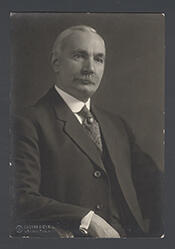
Here you will find contact information for Representative Joseph McLaughlin, including email address, phone number, and mailing address.
| Name | Joseph McLaughlin |
| Position | Representative |
| State | Pennsylvania |
| District | -1 |
| Party | Republican |
| Status | Former Representative |
| Term Start | April 2, 1917 |
| Term End | March 3, 1923 |
| Terms Served | 2 |
| Born | June 9, 1867 |
| Gender | Male |
| Bioguide ID | M000540 |
About Representative Joseph McLaughlin
Joseph McLaughlin was a Republican politician who served as a United States Representative from Pennsylvania from 1917 to 1923. Known formally in historical records as Joseph McLaughlin (Pennsylvania politician), he represented his constituents in the House of Representatives during a transformative era in American history that encompassed the final years of World War I and the beginning of the postwar period. Born in 1867, he emerged from the political and social milieu of late nineteenth-century Pennsylvania to become an influential figure in his district and within the Republican Party.
Details of McLaughlin’s early life and family background are sparse in the surviving public record, but his birth in 1867 placed his formative years in the Reconstruction and Gilded Age periods, when Pennsylvania was undergoing rapid industrialization and urban growth. Growing up in this environment likely exposed him to the economic and social issues that would later shape his political priorities, including questions of labor, industry, and the role of the federal government in regulating commerce and supporting national development. His early experiences in Pennsylvania, a state central to coal, steel, and rail production, provided the context for his later public service.
Information about McLaughlin’s formal education is limited, but like many politicians of his generation, he would have come of age at a time when legal training, business experience, or local civic engagement often served as the pathway into public life. Whether through professional work, party activity, or local officeholding, he established himself sufficiently within Republican circles to be selected as a candidate for Congress. His rise to national office reflected both his personal standing in the community and the strength of the Republican Party in Pennsylvania during the early twentieth century.
McLaughlin’s broader career before entering Congress likely involved participation in local or state affairs, as was common for future members of the House of Representatives from Pennsylvania. By the 1910s, the state’s political landscape was dominated by industrial interests, organized labor, and powerful party organizations, and McLaughlin’s advancement within the Republican Party suggests that he successfully navigated these forces. His reputation and connections within this environment positioned him to seek and win a seat in the national legislature.
Joseph McLaughlin’s congressional service began in 1917, when he took office as a Representative from Pennsylvania in the United States Congress. He served two consecutive terms, remaining in the House until 1923. As a member of the Republican Party, he contributed to the legislative process during a period marked by the United States’ involvement in World War I, the subsequent armistice, and the challenges of demobilization and economic adjustment. During these years, Congress addressed issues such as war finance, veterans’ affairs, industrial regulation, and the shifting balance between isolationism and international engagement. McLaughlin participated in the democratic process by debating and voting on such measures, representing the interests and concerns of his Pennsylvania constituents in the national forum.
Serving in the House of Representatives during this significant period in American history, McLaughlin was part of the legislative body that oversaw the transition from wartime to peacetime conditions. His role included engaging with legislation that affected both his industrial home state and the broader nation, as the federal government grappled with questions of economic policy, social change, and America’s place in the postwar world. While specific committee assignments and sponsored bills are not extensively documented in the brief surviving summaries of his career, his tenure from 1917 to 1923 placed him within the Republican majorities that shaped federal policy in the early 1920s.
After leaving Congress in 1923, McLaughlin returned to private life in Pennsylvania. Although detailed records of his later activities are limited, his post-congressional years unfolded during a decade of economic expansion and political realignment, in which many former legislators remained active in party affairs, business, or civic organizations. His experience as a two-term congressman and Republican leader from Pennsylvania would have continued to inform his standing in the community and his engagement with public issues.
Joseph McLaughlin died in 1926, closing a life that spanned from the immediate aftermath of the Civil War through World War I and into the modernizing America of the 1920s. Remembered in historical and reference works as Joseph McLaughlin (Pennsylvania politician), he is distinguished from several other notable figures of the same name, including Joseph M. McLaughlin (1933–2013), an American academic and U.S. federal appellate court judge; Joseph R. McLaughlin (1851–1932), Lieutenant Governor of Michigan; Joseph R. McLaughlin (born 1954), a North Carolina politician and U.S. Air Force graduate; Joseph Frank McLaughlin, an American judge in Hawaii; Joe McLaughlin (born 1960), a Scottish professional footballer; Joe McLaughlin (born 1957), an American football player; and Joseph McLaughlin (1922–1999), the Irish tenor better known as Josef Locke. His own legacy rests on his service as a Republican member of the United States House of Representatives from Pennsylvania during a pivotal era in the nation’s political and social development.