Representative Joseph George Minish
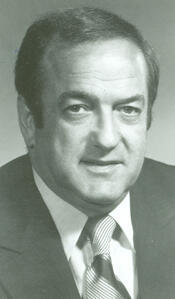
Here you will find contact information for Representative Joseph George Minish, including email address, phone number, and mailing address.
| Name | Joseph George Minish |
| Position | Representative |
| State | New Jersey |
| District | 11 |
| Party | Democratic |
| Status | Former Representative |
| Term Start | January 9, 1963 |
| Term End | January 3, 1985 |
| Terms Served | 11 |
| Born | September 1, 1916 |
| Gender | Male |
| Bioguide ID | M000796 |
About Representative Joseph George Minish
Joseph George Minish (September 1, 1916 – November 24, 2007) was an American Democratic Party politician from New Jersey who represented New Jersey’s 11th congressional district in the United States House of Representatives from 1963 to 1985. Over 11 consecutive terms in office, he contributed to the legislative process during a significant period in American history, participating in the democratic process and representing the interests of his constituents in northern New Jersey.
Minish was born in Throop, Pennsylvania, the son of a coal miner, George Joseph Minish (1894–1932), and Angeline Nardozzi Minish (1898–1954). His family was of Italian heritage; his grandfather, Vincenzo “James” Minisci (1860–1920), emigrated to the United States from Italy in 1886, and his mother had come to the United States from Italy as an infant. He grew up in a large family with two brothers, James Minish (1920–1928) and Francis X. Minish (1926–2009), and three sisters, Pauline Minish LaBelle (1918–2001), Mary Minish Mecca (1921–2000), and Lena Minish Mecca (1923–1994). His brothers-in-law Charles and James Mecca were themselves brothers, underscoring the close-knit nature of his extended family. Minish graduated from Dunmore High School in 1935. During World War II’s final phase, he served in the United States Army from 1945 to 1946, an experience that preceded his entry into public life and organized labor.
Following his military service, Minish embarked on a career in the labor movement that would shape his political outlook and future congressional service. He became active in organized labor in northern New Jersey and rose to leadership positions within the labor councils of Essex and Hudson Counties. From 1954 to 1960 he served as executive secretary of the Essex-West Hudson Council of the Congress of Industrial Organizations (CIO), representing industrial workers in a heavily urban and industrial region. After the merger of the AFL and CIO, he continued his work in the labor movement as executive director of the Essex-West Industrial Union Council, AFL-CIO, from 1960 to 1962. In these roles he developed close ties with labor leaders and working-class communities, building the political base and relationships that later supported his congressional campaigns.
Minish’s entry into elective office came in 1962, when seven-term Democratic U.S. Representative Hugh Joseph Addonizio vacated his Essex County–based House seat to run for mayor of Newark. Essex County Democratic leaders selected the 46-year-old Minish to defend the seat, which was considered politically competitive in the midterm election of President John F. Kennedy’s administration. The 11th District at that time combined Newark tenements and low-cost housing with affluent suburbs such as South Orange and West Orange. Minish was unopposed in the Democratic primary. In the general election he faced Republican Frank A. Palmieri, a lawyer who had previously won 36 percent of the vote against Addonizio in 1960. Labor leaders rallied behind Minish, who as a first-time candidate pledged strong support for the Kennedy administration. His campaign platform called for federal aid to education for both school construction and teacher salaries; extension of the Social Security Act to provide medical care for the aged; long-term loans and technical assistance to emerging nations; and the establishment of a cabinet-level Department of Urban Affairs. He won the election by a wide margin, receiving 48,102 votes (59.45 percent) to Palmieri’s 30,244 (37.28 percent), and took his seat in the 88th Congress on January 3, 1963.
During his 22 years in the U.S. House of Representatives, Minish was repeatedly returned to office by the voters of the 11th District. He easily won re-election in a series of contests against a range of Republican challengers. In 1964 he defeated William L. Stubbs, who had been the first African American to win a major party nomination for Congress in New Jersey. He went on to beat attorney Leonard Felzenberg in 1966; George M. Wallhauser Jr., son of a former Republican congressman, in 1968; and businessman James Shue, father of actors Elisabeth Shue and Andrew Shue, in 1970. In 1972 he faced his first seriously contested re-election bid against former state senator Milton Waldor but prevailed. He subsequently defeated attorney William Grant in 1974; former Essex County Young Republican chairman Charles Poekel in 1976; businessman Julius George Feld in 1978; conservative activist Bob Davis in 1980; and businessman Rowley (Rey) Reddington in 1982. Throughout these campaigns, Minish maintained strong backing from organized labor and local Democratic organizations, and he became known as a reliable party loyalist who focused heavily on constituent service.
In Congress, Minish served on the House Committee on Banking, Finance and Urban Affairs, where he rose to become chairman of the Subcommittee on General Oversight. His committee assignments placed him at the center of debates over financial regulation, urban development, and banking policy during a period of significant economic and social change. He was regarded as a supporter of large financial institutions and received substantial campaign contributions from the banking industry, yet he also gained attention for criticizing profiteering by defense contractors and accusing natural gas producers of price gouging. The Newark Star-Ledger, which covered his entire political career, characterized him as a staunch party loyalist and supporter of organized labor who ran an effective constituent service operation but had limited impact on major national legislation. By New Jersey standards he was considered a somewhat conservative Democrat: he supported the Vietnam War, opposed campaign finance reform and legalized abortion, and received middling ratings from civil liberties organizations. He was often described as a low-key legislator whose influence was felt more in district service and committee work than in high-profile legislative initiatives.
Minish’s congressional career came to an end after a major redistricting in the early 1980s. In 1984, a court-ordered redrawing of New Jersey’s congressional districts dramatically altered the 11th District. Many of its Democratic-leaning urban and inner-suburban areas were removed and replaced with heavily Republican territory to the west, particularly much of Morris County, one of the most Republican counties in the state. Minish quipped that the new lines pushed his district so far west that he might as well be a congressman from Pennsylvania. Despite the unfavorable terrain, he chose to seek re-election in the reconfigured 11th District. In the November 1984 general election he was defeated by State Assembly Minority Leader Dean Gallo, a Morris County Republican, who received 133,662 votes (56 percent) to Minish’s 106,038 (44 percent). Minish attributed his loss to the redistricting that had made the district overwhelmingly Republican, remarking that he was not sure “the good Lord could have survived” in such a district, and he also blamed special interest groups that had long opposed him. He told The New York Times that he was pleased to count such groups as his enemies, calling them “no good for the country” and “greedy.” The partisan tilt of the redrawn district was underscored by the fact that no Democrat would again surpass 40 percent of the vote there for 34 years, until Mikie Sherrill won the seat for the Democrats in 2018.
Outside of his public career, Minish was a longtime resident of West Orange, New Jersey. He married Theresa V. LaCapra (June 15, 1920 – January 24, 1997), whose parents, Luigi (Louis) LaCapra (1883–1931) and Lucy Vaccaro LaCapra (1898–1938), were Italian immigrants, reflecting a shared immigrant heritage between the Minish and LaCapra families. The couple had sons who were active in public and civic life. Their son George Joseph Minish (1944–1999) sought the Democratic nomination for the New Jersey General Assembly in 1973 but, lacking the backing of the Essex County Democratic Party leadership, was defeated in the primary by Richard Codey and Eldridge Hawkins. Another son, James Minish, went on to serve as executive vice president of facilities at the New Jersey Sports and Exposition Authority, playing a role in the management of major state sports and entertainment venues. A grandson, Joseph Minish, entered public service in the legal field and was hired in 2004 as an Assistant United States Attorney for the District of New Jersey by U.S. Attorney Chris Christie.
Joseph George Minish died on November 24, 2007, at the age of 91. His long tenure in Congress and his decades of public and labor service were recognized by both state and local honors. In Newark, the Joseph G. Minish Passaic River Waterfront and Historic Area was dedicated in 2008, commemorating his name along a redeveloped stretch of the riverfront. By executive order of Governor Jon Corzine, United States and New Jersey flags were flown at half-staff at all state departments, offices, and agencies on December 5, 2007, to honor the memory and passing of Representative Minish.