Representative Joseph Hampton Moore
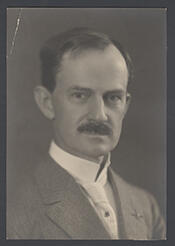
Here you will find contact information for Representative Joseph Hampton Moore, including email address, phone number, and mailing address.
| Name | Joseph Hampton Moore |
| Position | Representative |
| State | Pennsylvania |
| District | 3 |
| Party | Republican |
| Status | Former Representative |
| Term Start | December 4, 1905 |
| Term End | March 3, 1921 |
| Terms Served | 8 |
| Born | March 8, 1864 |
| Gender | Male |
| Bioguide ID | M000906 |
About Representative Joseph Hampton Moore
Joseph Hampton Moore (March 8, 1864 – May 2, 1950) was the 83rd and 85th Mayor of Philadelphia and a Republican member of the United States House of Representatives from Pennsylvania. Known throughout his public life as J. Hampton Moore, he served as a Representative from Pennsylvania in the United States Congress from 1905 to 1921, contributing to the legislative process during eight terms in office. His service in Congress and as mayor of Philadelphia spanned a significant period in American political and urban history, and he was a prominent figure in Republican Party politics at the local, state, and national levels.
Moore was born on March 8, 1864, in Woodbury, New Jersey. Little is recorded in standard references about his early childhood and family background, but by his late teens he had moved into the world of journalism in nearby Philadelphia. Beginning in 1881, he worked as a reporter for the Philadelphia Public Ledger and for the Court Combination, positions he held until 1894. His years as a reporter immersed him in the civic and political life of Philadelphia and helped establish the connections that would underpin his later career in public service and Republican Party organization.
Moore’s formal entry into public administration came in the 1890s. From 1894 to 1897 he served as chief clerk to the city treasurer of Philadelphia, gaining experience in municipal finance and city operations. In 1900 he was appointed secretary to the mayor of Philadelphia, a role that further deepened his involvement in city governance. He simultaneously advanced within the Republican Party’s organizational structure, serving as president of the Allied Republican Clubs of Philadelphia, the Pennsylvania State League of Republican Clubs, and the National League of Republican Clubs from 1900 to 1906. From 1901 to 1903 he served as city treasurer of Philadelphia, consolidating his reputation as a capable administrator and loyal party man.
Moore’s growing prominence attracted national attention. In January 1905 President Theodore Roosevelt appointed him the first Chief of the Bureau of Manufactures in the Department of Commerce and Labor, a newly created federal bureau intended to promote American manufacturing and commercial interests. He resigned after approximately six months in that position to become president of a Philadelphia bank, reflecting his parallel engagement in the city’s financial and business community. In 1907 he became president of the Atlantic Deeper Waterways Association, an influential organization advocating improvements in inland and coastal waterways; he held this post for four decades, from 1907 to 1947, and became a leading advocate for navigation and harbor development along the Atlantic seaboard.
Moore entered Congress as a Republican during the administration of Theodore Roosevelt. He was elected to the Fifty-ninth Congress to fill the vacancy caused by the death of Representative George A. Castor and was re-elected seven times. According to the existing record, he served in the United States Congress from 1905 to 1921, and more precisely from November 6, 1906, to January 4, 1920, when he resigned to assume the mayoralty of Philadelphia. As a member of the House of Representatives, he participated in the democratic process and represented the interests of his Pennsylvania constituents during a period that included the Progressive Era, World War I, and the early postwar years. A loyal Republican, he was also a delegate to the 1920 Republican National Convention, underscoring his continuing influence within the party at the national level.
Elected in 1919, Moore became mayor of Philadelphia in 1920. He first served as the city’s chief executive from 1920 to 1924, identified in contemporary numbering as the 109th mayor of Philadelphia while also being recognized as the city’s 83rd mayor. His administration dealt with the challenges of post–World War I urban governance, including public order, infrastructure, and moral regulation. During his terms as mayor, Moore took a strong stance on public morals, most notably banning the showing of films featuring actor Roscoe “Fatty” Arbuckle in Philadelphia because he believed that the charges then pending against Arbuckle for rape and murder would offend public morals. This action was taken concurrent with Arbuckle’s arrest and prior to Arbuckle’s trial and eventual acquittal, reflecting Moore’s willingness to use municipal authority in matters of public decency.
After leaving office in 1924, Moore remained active in public affairs. In 1926 he was appointed by the United States Department of State as a delegate to the International Navigation Congress held in Cairo, Egypt, an assignment consistent with his long-standing leadership in the Atlantic Deeper Waterways Association and his interest in maritime and inland navigation policy. He sought to return to the mayoralty in 1927 but was defeated. Nonetheless, he remained a significant figure in Philadelphia politics and Republican circles, and in the 1931 Philadelphia mayoral election he won a renewed mandate from the city’s voters.
Moore returned to office as mayor of Philadelphia in 1932, serving until 1936 in what was counted as his 111th incumbency and also recognized as his 85th mayoralty. His second tenure coincided with the depths of the Great Depression and the national political realignment surrounding the presidency of Herbert Hoover and the rise of Franklin D. Roosevelt. Moore played a notable role in the 1932 presidential election: he was widely credited with being responsible for Pennsylvania becoming one of only six states carried by President Hoover in his otherwise overwhelming defeat. By mobilizing sufficient Republican turnout in Philadelphia, Moore helped keep Pennsylvania in the Republican column, preserving an unbroken streak of the state not voting Democratic in a presidential election since 1856. This long-standing pattern was finally broken in 1936, when President Franklin D. Roosevelt carried Pennsylvania in his landslide re-election.
In his later years, Moore continued to be honored for his long public service. He remained president of the Atlantic Deeper Waterways Association until 1947, maintaining his influence in regional infrastructure and navigation policy well into his eighties. The city of Philadelphia recognized his contributions by naming a fireboat in his honor, one of only three mayors to receive such a distinction. In the 1950s, after his death, an elementary school located at Summerdale and Longshore Avenues in Philadelphia was built and named the J. Hampton Moore School; it remains in operation, serving as a lasting reminder of his impact on the city’s civic life. Moore died on May 2, 1950, closing a career that had spanned journalism, municipal administration, congressional service, and two nonconsecutive mayoralties in one of America’s largest cities.