Representative Joseph John O’Brien
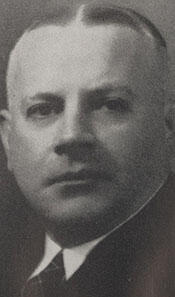
Here you will find contact information for Representative Joseph John O’Brien, including email address, phone number, and mailing address.
| Name | Joseph John O’Brien |
| Position | Representative |
| State | New York |
| District | 38 |
| Party | Republican |
| Status | Former Representative |
| Term Start | January 3, 1939 |
| Term End | January 3, 1945 |
| Terms Served | 3 |
| Born | October 9, 1897 |
| Gender | Male |
| Bioguide ID | O000014 |
About Representative Joseph John O’Brien
Joseph John O’Brien (October 9, 1897 – January 23, 1953) was a Republican member of the United States House of Representatives from New York who served three terms in Congress from 1939 to 1945. He represented New York’s 38th congressional district during a critical era that encompassed the end of the Great Depression and the Second World War, and he participated in the legislative process as a member of the House of Representatives, representing the interests of his constituents in western New York.
O’Brien was born in Rochester, New York, where he was educated in local schools and graduated from Rochester’s Cathedral High School. He pursued further studies at St. Jerome’s University in Ontario, Canada, and later attended McGill University in Montreal, reflecting an early interest in higher education that took him beyond his native state. With the entry of the United States into World War I, O’Brien enlisted in the United States Navy, in which he served from 1917 until 1919, contributing to the nation’s wartime efforts during his early adulthood.
Following his military service, O’Brien returned to New York and embarked on a civilian career with the New York Central Railroad beginning in 1919. Over nearly two decades with the railroad, he advanced through the ranks and ultimately held the position of chief construction inspector, a role that placed him at the center of major infrastructure and transportation projects. During this same period, from 1919 until 1926, he also pursued athletic endeavors, participating as a semiprofessional football player and working as a professional wrestler, an unusual combination that underscored his physical vigor and broad range of interests outside his primary employment.
O’Brien’s formal entry into politics came in the early 1930s as he aligned himself with the Republican Party. In 1932 he was elected head of the East Rochester Republican Club, marking his emergence as a local party leader. That same year he began service in municipal office as treasurer of East Rochester, New York, a position he held from 1932 until 1935. He subsequently served as assessor of East Rochester from 1935 until 1938, gaining experience in public finance, property valuation, and local administration during the challenging economic conditions of the Great Depression.
Building on his local political and administrative experience, O’Brien was elected to the United States House of Representatives in 1938 as a Republican. He represented New York’s 38th congressional district from January 3, 1939, until January 3, 1945, serving three consecutive terms. During his tenure in Congress, he contributed to the legislative process at a time when the federal government was addressing the lingering effects of the Depression and responding to the global crisis of World War II. As a member of the House of Representatives, Joseph John O’Brien participated in the democratic process and represented the interests of his constituents, taking part in debates and votes that helped shape national policy in a period of profound domestic and international change. He sought reelection in 1944 but was unsuccessful, bringing his congressional service to a close at the start of 1945.
After leaving Congress, O’Brien returned to public service at the state level. He became the Rochester-area administrator for the New York State Workmen’s Compensation Act, a position in which he oversaw the administration of benefits and protections for injured workers in his region. This role allowed him to continue his involvement in public affairs and to apply his administrative experience to issues of labor, workplace safety, and social welfare in the postwar years.
In his personal life, O’Brien married Mildred Erway in 1924. The couple had no children but maintained their home and ties in the Rochester area throughout his varied career in transportation, athletics, local government, and national politics. His life remained closely connected to the community in which he had been born and educated.
Joseph John O’Brien died in Rochester, New York, on January 23, 1953, after suffering a series of heart attacks that had begun in 1950. He was interred at Holy Sepulchre Cemetery in Rochester. His career reflected a trajectory from military service and industrial employment to local office and ultimately to the halls of Congress, where he served three terms as a Republican representative from New York during one of the most consequential periods in twentieth-century American history.