Representative Joseph Francis O’Connell
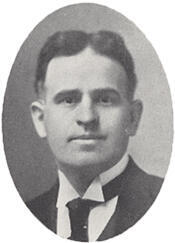
Here you will find contact information for Representative Joseph Francis O’Connell, including email address, phone number, and mailing address.
| Name | Joseph Francis O’Connell |
| Position | Representative |
| State | Massachusetts |
| District | 10 |
| Party | Democratic |
| Status | Former Representative |
| Term Start | December 2, 1907 |
| Term End | March 3, 1911 |
| Terms Served | 2 |
| Born | December 7, 1872 |
| Gender | Male |
| Bioguide ID | O000026 |
About Representative Joseph Francis O’Connell
Joseph Francis O’Connell (December 7, 1872 – December 10, 1942) was an American lawyer, academic, and Democratic politician who served as a U.S. Representative from Boston, Massachusetts, in the United States Congress from 1907 to 1911. Over the course of two terms in the House of Representatives, he contributed to the legislative process during a significant period in American history, representing the interests of his Massachusetts constituents.
O’Connell was born in Boston, Massachusetts, on December 7, 1872. He attended the Mather School of Boston and prepared for college at St. Mary’s Parochial School. He then enrolled at Boston College, from which he graduated in 1893. While at Boston College, O’Connell, together with Joseph Drum, helped create the first Boston College football team, marking an early involvement in collegiate athletics and student life that would become part of the institution’s history.
Following his undergraduate studies, O’Connell pursued a legal education at Harvard Law School, graduating in 1896. He was admitted to the Suffolk County bar in 1897 and commenced the practice of law in Boston. His legal career developed alongside growing engagement in public affairs, and he established himself as a practicing attorney in the city while building the professional and political connections that would later support his entry into elective office.
O’Connell was elected as a Democrat to the Sixtieth and Sixty-first Congresses, serving from March 4, 1907, to March 3, 1911, as a Representative from Massachusetts. His service in Congress occurred during a transformative era in American politics and society, and as a member of the House of Representatives he participated in the democratic process and represented the interests of his Boston-area constituents. In the 1908 election, he was narrowly re-elected by just four votes over former Boston City Clerk J. Mitchel Galvin, underscoring the competitive nature of his district. A member of the Democratic Party, he took part in national legislative debates of the period and contributed to the work of the House during his two terms.
In 1910, O’Connell was an unsuccessful candidate for renomination. In a three-way Democratic primary contest with former Representative William S. McNary and Boston City Councilor James Michael Curley, he finished second behind Curley, ending his tenure in Congress in March 1911. After leaving the House, O’Connell resumed the practice of law in Boston and remained active in politics and public service. He served as a delegate to the 1912 Democratic National Convention, reflecting his continued influence within the party.
O’Connell’s later career was marked by extensive involvement in legal reform and state constitutional matters. In 1914, he was appointed by Governor David I. Walsh to the National Conference on Uniform State Laws. He was reappointed by each succeeding governor and served in this capacity until his death, contributing to efforts to harmonize state legal codes. In May 1917, he was elected to serve as a member of the Massachusetts Constitutional Convention, representing the 12th congressional district. The convention convened on June 6, 1917, and adjourned on August 13, 1919, and O’Connell participated in deliberations on revisions to the fundamental law of the Commonwealth. He later served as a delegate to the 1920 Democratic National Convention and in 1923 was a member of the state commission to revise the charter of the city of Boston. He also sought higher office, running unsuccessfully for the United States Senate in 1930 and for Mayor of Boston in 1933.
Alongside his legal and political work, O’Connell was active in legal education. He served as a Professor of Law and as vice president of the board of trustees of Suffolk Law School in Boston, contributing to the training of new generations of lawyers and to the governance of the institution. His professional life thus combined private practice, public service, and academic leadership.
On November 23, 1910, O’Connell married Marasita Lenahan, the daughter of his former congressional colleague John T. Lenahan, at St. Mary’s Church in Wilkes-Barre, Pennsylvania. The couple had eleven children, and his family life ran parallel to his long career in law, politics, and education. Joseph Francis O’Connell died in Boston on December 10, 1942, three days after his seventieth birthday. He was interred at St. Joseph’s Cemetery in West Roxbury, Massachusetts, closing a life of sustained engagement in public affairs at the local, state, and national levels.