Senator Joseph Christopher O’Mahoney
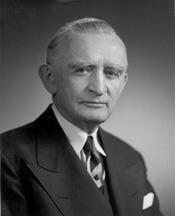
Here you will find contact information for Senator Joseph Christopher O’Mahoney, including email address, phone number, and mailing address.
| Name | Joseph Christopher O’Mahoney |
| Position | Senator |
| State | Wyoming |
| Party | Democratic |
| Status | Former Representative |
| Term Start | December 18, 1933 |
| Term End | January 3, 1961 |
| Terms Served | 6 |
| Born | November 5, 1884 |
| Gender | Male |
| Bioguide ID | O000088 |
About Senator Joseph Christopher O’Mahoney
Joseph Christopher O’Mahoney (November 5, 1884 – December 1, 1962) was an American journalist, lawyer, and Democratic politician who represented Wyoming in the United States Senate for six terms of service between 1933 and 1961. Over the course of four complete elected terms, served in two distinct periods from 1933 to 1953 and from 1954 to 1961, he became known as a prominent New Deal supporter (with notable reservations), a leading congressional advocate of antitrust enforcement, and an influential voice on public lands, natural resources, and economic policy.
One of eleven children, O’Mahoney was born in Chelsea, Massachusetts, to Dennis and Elizabeth (née Sheehan) O’Mahoney, both Irish immigrants. His father, who had come to the United States in 1861, worked as a furrier, and the large family’s modest circumstances shaped O’Mahoney’s early outlook. He received his early education at the Cambridge Latin School in Cambridge, Massachusetts. In 1905 he enrolled at Columbia University in New York City, attending until 1907, when he left to pursue a career in journalism. His first work as a reporter was for the Cambridge Democrat, providing him with experience in political and community affairs that would later inform his public career.
O’Mahoney moved west in 1908 to Boulder, Colorado, where he worked for the Boulder Herald from 1908 to 1916. During these years he established himself as a capable newspaperman and became increasingly interested in western issues and Democratic politics. In 1913 he married Agnes Veronica O’Leary, beginning a family life that would accompany his rise in public service. In 1916 he relocated to Cheyenne, Wyoming, to become city editor of the State Leader, a newspaper owned by John B. Kendrick, then governor of Wyoming. Although he had supported Theodore Roosevelt in the 1912 presidential election, O’Mahoney formally aligned with the Democratic Party in 1916, the same year he joined the State Leader, and from that point forward he was active in Democratic politics at the local, state, and national levels.
When Governor Kendrick entered the United States Senate in March 1917, O’Mahoney accompanied him to Washington, D.C., as his executive secretary, a post he held for three years. While working in the Senate, he studied law at Georgetown University Law School and earned a Bachelor of Laws degree in 1920. Admitted to the bar that same year, he returned to Cheyenne to establish a law practice. His legal work soon centered on issues arising from the Mineral Leasing Act, and his close study of federal oil leases led him to alert Senator Kendrick to questionable arrangements involving the Teapot Naval Oil Reserve in Wyoming. This warning helped prompt the investigation that exposed the Teapot Dome scandal, one of the most significant corruption cases of the 1920s. Concurrently, O’Mahoney became a key figure in Wyoming’s Democratic organization, serving as vice-chairman of the Wyoming Democratic Party from 1922 to 1930, as a delegate to state Democratic conventions from 1924 through 1932, and as a member of the Conference on Uniform State Laws from 1925 to 1926. He also served as city attorney of Cheyenne from 1929 to 1931.
O’Mahoney’s influence expanded to the national stage in the early 1930s. In 1929 he was elected a Democratic national committeeman, serving until 1934. He was a delegate to the 1932 Democratic National Convention in Chicago, Illinois, where he sat on the subcommittee that drafted the party platform and later served as vice-chairman of the national campaign committee that helped elect Franklin D. Roosevelt to the presidency. After the election, Democratic National Committee chairman James Farley, appointed as U.S. Postmaster General, rewarded O’Mahoney’s efforts by naming him First Assistant Postmaster General, a position he held from March to December 1933. His tenure there was brief, as his career soon shifted decisively to the Senate.
On December 18, 1933, Wyoming Governor Leslie A. Miller appointed O’Mahoney to the United States Senate to fill the vacancy caused by the death of Senator John B. Kendrick, his longtime mentor. In 1934 he won election to a full six-year term, defeating Republican Representative Vincent Carter by a margin of 57 percent to 43 percent. He was reelected in 1940, defeating Milward L. Simpson, and again in 1946, when he prevailed over Harry B. Henderson, thus serving continuously from 1933 to 1953. During this first long tenure, he supported most New Deal measures, particularly those aimed at economic recovery and regulation, but he opposed President Roosevelt’s 1937 proposal to expand the Supreme Court, often called the “court-packing plan.” O’Mahoney developed a strong reputation as an opponent of monopolies and excessive corporate concentration. Early in his Senate career he introduced legislation to require federal licensing of corporations engaged in interstate commerce. He was a leading advocate for the creation of the Temporary National Economic Committee, which he chaired from 1938 to 1941, conducting wide-ranging investigations into economic concentration and antitrust issues. He also backed legislation important to Wyoming and the West, including measures supporting wool, cattle, and oil producers, conservation initiatives, and the Casper–Alcova reclamation project. Within the Senate, he held several key chairmanships, including the Committee on Indian Affairs from 1943 to 1947 and the Committee on Interior and Insular Affairs, as well as co-chairmanship of the Joint Committee on the Economic Report from 1949 to 1953. His prominence in the party was reflected in 1944, when he was among twelve individuals formally placed in nomination at the Democratic National Convention as potential running mates for President Roosevelt.
In the Republican landslide of 1952, with Dwight D. Eisenhower winning the presidency, O’Mahoney was narrowly defeated for reelection by Wyoming Governor Frank A. Barrett, 52 percent to 48 percent, ending his first period of Senate service in January 1953. He returned to the private practice of law in Wyoming, but his absence from the Senate was brief. Following the suicide of Senator Lester C. Hunt in June 1954, a special and regular election were held in November 1954. O’Mahoney was elected both to complete Hunt’s unexpired term and to a full six-year term, defeating Representative William H. Harrison—descendant of Presidents William Henry Harrison and Benjamin Harrison—by a margin of 52 percent to 48 percent. This victory restored him to the Senate, where he served from 1954 until January 1961, completing what amounted to six terms of service across his two Senate careers.
During his second period in the Senate, O’Mahoney continued to focus on economic regulation, public power, and civil rights. He emerged as a leading opponent of the Dixon–Yates contract, which proposed that a private company build a power plant to supply electricity to the Tennessee Valley Authority to replace power the TVA sold to the Atomic Energy Commission; O’Mahoney criticized the arrangement as undermining public power. He sponsored legislation requiring “concentrated industries” to publicly justify price increases, sought to bar automobile manufacturers from operating their own finance companies, and strongly supported statehood for Alaska and Hawaii. He also introduced a measure to require nominees for federal judgeships to swear, prior to confirmation, that they would not render decisions contrary to the U.S. Constitution. In the civil rights arena, his advocacy of jury trials in certain civil rights cases helped secure sufficient votes to pass the Civil Rights Act of 1957. He opposed the confirmation of Lewis Strauss as Secretary of Commerce and, late in his career, introduced legislation to abolish the insurance rate-making body of the District of Columbia, arguing that it protected high rates for insurance companies rather than serving the public interest.
After suffering a stroke in June 1959, O’Mahoney decided not to seek reelection in 1960. His health limited his activity, but he remained engaged in Senate work, delivering his final speech on the Senate floor on August 29, 1960. He was brought into the chamber in a wheelchair by Senator Wayne Morse of Oregon, who predicted that O’Mahoney would be remembered as one of the most effective senators in defending free enterprise against monopoly power. Leaving office in January 1961, he resumed the practice of law in both Washington, D.C., and Cheyenne, Wyoming, drawing on decades of experience in public service and economic policy.
Joseph Christopher O’Mahoney died at the Naval Hospital in Bethesda, Maryland, on December 1, 1962, at the age of 78. He was interred at Mount Olivet Cemetery in Cheyenne, Wyoming. His long tenure in the Senate, spanning the New Deal, World War II, the early Cold War, and the dawn of the modern civil rights era, left a substantial record on antitrust law, natural resources, and the structure of the American economy, and his papers are preserved for research at the American Heritage Center.