Representative Joseph Colburn Pringey
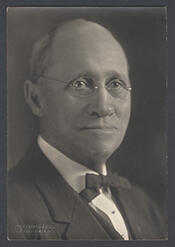
Here you will find contact information for Representative Joseph Colburn Pringey, including email address, phone number, and mailing address.
| Name | Joseph Colburn Pringey |
| Position | Representative |
| State | Oklahoma |
| District | 4 |
| Party | Republican |
| Status | Former Representative |
| Term Start | April 11, 1921 |
| Term End | March 3, 1923 |
| Terms Served | 1 |
| Born | May 22, 1858 |
| Gender | Male |
| Bioguide ID | P000542 |
About Representative Joseph Colburn Pringey
Joseph Colburn Pringey (May 22, 1858 – February 11, 1935) was an American politician and a U.S. Representative from Oklahoma. A member of the Republican Party, he served one term in the United States House of Representatives from 1921 to 1923, representing an Oklahoma constituency during a significant period in American political and economic history.
Pringey was born in Somerset, Pennsylvania, on May 22, 1858, the son of George and Effie Colburn Pringey. He attended the common schools in Pennsylvania during his youth. In 1870 he moved with his family to Missouri, where he continued his education and later attended a business college in Sedalia, Missouri. This training in business provided him with skills that he would later apply in both his private enterprises and public service.
In 1891, when the Sac and Fox lands in what was then Oklahoma Territory were opened for settlement, Pringey moved to the region and homesteaded a farm near Chandler. In addition to his agricultural pursuits, he became involved in the loan and insurance business, reflecting his background in business education. A committed Republican, he quickly entered territorial politics. In 1893 he was elected to the Oklahoma Territorial Senate, where he participated in the early legislative development of the territory. That same year he was appointed to the board of regents of the University of Oklahoma at Norman, serving in 1893 and 1894 and helping to oversee the governance of the young institution. His prominence in party affairs grew, and in 1900 he served as a delegate to the Republican National Convention.
Pringey continued to build his public career at the local level in the years leading up to statehood and afterward. He served as county clerk of Lincoln County, Oklahoma, from 1912 to 1920, managing county records and administrative matters during a period of growth and change in the region. During World War I he was active in home-front mobilization efforts, serving on the Oklahoma Council of Defense. He also participated as a “four-minute-man” speaker, delivering brief, government-sanctioned speeches in public venues to promote wartime policies and encourage support for the war effort among citizens.
Elected as a Republican to the Sixty-seventh Congress, Pringey served in the U.S. House of Representatives from March 4, 1921, to March 3, 1923. As a member of the House of Representatives, he participated in the democratic process and represented the interests of his Oklahoma constituents during the early postwar years. While in Congress he served on three committees: Expenditures in the Department of Labor, Pensions, and Public Buildings and Grounds. Sometimes known by the nickname “Uncle Joe,” he advocated compensation for soldiers who had served in World War I and supported a protective tariff designed to benefit farmers and laborers, reflecting the concerns of his largely agricultural district. His single term in office coincided with national debates over veterans’ benefits, economic adjustment after the war, and federal support for rural communities.
Pringey was an unsuccessful candidate for reelection in 1922 to the Sixty-eighth Congress, bringing his formal congressional service to a close after one term. Following his departure from Congress, he remained active in public life in Chandler. In 1923 and 1924 he served as acting postmaster of Chandler, Oklahoma, overseeing local postal operations. He also resumed his agricultural pursuits, continuing to manage and work his farm near Chandler, and maintained his engagement in community affairs.
Joseph Colburn Pringey died in Chandler, Oklahoma, on February 11, 1935, at the age of 76. He was interred in Oak Park Cemetery in Chandler. His career spanned the transition from territorial governance to statehood in Oklahoma and included service at local, territorial, and national levels, marking him as a notable figure in the political development of his adopted state.