Senator Joseph Eugene Ransdell
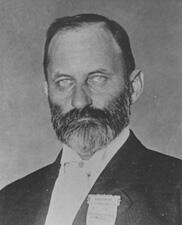
Here you will find contact information for Senator Joseph Eugene Ransdell, including email address, phone number, and mailing address.
| Name | Joseph Eugene Ransdell |
| Position | Senator |
| State | Louisiana |
| Party | Democratic |
| Status | Former Representative |
| Term Start | December 4, 1899 |
| Term End | March 3, 1931 |
| Terms Served | 10 |
| Born | October 7, 1858 |
| Gender | Male |
| Bioguide ID | R000059 |
About Senator Joseph Eugene Ransdell
Joseph Eugene Ransdell (October 7, 1858 – July 27, 1954) was an attorney and Democratic politician from Louisiana who served in the United States Congress from 1899 to 1931. Beginning in 1899, he was elected for seven consecutive terms as United States Representative from Louisiana’s 5th congressional district, and he subsequently served for three terms in the United States Senate from Louisiana before being defeated in the 1930 Democratic primary for the seat by Governor Huey Pierce Long Jr. Over the course of ten terms in Congress, he played a significant role in the legislative process during a transformative period in American history, particularly in matters of public health and river and flood control.
Ransdell was born in Alexandria, Rapides Parish, in central Louisiana, where he was raised in the Roman Catholic faith and attended local public schools. In 1882, he graduated from Union College in Schenectady, New York. After completing his collegiate studies, he returned to Louisiana and read law with an established firm. He was admitted to the bar in 1883 and soon thereafter began a legal and public career that would link him closely to the agricultural and riverine interests of northeastern Louisiana.
From 1883 to 1889, Ransdell practiced law in Lake Providence, East Carroll Parish, where his law partner during the 1880s was his younger brother, Francis Xavier Ransdell, who later became a judge of the Louisiana 6th Judicial District Court. Joseph Ransdell served as district attorney for the 8th Judicial District of Louisiana for fifteen years, from 1884 to 1896, consolidating his reputation as a capable lawyer and public official. He also owned and operated a plantation, cultivating cotton and pecan groves, and thereby became closely identified with planter and agricultural interests in the region. From 1896 to 1899, he served on the Fifth Levee District Board, reflecting his early involvement in flood control and levee policy along the Mississippi River. In 1898, he was a member of the Louisiana state constitutional convention, furthering his engagement in state-level governance and constitutional reform.
In 1899, following the death of Representative Samuel Thomas Baird, Ransdell was elected as a Democrat to the Fifty-sixth Congress to fill the resulting vacancy from Louisiana’s 5th congressional district. He took his seat in the U.S. House of Representatives on August 29, 1899. In 1900 he secured his first full term, defeating Republican businessman Henry E. Hardtner of Urania in La Salle Parish by 6,172 votes (90.8 percent) to 628 (9.2 percent). Hardtner was the last Republican to contest the seat until 1976, when Frank Spooner of Monroe mounted a strong but unsuccessful challenge to Democrat Jerry Huckaby of Ringgold in Bienville Parish. By 1910, Hardtner had joined the Democratic Party and served in the Louisiana House of Representatives as the first member from La Salle Parish, and later as a state senator from 1924 to 1928. Ransdell was reelected to the House six more times and served continuously from August 29, 1899, to March 3, 1913. He was not a candidate for renomination in 1912, having instead sought and won election to the United States Senate by the Louisiana State Legislature, in the period before the ratification of the Seventeenth Amendment to the Constitution.
Ransdell entered the United States Senate on March 4, 1913, and served there until March 3, 1931. A member of the Democratic Party, he represented Louisiana during World War I, the postwar era, and the onset of the Great Depression. In 1918, he defeated future U.S. Senator John H. Overton of Alexandria in a disputed election. He secured a third Senate term in the 1924 Democratic primary, defeating Lee Emmett Thomas, the mayor of Shreveport, by 104,312 votes (54.9 percent) to 85,54 (45.1 percent). During that campaign, Huey Pierce Long Jr., then running for a second term on the Louisiana Public Service Commission, devoted considerable energy to supporting Ransdell, motivated largely by his intense opposition to Mayor Thomas, although Long himself was then a resident of Shreveport. As a senator, Ransdell served as chairman of the Committee on Public Health and National Quarantine during the Sixty-third through Sixty-fifth Congresses, and as a member of the Committee on Mississippi River and Its Tributaries in the Sixty-sixth Congress. In this capacity he sponsored the Ransdell Act, landmark legislation that created the National Institutes of Health, reflecting his enduring interest in public health and scientific research, as well as his long-standing concern with river and flood control.
Ransdell’s final Senate campaign unfolded amid the rise of Huey Long as a dominant figure in Louisiana politics. In 1927, Ransdell appeared at a Long political rally in Lake Providence, where his younger brother introduced Long. District Attorney Jefferson B. Snyder, a powerful advocate of planter interests, also sat on the stage. Snyder, though not initially a Long supporter, believed Long would defeat his chief rival, U.S. Representative Riley J. Wilson, who was favored by most planter interests, and sought to influence the likely new governor. At the rally, Long launched a fierce attack on the political establishment, castigating many of the Ransdells’ closest allies. State Senator Norris C. Williamson of East Carroll Parish, vice president of the Constitutional League of Louisiana, was particularly outraged by Long’s treatment of the Ransdells and refused to compromise with the Long faction, ultimately retiring from public life in 1932 rather than face probable defeat. In the 1930 Democratic primary for the U.S. Senate, Governor Long challenged Ransdell directly and defeated him decisively, winning 149,640 votes (57.3 percent) to Ransdell’s 111,451 (42.7 percent). Long then won the general election without Republican opposition. Contemporary observers such as T. H. Harris, long-serving Louisiana state superintendent of education, praised Ransdell as “one of the most lovable and distinguished citizens of the United States,” but noted that voters believed Long could be of greater practical use to them, particularly in light of substantial increases in school appropriations under Long’s governorship.
In addition to his legislative work, Ransdell pursued business interests while in office, as was then permitted. In 1920, he founded a printing firm in Washington, D.C. After his Senate tenure ended in 1931, he returned to Lake Providence, where he engaged in real estate and continued to cultivate cotton and pecans. He remained active in public affairs and higher education, serving on the board of supervisors of Louisiana State University in Baton Rouge from 1940 to 1944 during the administration of Governor Sam H. Jones. Ransdell also maintained close ties to his community and church; he named the community of Elmwood, southwest of Lake Providence, for his boyhood plantation in Rapides Parish. In 1976, more than two decades after his death, St. Patrick’s Roman Catholic Church in Lake Providence moved into a new building on a lot he had willed to the congregation at 207 Scarborough Street, directly across from the earlier structure where he and his family had long worshiped.
Ransdell’s family connections extended into later generations of Louisiana public life. He was a great-uncle of Frank Voelker Jr., a Lake Providence attorney who chaired the Louisiana State Sovereignty Commission during the administration of Governor Jimmie Davis and became a candidate for governor in the 1963 Democratic gubernatorial primary, withdrawing before the balloting. Frank Voelker Sr., who served as judge of the Sixth Judicial District from 1937 until his death in 1963, was married to Ransdell’s niece, Isabel, and was thus a son-in-law of Judge Francis Ransdell. Ransdell’s great-great nephew, New Orleans entrepreneur and philanthropist David Ransdell Voelker, also played a prominent role in state affairs. Following Hurricane Katrina, Governor Kathleen Babineaux Blanco appointed David Voelker to the Louisiana Recovery Authority, and her successor, Governor Bobby Jindal, later elevated him to chairman of that body. In 2008, despite having been described as a “longtime, diehard Republican,” David Voelker became the largest donor in Louisiana to Democratic presidential candidate Barack H. Obama of Illinois, contributing $80,000 (approximately $114,099 in 2024), according to the nonpartisan OpenSecrets organization.
Joseph Eugene Ransdell spent his final years in Lake Providence. He died there on July 27, 1954, and was interred in Lake Providence Cemetery. At the time of his death, he was the last living United States Senator to have been originally elected by a state legislature rather than by direct popular vote. His life and career, spanning Reconstruction-era Louisiana through the mid-twentieth century, were the subject of a 1951 biography by Adras LaBorde, long-time managing editor of the Alexandria Daily Town Talk, reflecting the enduring interest in his role in Louisiana’s political and civic history.