Senator Joseph Lafayette Rawlins
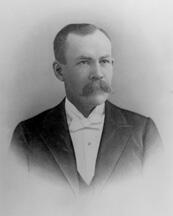
Here you will find contact information for Senator Joseph Lafayette Rawlins, including email address, phone number, and mailing address.
| Name | Joseph Lafayette Rawlins |
| Position | Senator |
| State | Utah |
| Party | Democratic |
| Status | Former Representative |
| Term Start | August 7, 1893 |
| Term End | March 3, 1903 |
| Terms Served | 2 |
| Born | March 28, 1850 |
| Gender | Male |
| Bioguide ID | R000073 |
About Senator Joseph Lafayette Rawlins
Joseph Lafayette Rawlins (March 28, 1850 – May 24, 1926) was an American lawyer, territorial delegate, and United States Senator from Utah who served in Congress both before and after Utah achieved statehood. A member of the Democratic Party, he represented Utah Territory in the U.S. House of Representatives from 1893 to 1895 and, following statehood, served a single term as a U.S. Senator from Utah from 1897 to 1903, contributing to the legislative process during a significant period in American history.
Rawlins was born in the Provisional State of Deseret near present-day Millcreek, Utah, about fifteen miles southeast of Salt Lake City, the youngest of three children of Joseph Sharp Rawlins and Mary Frost. In 1852, the Latter-day Saint leader Brigham Young directed his father to settle in Draper, Utah, where the family farmed. His father’s frequent absences on church missions, including a call in 1855 to the Elk Mountain Mission when Rawlins was four years old, left his mother, sisters, and himself to manage the farm. These long absences, undertaken at Young’s request, deeply affected the young Rawlins and contributed to his growing disaffection from the Church of Jesus Christ of Latter-day Saints.
As a boy, Rawlins showed a marked aptitude for learning and developed a particular interest in mathematics. However, the demands of farm work, especially during his father’s missions, limited his formal schooling; between the ages of fourteen and eighteen, his total time in school amounted to no more than sixteen months. Raised in the LDS Church, he strongly disliked the practice of plural marriage and initially took comfort in his father’s resistance to taking a second wife. When his father eventually acceded to church pressure and entered into plural marriage, Rawlins’s doubts about church doctrine and authority intensified, and he increasingly questioned the principles and practices of the Latter-day Saints.
Rawlins began his higher education at the University of Deseret in Salt Lake City, but financial constraints forced him to leave after his first year. Determined to continue his studies, he later enrolled at Indiana University Bloomington, where he pursued a classical course of study. Returning to Utah, he joined the faculty of the University of Deseret and served as a professor there from 1873 to 1875. During this period he also turned to the study of law. He was admitted to the bar in 1875 and commenced legal practice in Salt Lake City. By the time he became Salt Lake City’s attorney, he regarded himself as no longer a member of the LDS Church and never returned to it, instead building his professional identity around the law and public service.
Rawlins’s political career began in earnest in the early 1890s. A Democrat, he was elected as Utah Territory’s delegate to the Fifty-third Congress and served in the U.S. House of Representatives from March 4, 1893, to March 3, 1895. As a territorial delegate, he participated in debates and committee work but, like other delegates, did not possess a vote on the House floor. His tenure coincided with ongoing national discussions over silver coinage, economic policy, and the political future of the western territories. He was an unsuccessful candidate for reelection in 1894 to the Fifty-fourth Congress, but his service helped position him as a leading Democratic figure in Utah on the eve of statehood.
Following Utah’s admission to the Union in 1896, Rawlins was elected by the Utah State Legislature as a Democrat to the United States Senate. He served in the Senate from March 4, 1897, to March 3, 1903, completing one full term. During these years he represented the interests of his new state in a period marked by the aftermath of the Panic of 1893, debates over imperialism following the Spanish–American War, and continuing questions about the relationship between church and state in Utah. As a member of the Senate, Joseph Lafayette Rawlins participated actively in the democratic process and contributed to the legislative work of the chamber. He was an unsuccessful candidate for reelection at the end of his term, and his Senate service concluded in 1903.
After leaving the Senate, Rawlins returned to private life and resumed the practice of law in Utah. He entered into partnership with Edgar A. Wedgwood and Samuel R. Thurman, maintaining a prominent legal practice in Salt Lake City. Over time he withdrew from public life and active business, formally stepping back from professional engagements in 1921. Rawlins died in Salt Lake City on May 24, 1926, and was buried in Salt Lake City Cemetery. His papers are preserved in the J. Willard Marriott Library Special Collections at the University of Utah, documenting his career as a lawyer, territorial delegate, and U.S. Senator during a formative era in Utah’s political development.